

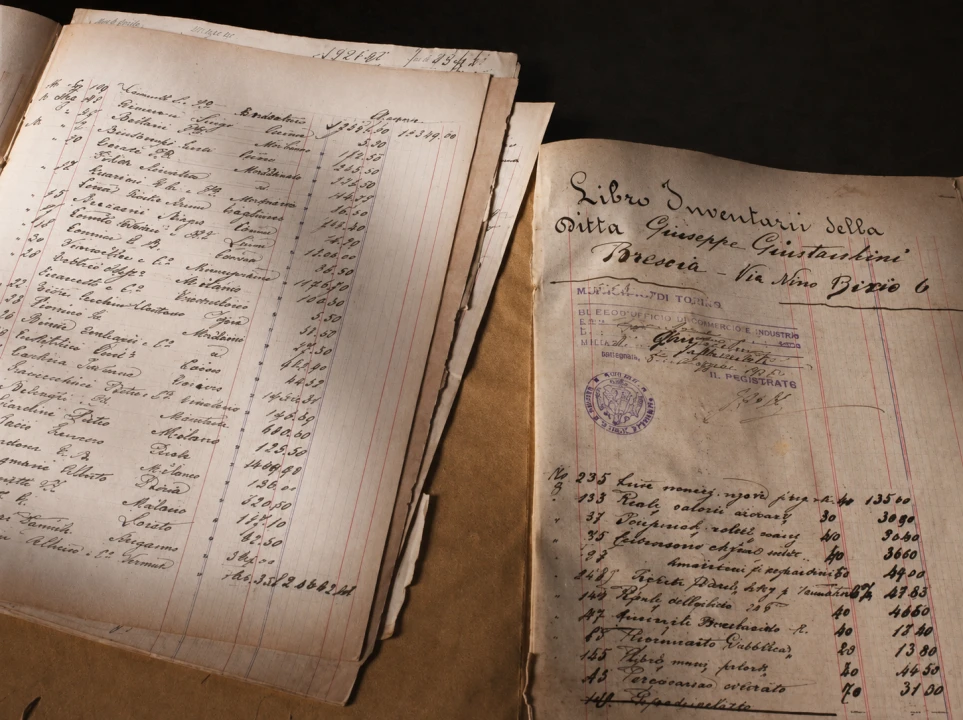

When people think of world records held by Italy, they often picture UNESCO sites, artistic masterpieces, or culinary traditions. Yet one of the country’s most remarkable achievements is far less known outside its borders: Italy is home to an extraordinary concentration of family businesses that have survived for centuries, in some cases for more than half a millennium.
In an age when companies are born and disappear within a few decades, Italy offers a strikingly different model. Across the country, family enterprises continue to operate generation after generation, passing down knowledge, skills, relationships, and values that have survived wars, political upheavals, economic crises, and technological revolutions. The result is a business ecosystem unlike any other in the world.
According to Unioncamere, the Italian Registry of Historic Companies includes more than 2,600 businesses that have remained active for at least 100 years. These firms are found throughout the country, from the Alps to Sicily, and represent virtually every sector imaginable: agriculture, food production, wine, publishing, textiles, jewelry, manufacturing, hospitality, and traditional crafts.
What makes Italy unique is not simply the number of old companies. Many countries have historic businesses. What distinguishes Italy is the combination of longevity, family ownership, and deep local roots. These companies are often inseparable from the towns and regions where they were founded. Their identity is tied not only to a product but also to a place, a family story, and a centuries-old tradition.
One of the most extraordinary examples can be found in Agnone, a small town in the region of Molise. Here, the Pontificia Fonderia Marinelli has been producing bells for churches and cathedrals for nearly a thousand years. According to family tradition, its origins date back to around the year 1000. Over the centuries, Marinelli bells have been installed throughout Italy and around the world. The foundry still employs ancient techniques involving molds made of clay, wax, and bronze. Walking through its workshops is like stepping into the Middle Ages, yet the company continues to operate successfully in the modern economy.
Wine provides another powerful example of Italian continuity. The Antinori family has been involved in winemaking since 1385, when Giovanni di Piero Antinori joined the Florentine winemakers’ guild. More than 640 years later, the family remains one of the most respected names in global wine. The company combines centuries-old traditions with cutting-edge research, international marketing, and sustainable production methods. It demonstrates how Italian family businesses often balance preservation and innovation rather than choosing between them.
A similar story can be found at Castello di Brolio in Tuscany, home to the Ricasoli family since the 12th century. The family played a central role in the development of modern Chianti wine. Bettino Ricasoli, known as the “Iron Baron,” not only served as Prime Minister of Italy but also helped define the wine blend that became the foundation of Chianti’s global success.
Italian longevity is not limited to food and wine. In Gardone Val Trompia, in the province of Brescia, Beretta traces its history back to 1526, when Bartolomeo Beretta supplied gun barrels to the Arsenal of Venice. Nearly five centuries later, the company remains under family control and is one of the oldest industrial businesses in the world.
Other remarkable examples include Acetaia Giusti in Modena, which has produced traditional balsamic vinegar since 1605; Amarelli in Calabria, famous for licorice since 1731; and Nardini in Bassano del Grappa, Italy’s oldest distillery, founded in 1779.
The secret behind these extraordinary survival stories goes beyond good management. Italian family businesses often view themselves as custodians rather than owners. Each generation inherits a responsibility to preserve and strengthen what previous generations built. Decisions are frequently made with a long-term perspective measured in decades rather than quarters.
This mindset reflects a broader characteristic of Italian culture. In many parts of the country, business is not merely an economic activity. It is a form of cultural heritage. A winery, a foundry, a distillery, or a workshop can be as closely tied to local identity as a monument, a church, or a historic square.
That is why Italy’s world record in family entrepreneurship is so remarkable. These companies are not simply old businesses. They are living institutions that connect the present to centuries of history. In a rapidly changing world, they offer a rare example of continuity, proving that innovation and tradition can grow together across generations.