

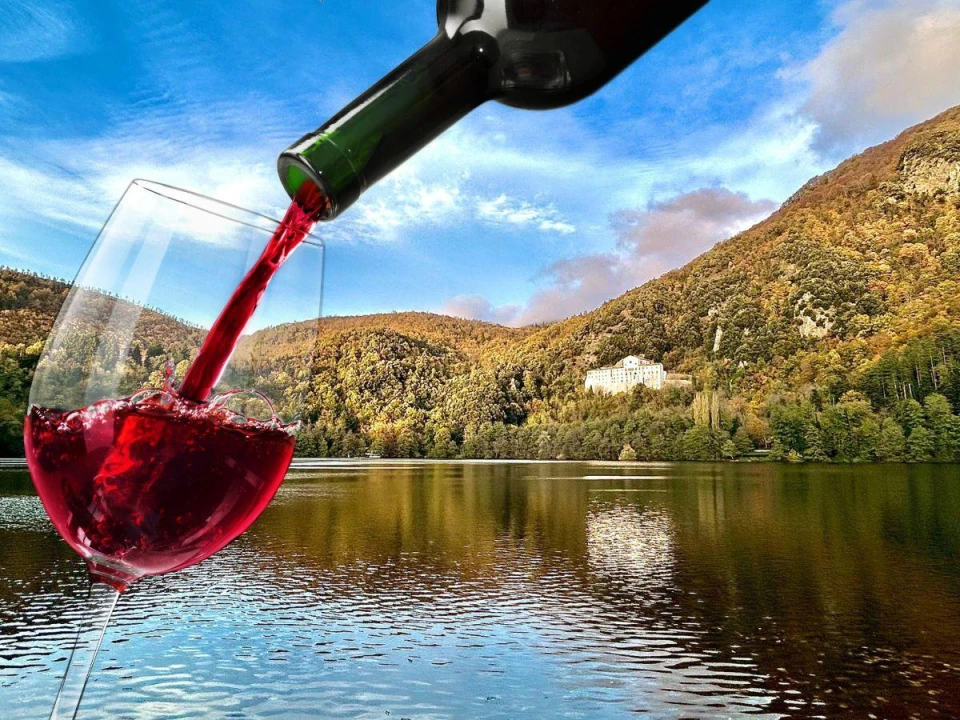

Basilicata is one of Italy’s smallest wine regions, with about 11,000 hectares of vineyards, yet it produces some of the country’s most distinctive and long-lived wines. Unlike better-known regions such as Tuscany or Piedmont, Basilicata remains relatively under the radar, but its wines combine ancient origins, unique geography, and strong character. At the center of this identity is Aglianico, a red grape that dominates local production, accounting for more than 60% of planted vines in some areas.
The history of wine in Basilicata stretches back over 2,000 years, when Greek settlers introduced vine cultivation to southern Italy between the 7th and 6th centuries BC. Over time, the Romans expanded production, recognizing both the quality and the medicinal value of local wines. During the Middle Ages, viticulture continued to develop, supported by monasteries and noble courts. By the 19th century, wines from the Vulture area were already in demand beyond the region, often used to strengthen other Italian wines thanks to their structure and intensity.
The heart of Basilicata’s wine production lies around Mount Vulture, an extinct volcano whose last eruption dates back over 100,000 years. The volcanic soil, rich in minerals and porous in structure, plays a crucial role in shaping the character of the wines. Vineyards are typically planted at elevations between 450 and 600 meters, where temperature swings between day and night help preserve acidity and aromatic complexity. This combination of altitude, soil, and climate creates a unique terroir that cannot easily be replicated elsewhere.
Aglianico del Vulture is the region’s flagship wine and one of southern Italy’s most important reds. Officially recognized as a DOC in 1971 and later elevated to DOCG status for its Superiore version in 2011, it is produced from 100% Aglianico grapes grown on the slopes of the volcano. Production remains relatively limited, with around 22,000 hectoliters annually, reinforcing its reputation as a niche but high-quality wine.
In the glass, Aglianico del Vulture is deep ruby in color, often almost opaque. Its aroma is complex, with notes of ripe cherry, dark berries, spices, and sometimes hints of licorice or cocoa. On the palate, it is full-bodied, structured, and tannic, with a firm backbone that allows it to age for 6–20 years or more. Younger versions can feel intense and slightly rustic, but with time they develop smoother textures and greater balance.
While red wines dominate – accounting for roughly 80%–90% of production – Basilicata also offers a surprising diversity. Alongside Aglianico, producers cultivate grapes such as Sangiovese, Montepulciano, and Primitivo, as well as international varieties like Merlot and Cabernet Sauvignon. White wines, though less common, are made from grapes such as Malvasia Bianca, Greco, and Moscato, typically producing fresh, aromatic styles.
The region includes several denominations beyond Aglianico del Vulture. Matera DOC, located closer to the Ionian coast, produces a range of reds, whites, and sparkling wines, while Terre dell’Alta Val d’Agri DOC and Grottino di Roccanova DOC offer structured reds often aged in caves carved into tuff rock. These smaller appellations highlight the diversity of Basilicata’s landscapes, from volcanic hills to coastal plains.
What makes Basilicata particularly interesting today is the balance between tradition and innovation. Since the 1990s, producers have improved vineyard management by reducing yields and selecting better sites, while also modernizing winemaking techniques such as controlled fermentation and the use of oak barrels. At the same time, many wineries continue to use traditional methods, including aging in large wooden casks or natural cave cellars.
Flavor remains the defining feature of Basilicata wines. They are rarely light or immediate – instead, they tend to be intense, structured, and deeply tied to their environment. The volcanic influence often brings mineral notes and a subtle smoky edge, while the climate ensures both ripeness and freshness. This combination makes them particularly suited to pairing with rich foods such as grilled meats, game, and aged cheeses.
Despite their quality, Basilicata wines are still relatively undiscovered compared to those from northern Italy. This limited visibility, however, is part of their appeal. They offer authenticity, strong regional identity, and a sense of place that is increasingly rare in a globalized wine market.
In the end, Basilicata is not about volume but about character. Its wines tell the story of an ancient land shaped by fire, altitude, and time – a place where tradition continues to evolve without losing its roots.