
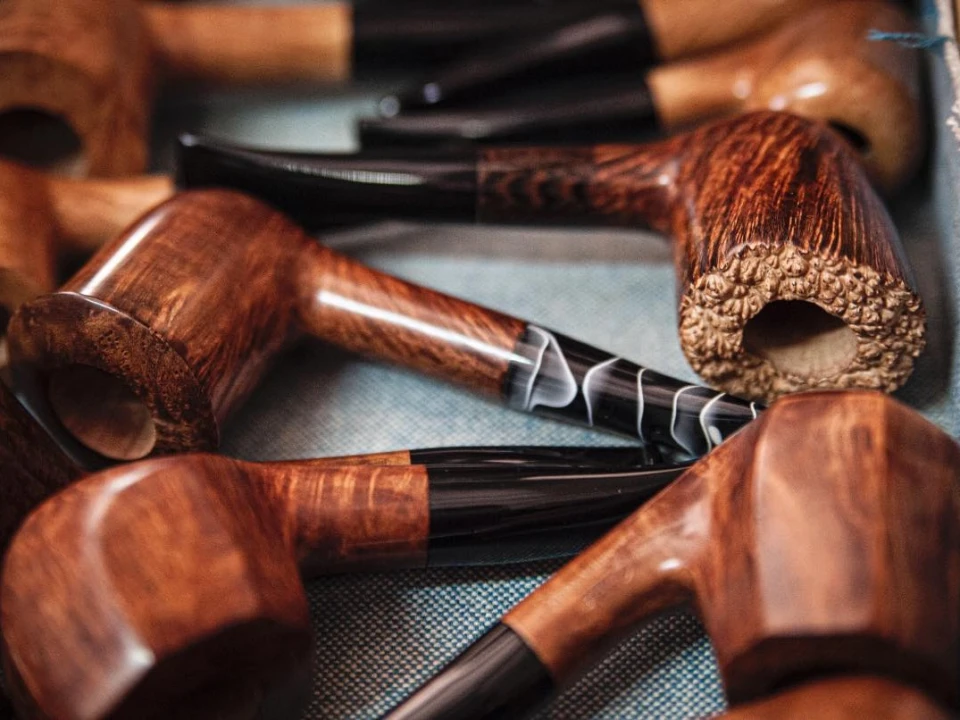

In the mountains of Calabria, a small and little-known production tradition has developed around a very specific object – the smoking pipe. In the province of Vibo Valentia, particularly in towns such as Brognaturo and Serra San Bruno, generations of craftsmen have specialized in creating pipes from a material that grows naturally in the surrounding forests. This activity, though limited in scale, has become one of the most distinctive manufacturing traditions of the region.
The key material used in these pipes is briar, the dense root of the Erica arborea plant. This shrub grows widely in Mediterranean landscapes and is especially abundant in parts of southern Italy. Briar is highly valued for pipe making because it is heat-resistant, lightweight, and durable. Its natural structure also absorbs moisture during smoking, helping create a smoother experience compared with other types of wood.
In Calabria, the harvesting of briar roots typically takes place in mountain areas between 600 and 1,200 meters above sea level. Workers carefully extract the roots from the soil, often selecting plants that are 30–50 years old to ensure the wood has developed the right density. Once removed, the roots are cut into blocks and undergo a long curing process. In many cases the wood is boiled and then dried for several months – sometimes up to 12–24 months – to stabilize its internal structure and prevent cracking during carving.
After the curing stage, pipe production begins. Each block of briar is examined for grain quality, density, and imperfections. Skilled craftsmen then cut and shape the wood using lathes and specialized tools. Although machinery assists in the initial stages, much of the finishing work is still done by hand. Artisans sand, polish, and assemble the different parts of the pipe, including the stem and mouthpiece.
The town of Brognaturo has become particularly associated with this activity. Despite having a population of fewer than 2,000 residents, it has hosted several workshops dedicated to briar processing and pipe manufacturing. Over time, these small producers have built a reputation among pipe collectors and enthusiasts who appreciate the durability and distinctive grain patterns of Calabrian briar.
Historically, a significant portion of the briar harvested in Calabria was exported as raw material rather than transformed locally. France and other European countries developed large pipe-making industries that relied on Mediterranean briar. Estimates suggest that Italy has supplied a notable share of the global briar market for decades, with Calabria playing an important role due to the quality of its wood.
Today the Calabrian pipe sector remains relatively small but continues to attract interest from collectors and specialized markets. Some workshops focus on handcrafted pipes produced in limited numbers, while others concentrate on preparing briar blocks for international manufacturers. The combination of natural resources and technical expertise has allowed this tradition to survive despite the decline in tobacco consumption in many parts of the world.
Although production volumes are modest compared with large manufacturing industries, the Calabrian pipe represents a distinctive example of regional specialization. From the forests where the Erica arborea grows to the workshops where the wood is shaped and polished, the process reflects a close relationship between landscape, material, and craftsmanship. In a mountainous area far from major industrial centers, this small sector continues to transform a simple plant root into an object appreciated by enthusiasts around the globe.