
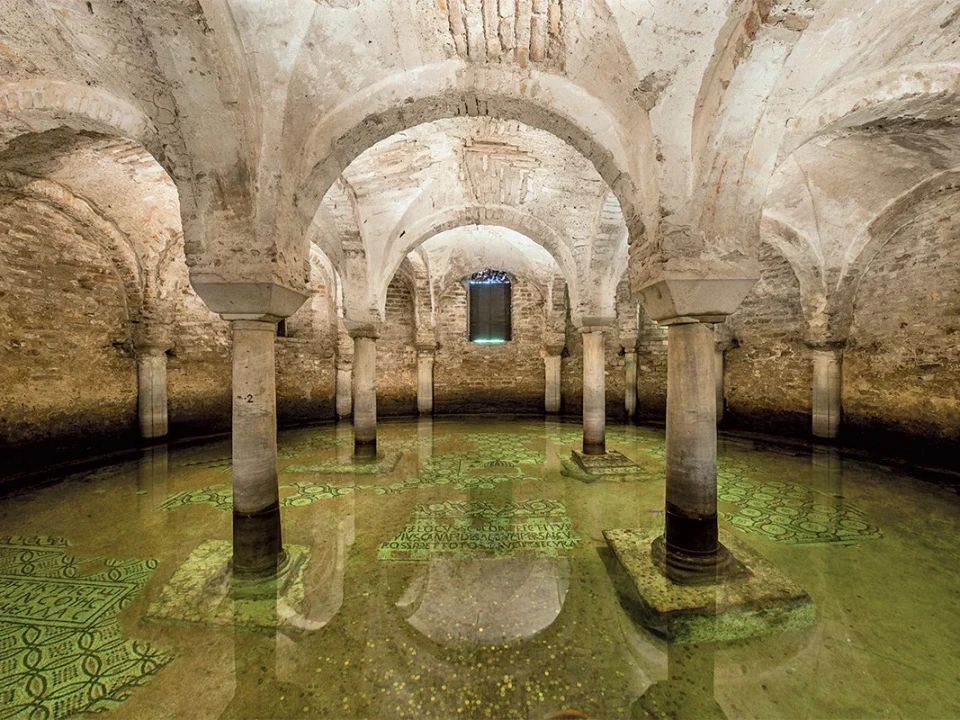

Inside a dim corner of a 5th-century church in Ravenna, a simple gesture reveals an unexpected scene. When a visitor drops a 1-euro coin into a small slot, a soft light switches on for a few minutes. The glow does not illuminate the nave or the altar. Instead, it reveals what lies beneath the Basilica of San Francesco.
Just below the main altar, a narrow opening allows visitors to look down into an underground chamber about two meters below ground level. At first glance it resembles a shallow pool. In reality, it is an ancient crypt that has gradually filled with freshwater over time.
The floor of this crypt is entirely covered with Byzantine mosaics. These intricate designs, created more than 1,500 years ago, were originally meant to remain dry and serve as the decorated surface of a sacred space. Artisans arranged thousands of small tiles into geometric patterns and ornamental motifs typical of early Christian architecture in Ravenna, a city that later became famous for its extraordinary mosaic heritage.
Today those same mosaics lie beneath a thin layer of clear water. The water is not from the nearby Adriatic Sea, even though Ravenna is located only a few kilometers from the coast. Instead, it comes from the underground water table. Seasonal rainfall and subtle variations in sea level cause the water to rise and fall slightly throughout the year. As a result, the crypt never looks exactly the same from one season to the next.
The scene becomes even more unusual because small goldfish swim slowly above the ancient floor. The bright orange fish move quietly across the geometric designs, creating the impression that the mosaic itself is alive. Their movement adds a modern layer to a composition created more than fifteen centuries ago.
For a long time, this underground chamber remained largely unnoticed. Generations of visitors walked across the basilica floor without realizing that a submerged crypt existed just beneath them. The small viewing window below the altar had always been there, but it took the curiosity of modern visitors to transform it into a focal point of attention.
In recent years the flooded crypt has become one of Ravenna’s most intriguing attractions. Travelers from many countries come to see this unusual meeting between art, architecture, and water. It offers a quiet but powerful reminder that historical spaces often evolve in unexpected ways.
Ironically, the water that might seem like a threat to the mosaics may actually help preserve them. The stable aquatic environment protects the surface from air exposure and temperature changes, creating conditions that can slow deterioration. What might appear to be a fragile situation has instead contributed to the survival of these ancient decorations.
Within just a few square meters, visitors encounter the craftsmanship of early Christian artisans alongside the slow, unpredictable behavior of underground water. The flooded crypt also hints at the legacy of Roman hydraulic systems, some of which still influence the movement of water in Ravenna after nearly sixteen centuries.
The crypt beneath the Basilica of San Francesco offers a rare perspective on history. As lights briefly illuminate the water and goldfish drift over the ancient mosaics, the scene reveals how layers of time continue to exist beneath the surface of everyday places. It is a reminder that the past often survives quietly below our feet, waiting to be rediscovered.