

Imagine Robert De Niro, Al Pacino, Sylvester Stallone and Dustin Hoffman. Close your eyes and think about their voices. They’re different, right? Yet in Italy they were all dubbed by the same actor – Ferruccio Amendola, perhaps the most famous male voice actor in the history of Italian dubbing. Here’s another example: Woody Allen and Peter Sellers were both dubbed by Oreste Lionello.
But it is among film and television actresses that we find a record that is almost impossible to match. Maria Pia Di Meo – not only an exceptional voice actress but also a talented performer in her own right – provided the Italian voice for an entire generation of stars: Meryl Streep, Jane Fonda, Shirley MacLaine, Catherine Deneuve, Barbra Streisand, Audrey Hepburn, Julie Andrews, Joanne Woodward, Julie Christie, Ursula Andress, Sandra Dee, Susan Sarandon, Faye Dunaway, Vanessa Redgrave, Mia Farrow, Romy Schneider, Cher and Natalie Wood.
Italy is widely recognized as one of the world’s leading centers for film dubbing, a tradition that has shaped how generations of viewers experience foreign movies and television. Unlike countries where subtitles dominate, Italian audiences have long been accustomed to hearing international actors speak fluent Italian on screen. This distinctive practice has deep historical roots that date back nearly a century.
The development of dubbing in Italy began in the early 1930s, shortly after sound films replaced silent cinema. At that time, international movies were difficult for audiences to understand because language barriers limited their accessibility. The situation changed during the Fascist era, when the government promoted dubbing as both a cultural and political tool. Foreign-language films were required to be translated into Italian, partly to make them understandable and partly to control the content entering the country. In 1934, regulations formally required that most imported films be dubbed domestically.
As a result, a sophisticated dubbing industry quickly emerged. Specialized studios were established in cities such as Rome and Milan, where actors, translators, and sound engineers collaborated to adapt foreign dialogue for Italian audiences. By the 1940s and 1950s – often called the golden age of Italian dubbing – the process had become highly refined. Professional voice actors carefully matched tone, rhythm, and emotion to the performances of the original actors, creating Italian versions that felt natural and convincing.
Over time, certain voice actors became closely associated with specific Hollywood stars. Italian audiences often recognized the voice behind the character as much as the actor on screen. This practice helped create a unique cultural connection between dubbing artists and moviegoers. Many of these performers built long careers lending their voices to dozens, sometimes hundreds, of films and television series.
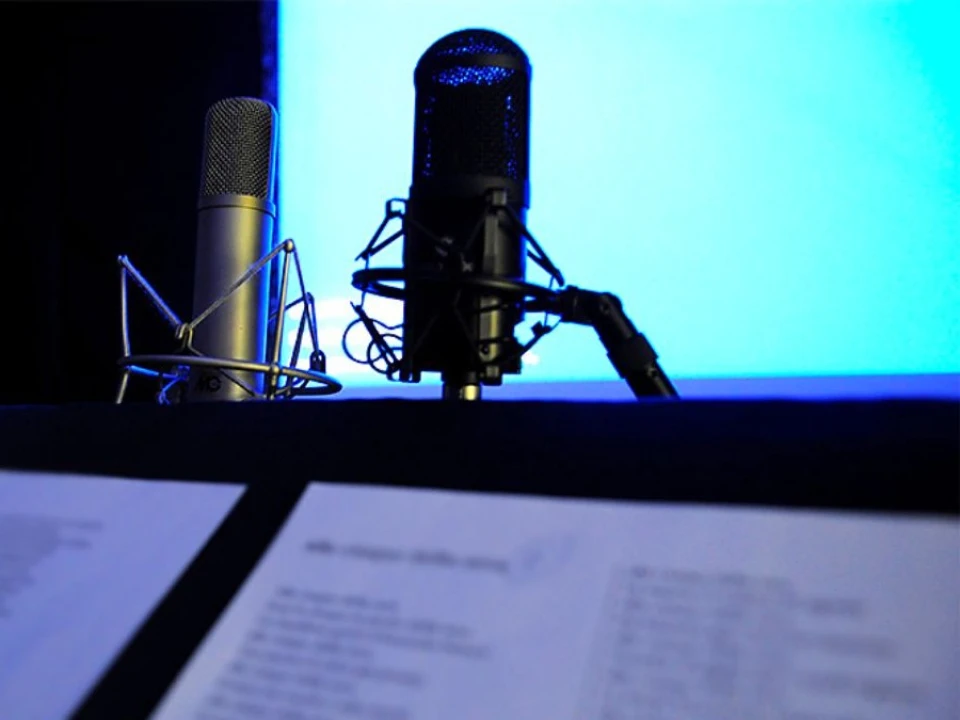
The dubbing process itself is complex and highly technical. Translators must adapt dialogue so that it matches both the meaning and the lip movements of the original performance. Timing is critical, since the spoken Italian must fit within the same seconds as the original line. Recording sessions typically involve multiple actors working in soundproof studios, guided by a dubbing director who ensures consistency and accuracy.
Italy’s dubbing sector grew alongside the expansion of television and international cinema distribution. By the late 20th century, nearly all major foreign films released in Italian theaters were dubbed. Today this remains the dominant format, with estimates suggesting that more than 80% of international movies shown in Italy are presented with Italian-language dubbing rather than subtitles.
Technological changes are now reshaping the industry. Digital tools have streamlined editing, synchronization, and sound mixing, reducing production times compared with traditional analog techniques used decades ago. More recently, artificial intelligence has begun to influence the field. AI-based systems can assist with voice cloning, automatic lip synchronization, and translation, potentially reducing costs and accelerating production.
Despite these innovations, many professionals argue that human interpretation remains essential. Voice actors bring emotional nuance, character identity, and cultural sensitivity that automated systems still struggle to reproduce. For this reason, the future of Italian dubbing may depend on a hybrid model that combines technological efficiency with the artistry of experienced performers.
Nearly 100 years after its origins in the early sound-film era, dubbing remains a defining feature of Italy’s audiovisual culture. The industry continues to adapt to new technologies while preserving a tradition that has shaped how millions of Italians watch movies and television. In a country with a deep passion for cinema, the voices behind the screen remain an integral part of the storytelling experience.