
In ancient times, the city of Taranto in southern Italy was known not only as an important naval center but also as one of the Mediterranean’s most valuable industrial hubs. Its wealth was linked to a rare and highly prized pigment – purple dye. This color, famous throughout the Roman Empire, symbolized authority, prestige, and wealth. During the 1st century AD, Taranto played a central role in producing this luxury material, supplying a product that only the most powerful people in Roman society could afford.
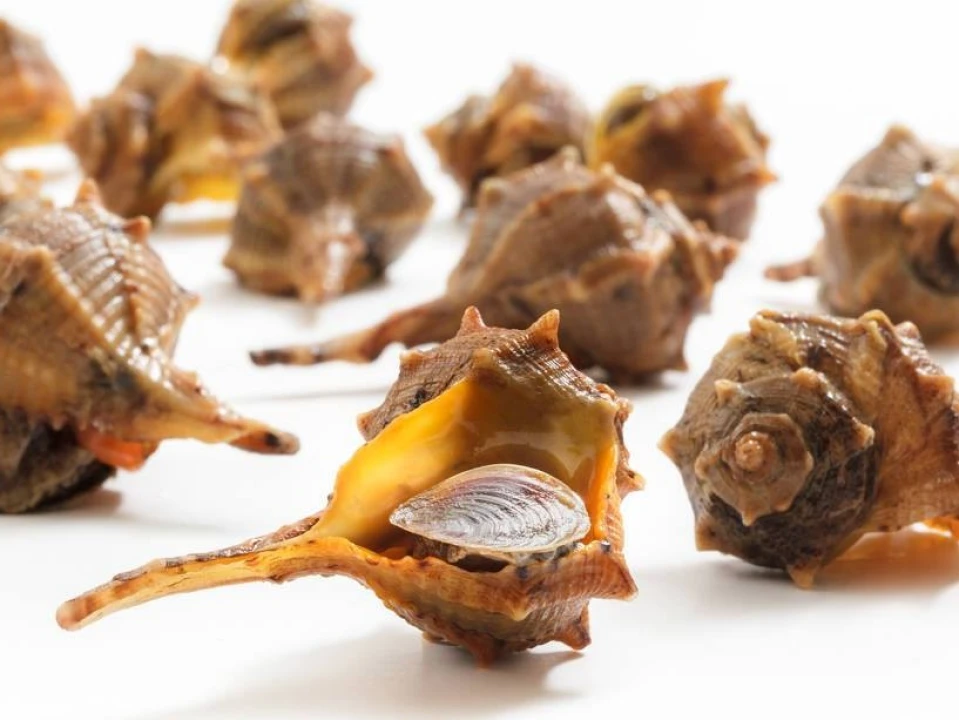
The purple dye was extracted from small sea snails belonging to the murex family, particularly species such as Murex brandaris and Murex trunculus. These mollusks lived in the coastal waters of southern Italy, especially in the Mar Piccolo lagoon near Taranto. Inside each shellfish was a small gland that produced a chemical substance which, after exposure to sunlight and air, transformed into an intense purple pigment.
Producing the dye required enormous quantities of these mollusks. Historical estimates suggest that roughly 12,000 murex shells were needed to obtain about 1.4 grams of pure purple pigment. This extraordinary ratio made the dye one of the most expensive materials in the ancient world. In some cases, 1 gram of purple dye could be worth as much as 10 grams of gold.
Because of its rarity and cost, purple cloth became a powerful symbol of political status. In Roman society the color was closely associated with authority. Certain garments dyed in purple were reserved exclusively for senators and emperors. Wearing a toga or cloak tinted with this pigment immediately signaled wealth and influence. The color itself became so connected to imperial power that the phrase “born in the purple” later came to describe members of ruling dynasties.
Taranto developed an organized production system to support this industry. Archaeological evidence suggests that large processing areas existed near the shoreline of the Mar Piccolo. Artisans collected the shells, broke them open, and extracted the small glands needed for dye production. The mixture was then processed in stone basins or vats where chemical reactions produced the final pigment.
Excavations conducted between the 1970s and 2020 uncovered several traces of this activity. Researchers discovered fragments of amphorae, processing containers, and piles of broken shells, evidence of the massive quantities of mollusks used in dye production. In some areas these shells accumulated into large deposits sometimes referred to as “shell hills,” formed from centuries of industrial waste.
Ancient writers also described the industry. The Greek geographer Strabo mentioned the strong smell associated with purple dye production. The process required fermenting organic materials and processing thousands of shells, creating odors that were reportedly intense and difficult to ignore. Despite this unpleasant aspect, the economic value of the dye made the activity extremely profitable.
The purple pigment produced in Taranto was widely distributed across the Roman world. Textiles dyed with this color appeared in ceremonial clothing, decorative fabrics, and luxury garments. Some sources referred to the local product as Rubra Tarantina, highlighting its reputation throughout the Mediterranean.
After the decline of the Roman Empire, large-scale purple dye production gradually disappeared. The knowledge required to produce the pigment became rare, and by the Middle Ages much of the original technique had been lost. Later attempts to recreate ancient purple dyes required new experimentation and research.
Today Taranto no longer produces imperial purple, but archaeological discoveries continue to reveal the scale of the ancient industry. What once filled the harbor with the smell of fermentation and shellfish is now part of the city’s historical identity – a reminder that Taranto was once a center of one of the most valuable chemical industries of the ancient world.