
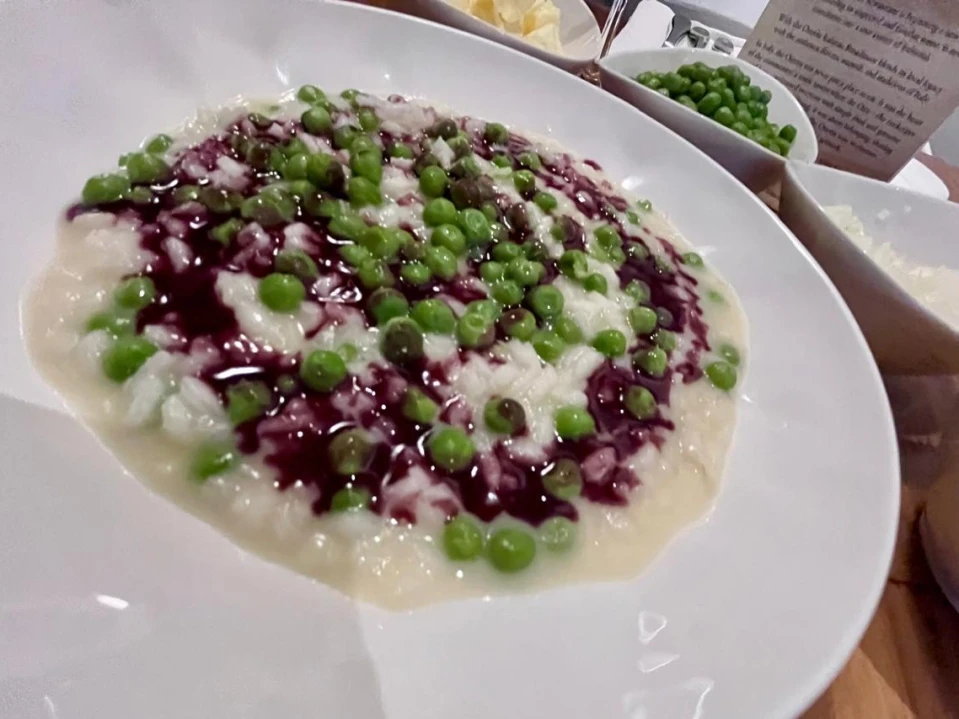

Risi e Bisi is one of the most iconic dishes in the culinary tradition of the Veneto region, closely tied to the history of the Republic of Venice. It was traditionally served to the Doge on April 25, the feast day of Saint Mark – the patron saint of Venice – as a symbol of prosperity and abundance.
Its traditional texture is described as all’onda (“wave-like”) – softer and creamier than a classic risotto, yet not as liquid as a soup. The rice most commonly used is Vialone Nano, prized for its ability to release starch while maintaining a firm structure.
Risi e Bisi was considered the official dish of the Serenissima Republic. It became a symbol of spring thanks to the use of fresh young peas. A popular saying paired it with strawberries – “Risi e bisi e fragole” – referencing the colors of the Italian flag. Traditionally, the broth was also made with the pea pods so that nothing would be wasted.
The Biso de Borso, the pea grown in Borso del Grappa in the province of Treviso, is widely considered one of the best varieties for preparing this dish.
Why it works so well for Risi e Bisi: it has a naturally sweeter flavor thanks to the rich soil at the base of Monte Grappa; the skin is thin and tender, so it does not require long cooking times: t is rich in natural sugars that enhance the creaminess of the rice; it keeps a bright green color even after cooking: its velvety texture contributes to the dish’s characteristic all’onda finish.
Traditional Recipe (Serves 4)
Ingredients
- 320 g Vialone Nano rice
- 500–600 g fresh peas (preferably Biso de Borso)
- 1 white onion
- 50 g butter
- 2 tablespoons extra-virgin olive oil
- 50 g grated Parmigiano Reggiano
- Vegetable broth (preferably made using the pea pods)
- Salt and pepper to taste
Preparation
- Prepare the broth using the pea pods.
- Gently sauté the onion in olive oil.
- Add the peas and let them absorb the flavors.
- Add the rice and begin cooking, gradually adding broth.
- Cook for about 15–17 minutes, keeping the texture soft and creamy.
- Remove from heat and finish by stirring in the butter and Parmigiano.
- Serve with the classic all’onda
After finishing the risotto and plating it, you can drizzle a reduction of red wine – for example Valpolicella – that has been simmered in a small saucepan until it reaches a syrupy consistency.
The red wine adds an elegant contrast between the sweetness of the peas and the wine’s fruity, tannic notes, giving the dish greater aromatic depth.
Risi e Bisi is not just a dish – it is a symbol of Venetian agricultural culture and the gastronomic tradition of the Serenissima. Using Biso de Borso elevates the recipe even further, making it one of the purest expressions of the Italian springtime table.