

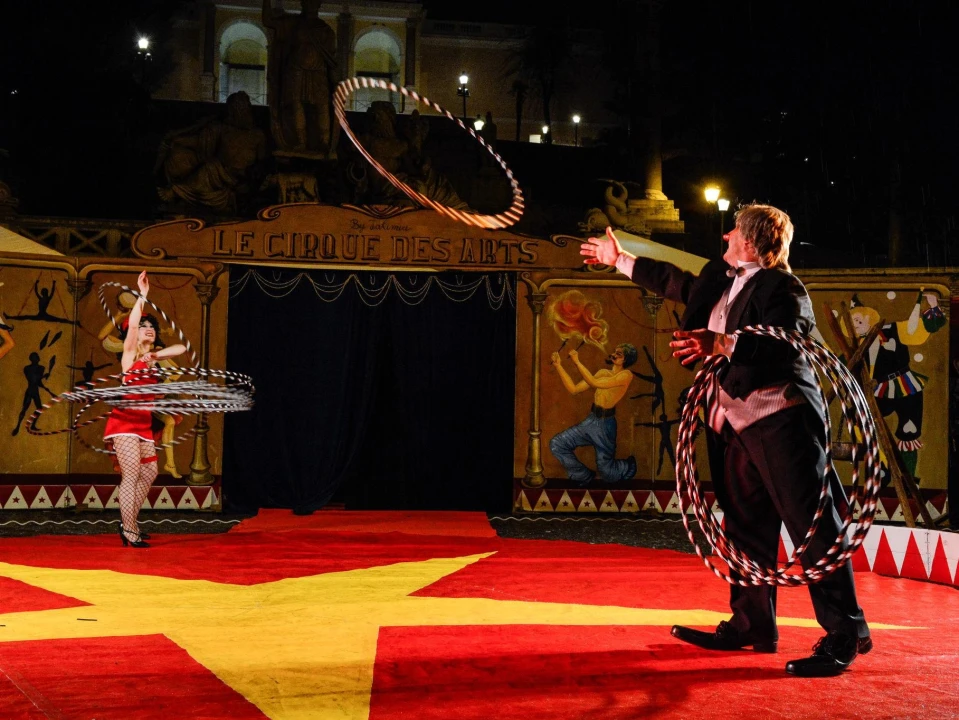

When discussing the history of the circus in Italy, two regions stand above all others: Lombardy and Veneto. For more than two centuries, these neighboring regions have been the center of Italy’s circus world, producing many of the country’s most famous families, performers, entrepreneurs, and traveling shows. Even today, Lombardy and Veneto remain the areas where the Italian circus is strongest, preserving traditions that have shaped one of the most distinctive circus cultures in the world.
The origins of the modern circus can be traced to the late eighteenth century, when equestrian spectacles inspired by English showman Philip Astley began spreading across Europe. In Italy, these performances merged with older traditions of street entertainers, acrobats, jugglers, musicians, animal trainers, and traveling performers who had long animated fairs and public squares. Over time, these influences evolved into a uniquely Italian form of circus entertainment.
By the nineteenth century, circus families had become an integral part of Italian cultural life. Unlike many other professions, circus skills were typically passed directly from one generation to the next. Entire families traveled together, sharing not only their work but also their daily lives. Children learned acrobatics, balancing acts, juggling, horsemanship, music, and technical skills from their parents and grandparents, creating a strong sense of continuity that remains one of the defining features of the Italian circus.
Lombardy played a particularly important role in this development. The provinces of Bergamo, Brescia, and Mantua became home to numerous circus dynasties whose names would later become famous throughout Europe. These areas produced generations of performers and entrepreneurs who transformed family businesses into internationally respected institutions. Many of Italy’s largest circus companies established their operational bases in Lombardy, helping the region become one of the principal centers of the European circus industry.
Veneto developed an equally important connection to the world of traveling entertainment. In particular, the area around Bergantino and Melara, in the province of Rovigo, became internationally known as the “Amusement Ride District.” This unique industrial cluster grew from families involved in fairs, carnivals, and traveling shows and eventually developed into a global center for the design and manufacture of amusement rides, attractions, and entertainment equipment. Today, companies from this district export their products around the world, demonstrating how circus culture helped generate a broader entertainment industry.
Among the most celebrated names in Italian circus history is the Orfei family. Thanks largely to the extraordinary success of Moira Orfei, the Italian circus achieved unprecedented visibility during the second half of the twentieth century. With her distinctive style, charisma, and entrepreneurial talent, she became the symbol of a tradition that combined spectacle, family heritage, and popular culture.
Another legendary name is the Togni family. The Circo Americano dei Fratelli Togni became one of Europe’s most prestigious circus organizations, known for its large productions, international performers, and innovative presentations. For decades, it represented Italian circus excellence around the world.
What makes the Italian circus particularly distinctive compared with circus traditions in other countries is its deeply family-centered structure. In nations such as France, Germany, the United Kingdom, or the United States, performers are often recruited from professional schools and then hired by independent companies. In Italy, however, the circus has traditionally remained a family enterprise. Skills, values, and professional knowledge are transmitted within the family itself, creating a culture that blends business, education, and artistic expression.
Another characteristic that sets the Italian circus apart is the versatility of its performers. Historically, members of circus families often mastered multiple disciplines rather than specializing in only one. An artist might simultaneously perform as an acrobat, juggler, musician, technician, animal trainer, or equestrian performer. This flexibility allowed Italian circuses to adapt quickly to changing audiences and economic conditions while maintaining a high level of artistic diversity.
The Italian circus is also distinguished by its entrepreneurial spirit. Many circus families were not only performers but also innovators and manufacturers. They designed tents, transportation systems, lighting equipment, stage technologies, and, in the case of Veneto, amusement rides and attractions. This close relationship between artistic creativity and industrial production is far less common in many other circus traditions around the world.
Equally important is the circus’s connection to local communities. For generations, the arrival of a circus in an Italian town was one of the most anticipated events of the year. Circuses often coincided with religious festivals, local celebrations, and seasonal fairs, creating strong bonds between performers and audiences. This close relationship helped preserve the circus as a popular and accessible form of entertainment deeply rooted in everyday life.
Mobility has always been another essential element of circus culture. Traveling continuously from city to city and often across national borders, circus families created networks that connected different regions and countries. This itinerant lifestyle encouraged the exchange of techniques, ideas, and innovations while strengthening the sense of belonging to a unique professional community.
Today, the Italian circus is undergoing significant transformation. Alongside traditional big-top productions, contemporary circus companies are increasingly incorporating theater, dance, music, multimedia technology, and visual arts. Yet despite these changes, the historical foundations remain remarkably strong.
Lombardy and Veneto continue to be the beating heart of this world. They are home to many of the most important circus families, specialized manufacturers, training institutions, and entertainment companies that sustain the industry. More importantly, they preserve a cultural heritage built on family bonds, craftsmanship, creativity, entrepreneurship, and a remarkable ability to adapt.
In a rapidly changing entertainment landscape, the Italian circus remains a living tradition. Its strength lies not only in spectacular performances but also in a unique way of life that has been passed down through generations. And nowhere is that heritage more visible than in Lombardy and Veneto, the regions where the story of the Italian circus continues to evolve while remaining deeply connected to its roots.