

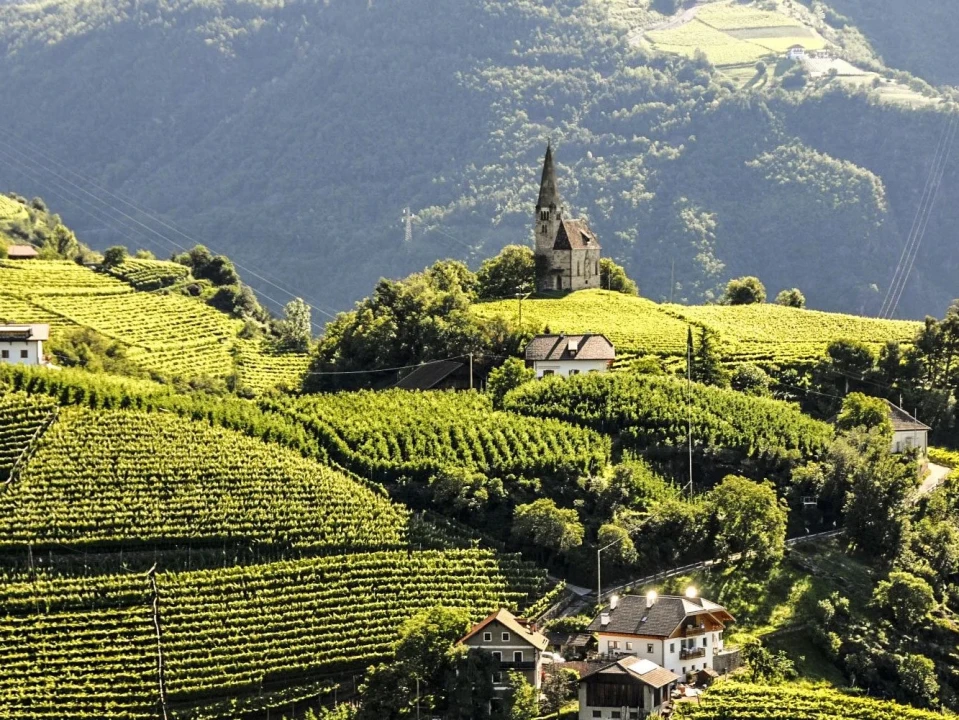

Trentino Alto Adige, perched between the Dolomites and the central Alps, is Italy’s northernmost wine region – and one of its most distinctive. Vineyards climb terraces from 200 to 1,000 meters, hugging steep slopes where the climate shifts from valley warmth to alpine crispness. This mosaic of altitudes and exposures creates wines with clarity, balance, and unmistakable character.
Although the vineyard surface is only about 15,000 hectares – less than 3% of Italy’s total – the output is among the country’s most respected. More than 98% of production qualifies as DOC, the highest proportion nationwide. Annual volumes reach around 1.2 million hectoliters, yet the emphasis is always on quality rather than quantity. The region’s patchwork of microclimates means that each valley, hillside, and even single plot can produce wines with unique signatures.
Trentino in the south leans toward versatility. Its flagship grape is Teroldego, native to the Rotaliano plain. This red variety delivers deep color, vibrant acidity, and flavors of blackberry, plum, and spice. Structured yet approachable, it has earned recognition as one of Italy’s great indigenous grapes. Marzemino, another local red, is lighter, with floral aromas and supple tannins – elegant and often enjoyed young. Pinot Grigio, widespread here, achieves remarkable precision: citrus, green apple, and a mineral streak that reflects alpine freshness. Chardonnay and Pinot Noir, planted at higher altitudes, form the backbone of Trentodoc, Italy’s first sparkling wine appellation crafted with the classic method. Trentodoc today produces over 9 million bottles a year – crisp, refined bubbles that stand proudly beside Champagne.
Alto Adige, or Südtirol, presents a different profile. Roughly two-thirds of its vineyards are devoted to white grapes, and the results are stunning. Gewürztraminer is perhaps its most emblematic wine – aromatic, perfumed with rose, lychee, and exotic spice, yet balanced by cool-climate acidity. Pinot Bianco shows elegance and restraint, often with notes of pear and almond. Sauvignon Blanc thrives in higher vineyards, producing wines with vibrant citrus and herbal tones. Pinot Grigio here is taut and structured, proving that the grape can deliver much more than mass-market simplicity.
Red wines of Alto Adige are equally distinctive. Lagrein, grown near Bolzano, yields dark, powerful wines with flavors of blackberry, cocoa, and violet, structured by firm tannins. Schiava (known locally as Vernatsch) offers the opposite – light, fruity reds with delicate aromas of cherry and almond, perfect for everyday enjoyment. Together they illustrate the diversity of a small but varied territory: from bold, cellar-worthy reds to easy-drinking alpine styles.
The secret behind this diversity lies in terroir. Soils range from porphyry and quartz to limestone and dolomite. Sun exposure varies dramatically between south-facing terraces and shaded mountain valleys. Altitude brings cooler nights, preserving acidity and aromatic intensity. Annual rainfall averages around 1,000 millimeters, but winds like the Ora del Garda sweep through valleys, reducing humidity and protecting grapes from disease. This natural ventilation allows sustainable practices, and many growers now embrace organic or biodynamic viticulture.
History has also shaped the region’s wine identity. Vines were cultivated here in Roman times, and medieval monasteries preserved traditions on terraced hillsides. Centuries of Habsburg rule introduced Germanic varieties and cellar discipline. After World War I the region became Italian, blending Mediterranean influences with existing alpine heritage. Today, this dual legacy is visible in everything from grape choices to winemaking styles – a true crossroads of culture in a glass.
Cooperatives are the backbone of production. Around 70% of growers belong to cooperative wineries, a necessity in a land where plots are tiny and slopes steep. These cooperatives, however, are not anonymous factories – many are recognized for excellence, bottling single-vineyard selections and pushing innovation. Alongside them, family estates and boutique producers experiment with old vines, high-altitude plantings, and new blends. The dynamic between collective strength and artisanal precision keeps the region’s wine culture vibrant.
Numbers highlight the balance between tradition and innovation. Pinot Grigio accounts for about 15% of total vineyard area. Schiava still covers a large share of Alto Adige plantings, though in decline as Lagrein and international varieties gain ground. Gewürztraminer from the village of Tramin – the grape’s spiritual home – is exported worldwide. Teroldego’s reputation continues to rise, with more producers aging it in wood to reveal depth and complexity. And Trentodoc has become Italy’s benchmark sparkling wine, praised for its mountain freshness and long aging potential.
Wine here is more than commerce – it is identity. Festivals in autumn celebrate the harvest with open cellars and tastings. Families gather around tables with canederli and speck paired with Pinot Bianco, or polenta with Teroldego. A glass of Schiava at a summer picnic, Gewürztraminer with apple strudel, Trentodoc for life’s milestones – wine flows naturally through daily life.
Challenges remain. Climate change pushes cultivation ever higher, with experimental vineyards now above 1,000 meters. Heat waves test delicate varieties, while water management becomes increasingly urgent. Yet resilience defines Trentino Alto Adige. Innovative canopy practices, organic farming, and renewed focus on indigenous grapes promise a future where authenticity is preserved.
To taste a wine from these valleys is to drink the mountains – sharp air, bright sun, and centuries of dedication captured in a glass. Trentino Alto Adige may be small, but every bottle tells a grand story of altitude, precision, and cultural fusion. Few regions demonstrate so clearly how geography and history shape flavor. Here, vines do not simply grow – they thrive, speaking the language of the Alps with every sip.