

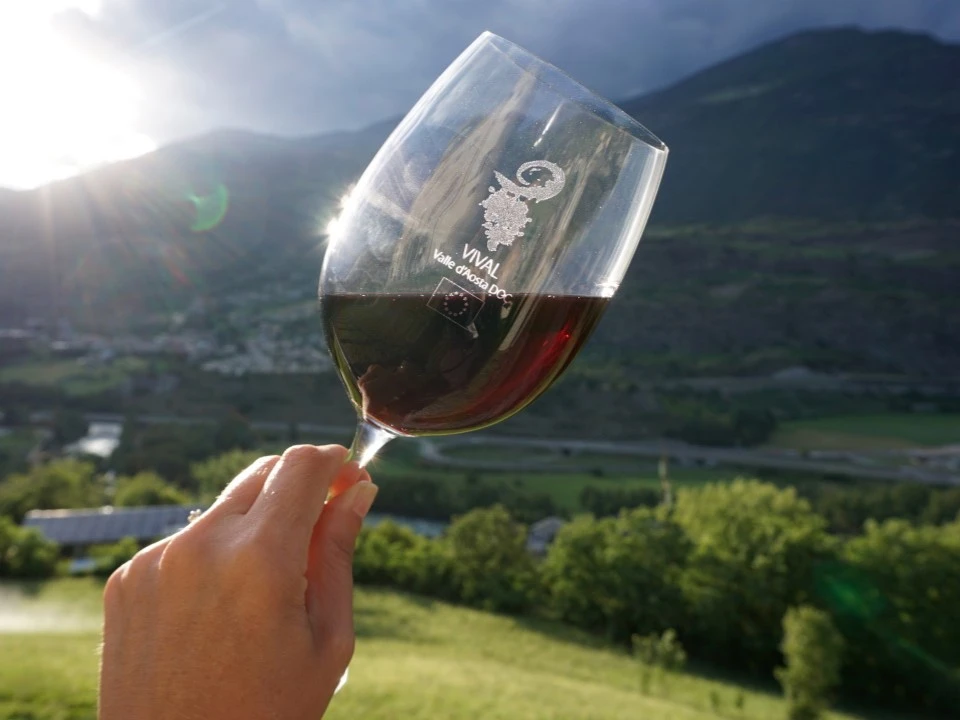

In the Alps of northwestern Italy lies Valle d’Aosta – Italy’s smallest wine region, with vineyards clinging to steep slopes and terraces along the valley carved by the Dora Baltea river. Though modest in size, the region produces wines of remarkable character, shaped by mountain soil, altitude, and a long tradition of viticulture under challenging conditions.
The region’s official classification, Valle d'Aosta DOC, encompasses a wide array of wine styles – red, white, rosé, sparkling, late‑harvest – often linked to sub‑zones and grape varieties that reflect the diverse terroir.
Many of the grapes cultivated here are native – local varieties such as Petit Rouge, Fumin, Cornalin, and Prié Blanc remain central. Others like Pinot Noir, Chardonnay or Nebbiolo (known locally as “Picotendro”) have found their niche too.
On the red‑wine front, blends based on Petit Rouge often define the regional profile. Wines from sub‑zones like Torrette deliver medium‑ to full‑bodied wines with vibrant red fruits, light spice, and fresh acidity – sometimes a bit chill‑served, recalling lighter Alpine reds more than heavy lowland wines. Fumin and Cornalin add deeper color and earthy or dark‑fruit notes for those seeking more structure and complexity.
White wines also stand out, especially those from Prié Blanc – often under the sub‑zone Blanc de Morgex et de La Salle – offering crisp acidity, mineral clarity, and delightful citrus or floral aromas that reflect the high‑altitude vineyards. Other whites from Chardonnay, Pinot Gris, or local grapes complement the range, and occasionally even sparkling and passito (late‑harvest) wines add further variety.
Viticulture here is often defined as “heroic”: vineyards carved into steep alpine slopes, many at high elevation, requiring terracing and manual work. That difficult geography gives the wines a distinctive Alpine edge – vivid acidity, clean mineral notes, and a sense of mountain freshness.
Because of its limited size and production – around 400 hectares under vine – Valle d’Aosta offers wines that remain rare and often underappreciated beyond their home region. But that scarcity contributes to their charm: each bottle feels like a small treasure, a true expression of alpine soil, altitude, and tradition.
Exploring these wines is a journey through contrasting styles – from light, fragrant reds meant to be enjoyed slightly chilled, to structured, earthy reds, crisp whites born in mountain vineyards, and occasionally delicate sparkling or late‑harvest wines.
For anyone interested in discovering Italian wines beyond the usual regions, Valle d’Aosta offers a compelling, authentic experience – wines that reflect a unique landscape, a small‑scale terroir, and generations of careful winemaking under difficult but beautiful natural conditions.