
Among the many treasures of Italian pastry-making, some of the most memorable are also the simplest. In Liguria, a region internationally celebrated for its pesto, olive oil, seafood, and extraordinary coastal landscapes, one traditional sweet demonstrates how a handful of ingredients can become an enduring symbol of local craftsmanship.
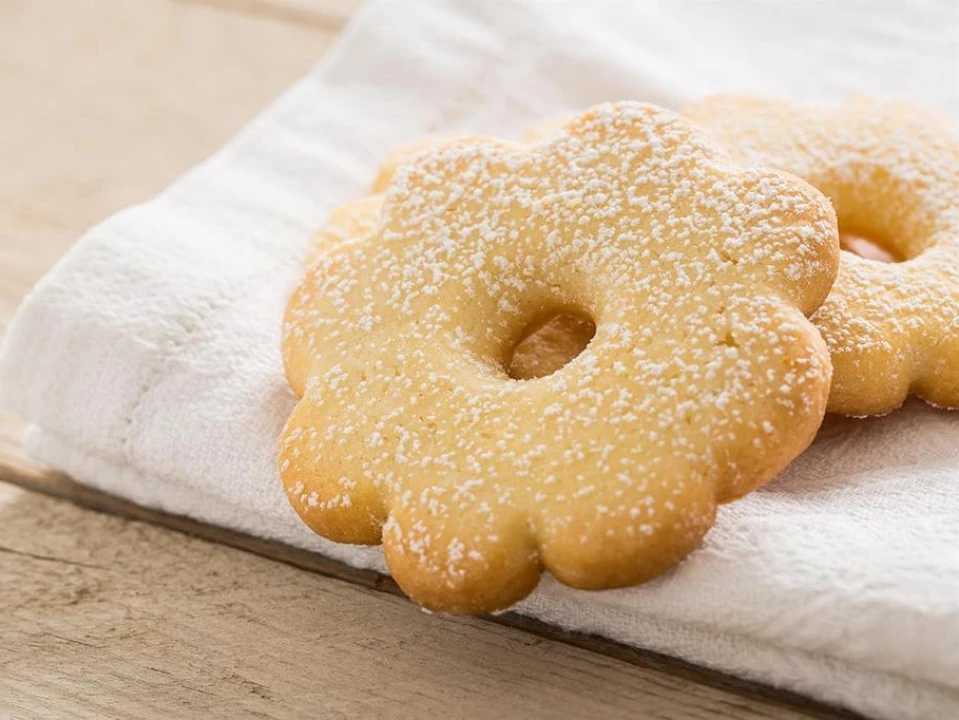
Canestrelli are delicate, buttery cookies distinguished by their characteristic flower shape, central opening, and generous dusting of powdered sugar. Their appearance is immediately recognizable, but their cultural significance extends beyond their elegant simplicity.
These traditional cookies are particularly associated with the inland valleys of the province of Genoa, especially the Val Trebbia and the village of Torriglia, where their production has become an important expression of local gastronomic identity.
Unlike desserts reserved for particular religious celebrations or holidays, canestrelli can be enjoyed throughout the year. They accompany coffee, afternoon tea, family gatherings, and the everyday pleasure of something sweet prepared according to a familiar recipe.
Their history reflects the broader development of Ligurian baking traditions, which combined local agricultural resources with ingredients circulating through Genoa's extensive commercial networks.
The name canestrello has a long history in Italian gastronomy and has been associated with different baked preparations in various regions. Historical references to canestrelli do not always describe the same cookies known today, making it difficult to establish a single precise date for the origins of the modern Ligurian version.
Nevertheless, the flower-shaped butter cookie became firmly established in the culinary traditions of the Genoese hinterland, where artisan bakeries helped preserve its distinctive characteristics.
The ingredients are remarkably straightforward: flour, butter, sugar, and egg yolks, sometimes accompanied by vanilla or lemon zest.
Some traditional recipes use hard-boiled egg yolks rather than raw ones, a technique that contributes to the particularly delicate and crumbly consistency of the finished pastry.
The secret lies in the balance between ingredients and preparation.
The butter must be incorporated carefully into the dough, producing a texture that is rich without becoming heavy. Excessive handling can compromise the desired consistency, while proper resting helps maintain the shape during baking.
The dough is rolled out and cut into small flowers, usually with six rounded petals and a circular opening in the center.
This recognizable silhouette is more than a decorative choice. It has become an identifying feature of the specialty, distinguishing canestrelli from countless other Italian butter cookies.
Baking requires particular attention. Traditional canestrelli should remain relatively pale, with only a delicate golden color. Excessive browning would alter their flavor and compromise the tender texture that makes them distinctive.
Once cooled, the cookies are covered with powdered sugar, creating the elegant white appearance that completes their presentation.
The first bite reveals their defining characteristic: a fragile, almost melting consistency that gives way to the richness of butter and the subtle sweetness of the dough.
There are no elaborate fillings, complex decorations, or contrasting layers. The quality of the result depends almost entirely on the ingredients and the skill of the baker.
This simplicity connects canestrelli with an important aspect of Italian culinary culture: the belief that excellent raw materials and careful preparation can be more valuable than unnecessary complexity.
In Torriglia, canestrelli have become closely associated with the town's identity. Local pastry shops and bakeries maintain their own recipes, and the cookies represent a recognizable specialty of the surrounding territory.
Their reputation also reflects the importance of Italy's smaller communities in preserving traditional food production.
While Genoa's maritime history and coastal scenery attract international attention, the region's inland valleys possess a culinary heritage shaped by rural life, family businesses, and generations of artisanal knowledge.
These territories are home to numerous distinctive products that rarely receive the same international recognition as Italy's most famous foods.
Canestrelli offer an opportunity to discover this lesser-known dimension of Ligurian gastronomy.
They also demonstrate how regional specialties can develop strong identities without requiring industrial-scale production. The relationship between a particular recipe, a local community, and the reputation of its artisans remains essential.
Today, canestrelli are produced by both small bakeries and larger food companies, making them available well beyond Liguria.
Their popularity has introduced the traditional flower-shaped cookie to consumers throughout Italy and abroad, while artisan producers continue emphasizing the quality and authenticity of their preparations.
For Italian Americans interested in rediscovering regional family traditions, canestrelli represent an accessible connection with Ligurian food culture.
They require no elaborate ceremony and belong to no single season. Their appeal comes from the everyday pleasure of sharing something carefully made.
In a country famous for spectacular desserts, canestrelli remind us that Italian pastry excellence can also be expressed through restraint.
A little butter, flour, sugar, and patient craftsmanship are enough to create a specialty that has become part of Liguria's culinary identity.
Sometimes the most enduring traditions are the ones that make ordinary moments extraordinary.