

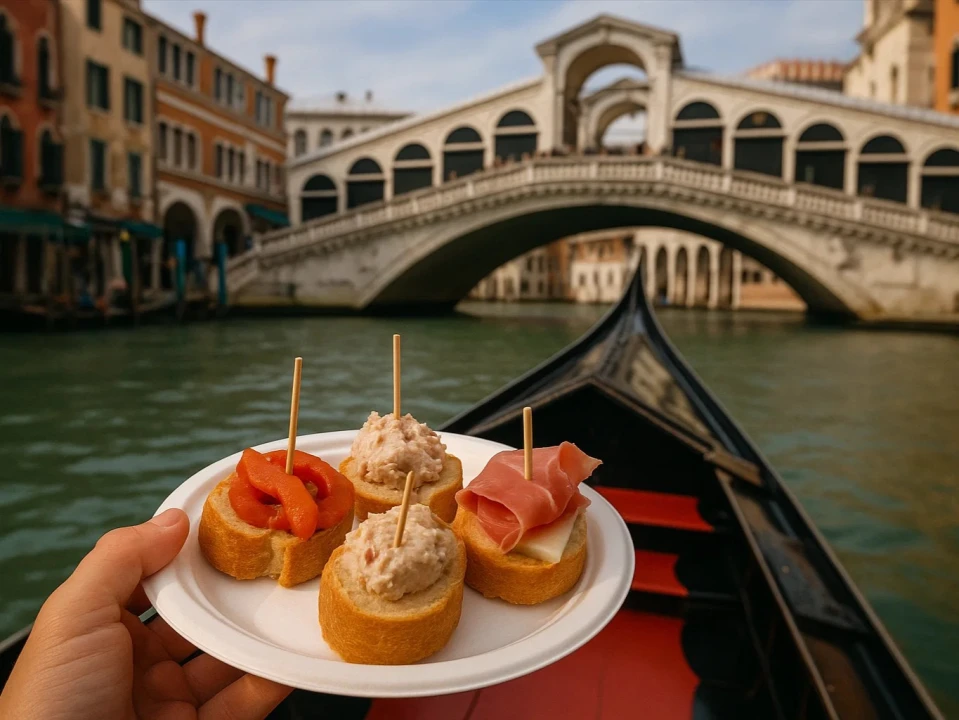

Cicchetti are Venice’s answer to street food, but their story begins long before the modern idea of grab-and-go eating. The tradition dates back to around the 1400s, when merchants and traders stopped near the Rialto market to rest, close deals, and enjoy a quick bite with a glass of wine. What started as a practical habit gradually became a defining feature of Venetian daily life.
The word itself comes from the Latin “ciccus,” meaning “small quantity,” which perfectly describes their nature. Cicchetti are small, flavorful bites designed to be eaten quickly, often without utensils, making them one of the earliest forms of European fast food. Unlike industrial fast food, however, they rely on fresh, local ingredients and traditional recipes shaped by centuries of trade and cultural exchange.
At their core, cicchetti are simple but highly varied. They can be served on slices of bread, small pieces of polenta, or as fried bites. Common ingredients include seafood, cured meats, cheeses, and seasonal vegetables. Among the most iconic versions is baccalà mantecato – a creamy spread made from salted cod – typically served on toasted bread. Other classics include sardines prepared in sweet-and-sour sauce, small meatballs, marinated anchovies, and fried vegetables.
This variety reflects Venice’s history as a global trading hub. At its peak, the city imported thousands of tons of spices and goods each year, blending local lagoon products with influences from across the Mediterranean and beyond. That same mix of cultures still defines cicchetti today, where traditional recipes coexist with modern interpretations.
Cicchetti are not just about what you eat, but how you eat. They are typically served in bacari, small wine bars with limited seating, where the experience is informal and social. The idea is not to sit down for a full meal, but to move from place to place, sampling different bites along the way. This practice is often compared to Spanish tapas, but in Venice it follows its own rhythm and rituals.
A key element of the experience is the “ombra,” a small glass of wine traditionally enjoyed alongside each cicchetto. The term dates back to when wine sellers in St. Mark’s Square would keep their barrels in the shadow of the bell tower to stay cool. Today, pairing cicchetti with wine remains essential, turning a quick snack into a social ritual.
One of the most distinctive aspects of cicchetti culture is the way people eat them. Instead of ordering a single dish, locals usually select two or three pieces at a time, eat them standing at the counter or outside, and then move on to another bacaro. Over the course of an evening, this can turn into a progressive meal made up of multiple stops, each offering a slightly different atmosphere and selection.
Prices are traditionally accessible, with most cicchetti costing between 1 and 3 euros, making them an affordable way to experience Venetian cuisine. This accessibility has always been part of their identity – a food for everyone, from merchants centuries ago to locals and visitors today.
What makes cicchetti unique is their balance between simplicity and depth. Each bite is small, but it carries layers of flavor and history. They are not designed to impress through presentation or size, but through taste, quality, and context. Eating cicchetti means stepping into a rhythm that is distinctly Venetian – unhurried, social, and rooted in everyday life.
In the end, cicchetti are more than just street food. They represent a way of experiencing Venice that goes beyond landmarks and postcards. They invite you to slow down, to explore, and to connect with the city through its most authentic spaces.