
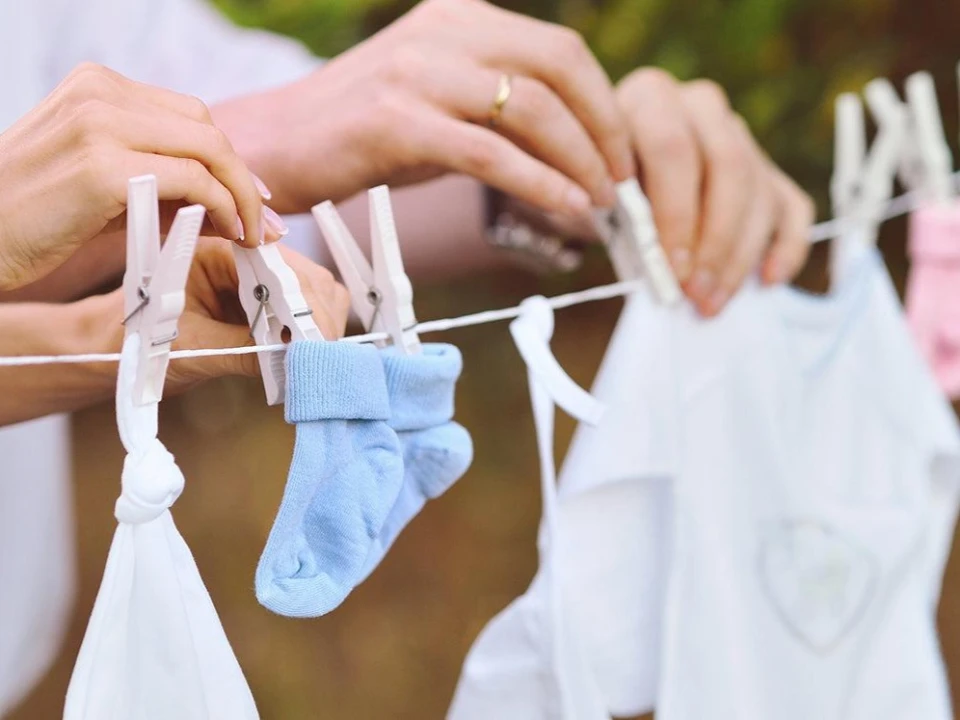

According to a belief associated with Umbria, even a newborn’s laundry had a curfew. At sunset, it had to come inside before the devil saw it and brought illness upon the baby.
As a way of getting people to follow instructions, it works remarkably well. “Remember to bring in the swaddling cloths” is advice. “If you don’t, your baby could get sick” is an order. Add the Evil One, and the discussion is over before it starts.
Childhood has always been fertile ground for precautions of this kind. In 1886, physician and folklorist Zeno Zanetti published Nonne e bambini. Saggio di credenze popolari umbre in Perugia; in 1892, he followed it with La medicina delle nostre donne, an extensive collection of practices, remedies, and explanations from folk medicine in the countryside around Perugia.
Those pages do not so much establish where this particular superstition came from as reveal the world in which it could thrive: one where practical experience and the supernatural readily coexisted, and a rule offered at least something to do when faced with a baby’s vulnerability.
And the belief had company.
In Garfagnana, Tuscany, oral accounts collected in 2002–2003 recall mothers bringing their children’s laundry inside before the evening Angelus bells marked nightfall. If malevolent figures known locally as “streghi” – a kind of witch or sorcerer – touched the clothes, they could supposedly make the children sick. Another account explicitly mentions the evil eye.
In the Sibillini Mountains, on the Marche side, the danger changed its face but kept its target: children’s clothes could not be left outside overnight because witches might steal them for their rituals.
The culprits’ names change. The laundry keeps coming inside.
And here the story gets more interesting: remove the devil, and the rule still stands.
After sunset, surfaces cool. If they reach the dew point, water vapor condenses, and fabric that was almost dry can become damp again overnight. Choosing clean, dry clothes for a newborn is simple prudence: wet clothing increases heat loss, and with very young babies, avoiding damp or cold fabrics makes sense.
The practical core, then, is sound. The supernatural threat does a different job: it turns a precaution into a command.
When a child’s health is at stake, “better do it” can easily become “always do it.” And “always do it” can become “if you don’t, something will happen.” Fear is a formidable accelerator: it fixes the rule in memory.
There is no reason to laugh at someone who rushed to bring in the swaddling cloths before dark. They were probably doing exactly what they believed was necessary to protect a baby.
Our part comes next: keeping the care without automatically inheriting the threat, distinguishing what actually protects us from what we have learned to fear.
If the laundry is getting damp again, it can come inside.
The devil can stay outside. If he gets cold, that’s his problem.
Aspetta 2 ore (Credenze popolari smontate con logica, scienza e satira), by Frederik Quarta, explores more than 200 popular beliefs, misconceptions, and superstitions from everyday Italian culture, putting them to the test through logic, science, cultural observation, and satire. Published by Viastante Edizioni in 2026.