
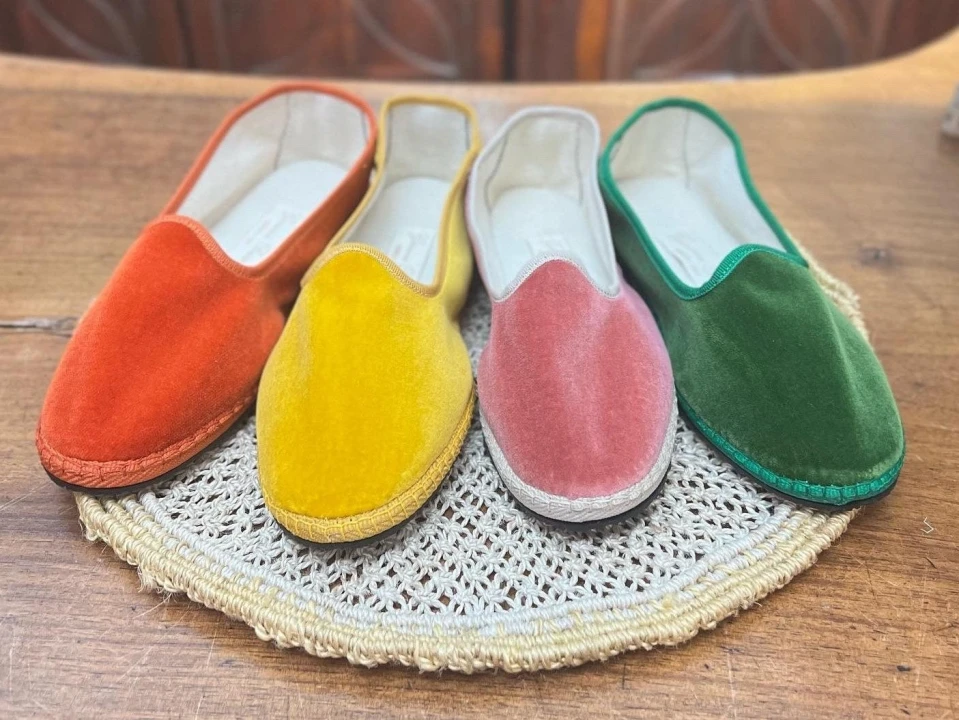

In the mountain villages and rural communities of Friuli Venezia Giulia, a remarkable tradition of craftsmanship developed around one of the simplest objects of everyday life: a pair of shoes. Known as scarpets, scarpez, or furlane, these lightweight handmade slippers represent an ingenious combination of practicality, creativity, and resourcefulness. Originally produced using discarded fabrics and other inexpensive materials, they have evolved from humble household necessities into distinctive symbols of Italian artisanal excellence.
Their history is closely connected to the rural economy of Friuli, particularly the mountainous territory of Carnia. For generations, families lived with limited resources, and almost every usable material was carefully preserved. Old clothes, fabric remnants, worn blankets, and pieces of canvas could be transformed into something useful rather than discarded.
Making footwear at home was an important expression of this philosophy. Women traditionally played a central role in producing scarpets, often sewing them during the winter months when agricultural activities slowed down. The work required patience, experience, and considerable manual skill.
The construction of a traditional scarpet was surprisingly sophisticated. Multiple layers of recycled fabric were cut, assembled, and stitched together to create a thick, flexible sole. The upper portion could be made from cotton, canvas, wool, or velvet, depending on the available materials and the intended use.
Some versions incorporated pieces of discarded bicycle tires to reinforce the outer sole, improving durability and providing additional protection against damp surfaces. Jute from agricultural sacks was another commonly reused material.
This combination of textiles produced footwear that was soft, lightweight, and comfortable. Unlike rigid leather shoes or heavy wooden clogs, scarpets adapted naturally to the shape of the foot.
Although their precise origins are difficult to establish, documentary evidence confirms the presence of the tradition in Carnia by the early nineteenth century. An 1826 document from Sostasio, in the present-day municipality of Prato Carnico, contains a reference to scarpis, demonstrating the historical importance of this form of footwear.
Scarpets were not all identical. Their appearance varied according to local customs, available fabrics, and the occasions for which they were made. Simple models served everyday needs, while more elaborate examples were reserved for celebrations, religious services, and family gatherings.
Velvet was especially appreciated for festive footwear. Decorative stitching, embroidered flowers, colored borders, and carefully selected fabrics could transform an ordinary pair of slippers into an elegant accessory.
The tradition eventually traveled beyond Friuli. In Venice, similar shoes became popular among gondoliers and other workers navigating the city's boats and narrow waterways. Their flexible soles offered practical advantages, while their light construction made them comfortable for extended use.
Over time, the footwear became widely known as furlane, a name emphasizing its Friulian origins. Its evolution illustrates how an object created for practical reasons can acquire new cultural and aesthetic meanings.
Today, this tradition has experienced a revival, thanks to artisans who recognize its potential within contemporary fashion and sustainable design.
In Gonars, in the province of Udine, specialized workshops continue producing handmade Friulian shoes while experimenting with new fabrics, colors, and decorative combinations. Some use recycled textiles, recovered rubber, and materials left over from other manufacturing processes, preserving the original philosophy of resourcefulness.
The growing appreciation of artisanal footwear has also introduced scarpets to audiences far beyond their original territory. Their simple silhouette, soft construction, and understated elegance appeal to consumers looking for alternatives to mass-produced accessories.
What makes scarpets particularly interesting is the relationship between tradition and modern sustainability. Long before recycling became a central concern of the fashion industry, Friulian families were already applying the principles of material recovery, waste reduction, and product durability.
Their production also preserves skills that cannot be fully replaced by industrial machinery. Selecting fabrics, assembling the layers, stitching the soles, and finishing the upper sections require human judgment and experience.
Each pair reflects the choices of the person who made it, from the combination of colors to the smallest decorative detail.
In an era increasingly interested in responsible consumption and authentic craftsmanship, scarpets demonstrate the continuing relevance of traditional Italian knowledge. Their story connects rural households, mountain communities, Venetian waterways, and contemporary fashion through a single handmade object.
What began as a practical response to limited resources has become a recognizable expression of regional identity. The scarpets of Friuli Venezia Giulia show how creativity, manual skill, and respect for materials can transform an everyday necessity into an enduring example of Italian craftsmanship.