

When people think of Italian gastronomic excellence, their minds usually turn to pasta, olive oil, cheese, and wine. Caviar, traditionally associated with Russia and the Caspian Sea, rarely enters the conversation. Yet one of the world's most important centers of caviar production is located in Lombardy, in the small town of Calvisano, in the province of Brescia. Here, an extraordinary combination of natural resources, industrial innovation, and Italian craftsmanship has transformed a luxury delicacy into an unexpected symbol of Made in Italy excellence.
The story began in 1972, when entrepreneurs Giovanni Tolettini and Gino Ravagnan developed an innovative idea: using surplus heat from a local steel plant to warm freshwater for fish farming. Calvisano was particularly suitable because of its abundant underground springs and exceptionally clean water. The project anticipated the principles of the circular economy long before the concept became widely discussed.
Agroittica Lombarda was established in 1977, initially focusing on eel farming. A decisive turning point came in 1981, when Ravagnan met Serge Doroshov, a Russian-born marine biologist working at the University of California, Davis. Their collaboration introduced white sturgeon, a species native to North America's Pacific Coast, to the waters of Lombardy.
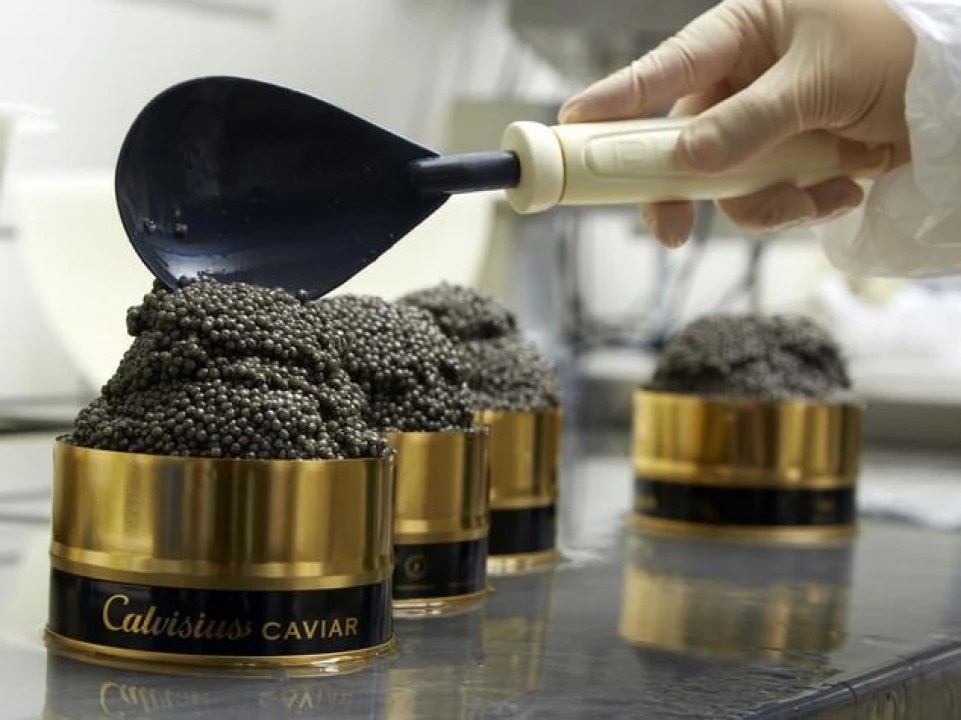
The experiment proved remarkably successful. In 1992, the company achieved captive reproduction of white sturgeon and developed its first caviar production. The product eventually became known as Calvisius, named after the town where this remarkable gastronomic adventure began.
The results were extraordinary. By 2007, Agroittica was producing approximately 25 metric tons of caviar annually, representing around 22% of global production at that time. What had started as an unconventional experiment had become an internationally recognized industry.
The company's development also coincided with growing international concern about declining wild sturgeon populations. Restrictions introduced under the Convention on International Trade in Endangered Species encouraged the expansion of regulated aquaculture as an alternative to harvesting wild fish.
Today, Calvisano remains at the center of a sophisticated production system. Sturgeon are raised in freshwater environments designed to accommodate their biological needs. The process requires considerable patience, since female sturgeon may need many years to reach maturity and produce the valuable eggs.
Quality depends on numerous factors, including water conditions, species, feeding, maturity, and processing techniques. The eggs are carefully selected, cleaned, salted, and packaged under controlled conditions.
One of the traditional approaches is malossol, a Russian term meaning lightly salted. This method uses relatively little salt to preserve the delicate flavor and natural characteristics of the caviar.
Different sturgeon species produce distinctive varieties. White sturgeon caviar is appreciated for its relatively large eggs and delicate, buttery flavor. Siberian sturgeon offers another expression, while Beluga is particularly prized for its large, soft eggs and refined taste.
Italian culinary creativity has also contributed to the product's international appeal. Although caviar is traditionally served on its own or with simple accompaniments, contemporary chefs increasingly incorporate it into dishes featuring pasta, seafood, eggs, and other ingredients.
The economic significance is substantial. In 2026, Agroittica reported annual production of approximately 25–30 metric tons, with exports accounting for around 70% of output. The company recorded revenue of €36 million in 2025, demonstrating the international strength of this specialized Italian industry.
The United States is among its principal export markets, reinforcing another connection between Italian food production and American consumers.
The story of Brescia's caviar demonstrates that Italian gastronomic excellence is not limited to centuries-old recipes. It can also emerge from scientific research, entrepreneurial imagination, environmental awareness, and the ability to transform local resources into products appreciated around the world.
In Calvisano, an unexpected meeting between steelmaking, freshwater springs, American sturgeon, and Italian craftsmanship created something truly distinctive: a luxury delicacy with an unmistakably Lombard identity.