

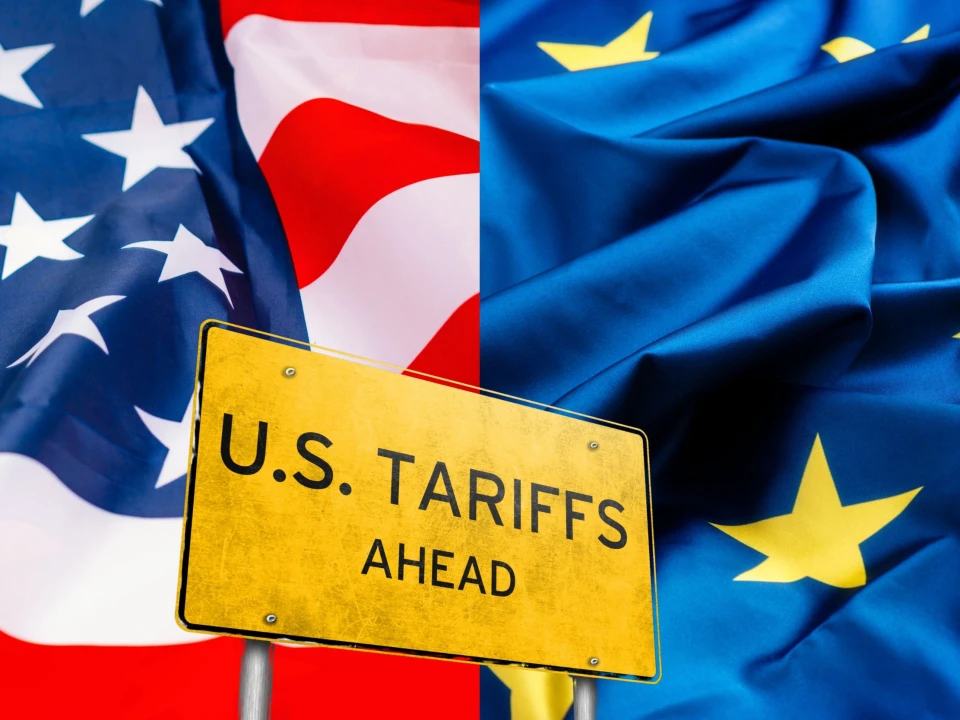

Every time the issue of tariffs resurfaces in American and European public debate, the economic relationship between Italy and the United States is portrayed as if it were suddenly fragile, exposed to political shocks capable of deeply damaging it. It is a narrative that works in the media because it strikes recognizable symbols: wine, cheese, fashion, everything that embodies Made in Italy in the collective imagination. But it is also a partial narrative, which risks obscuring the real nature of a much more complex and resilient economic relationship.
In recent history, tariffs have often been used as a tool of political pressure rather than as a structural economic lever. They serve to respond to internal needs, to rebalance consensus, to demonstrate negotiating strength. Rarely, however, do they succeed in undermining trade relations based on decades of industrial integration. The relationship between Italy and the United States falls squarely into the latter category.
For years, the United States has been the leading non-European market for Italian exports and one of Italy's main trading partners overall. Even in times of heightened tension, trade has never really stopped. On the contrary, in recent years it has continued to grow, consistently exceeding €70 billion per year, with a balance that is often favorable to Italy. This fact alone would be enough to dispel the idea of a relationship in permanent crisis.
But it is by looking beyond the aggregate data that the true strength of this relationship emerges. Italy exports not only highly recognizable consumer goods to the United States, but above all intermediate and high-tech goods. Industrial machinery, automation systems, advanced components, specialized chemicals, pharmaceuticals, energy equipment, and food industry equipment. These are sectors that directly affect American productivity and are difficult to replace without significant costs.
In this sense, Italy is an integral part of US value chains. It is not a casual supplier, but a structural partner. As the International Monetary Fund has repeatedly observed, the most resilient trade relations are those based on deep productive interdependencies, not on flows of easily interchangeable goods. This is precisely the case with the economic relationship between Italy and the United States.
Tariffs affect what is visible, rarely what is essential. They can slow down certain segments, temporarily increase costs, and push companies to reorganize their pricing or distribution strategies. But they are unlikely to disrupt industrial relationships based on specific skills, certified quality, and long-term reliability. It is no coincidence that, even in periods of heightened trade friction, many American companies have continued to rely on Italian suppliers, often considered irreplaceable for their standards and know-how.
There is also one factor that distinguishes Italy from other European partners: the structure of its productive fabric. Italian companies, particularly SMEs, have developed a remarkable capacity for adaptation over time. Accustomed to operating in complex regulatory environments and fragmented markets, they have often responded to tariffs not by withdrawing, but by increasing their direct presence in the US market through subsidiaries, joint ventures, or productive investments. Paradoxically, this strategy has strengthened economic ties rather than weakening them.
This dynamism is also reflected in investment flows. The United States is one of the main foreign investors in Italy, especially in technology- and capital-intensive sectors. At the same time, many Italian companies choose America as their primary market for internationalization, not only because of the size of the market, but also because of cultural, legal, and entrepreneurial affinities. Despite their differences, the two economic systems share a similar vision of doing business, the role of innovation, and the value of quality.
Contributing to this even deeper bond is a factor often overlooked in traditional economic analyses: the human and relational capital represented by the Italian-American community. Over twenty million people form a natural bridge between the two countries, not only culturally but also economically. Managers, entrepreneurs, professionals, and investors who are familiar with both realities facilitate dialogue, reducing information asymmetries and barriers of trust.
This relational capital cannot be measured in percentage points of GDP, but it has a concrete impact on investment decisions and strategic choices made by companies. It is one of the reasons why, despite cyclical political tensions, the economic relationship between Italy and the United States continues to show surprising underlying stability.
Major international institutions also emphasize how global trade is evolving towards more selective models based on regulatory affinities, strategic alliances, and shared values. The World Trade Organization estimates that over 70% of trade today takes place within regional value chains or between countries with strong institutional convergence. In this scenario, Italy and the United States remain firmly connected, beyond the fluctuations of trade policy.
Looking beyond tariffs therefore means adopting a long-term perspective. It means recognizing that trade tensions are part of the physiology of international relations, but rarely determine the final outcome. The economic link between Italy and the United States is not based on contingent convenience, but on trust built over time, converging interests, and deep industrial complementarity.
For the Italian-American community, all this also represents a responsibility. Being a bridge today means not only preserving the memory of our origins, but also actively contributing to a more mature and informed understanding of economic relations between the two countries. It means remembering that behind every discussion about tariffs there are supply chains, territories, businesses, and people. And that when ties are strong, the economy can withstand even the most uncertain winds of politics.
Tariffs come and go. Structural relationships remain. And it is on these that, often far from the spotlight, Italy and the United States continue to build their common future.