

Nativity art is the craft and artistic skill dedicated to the creation and display of nativity scenes, a three-dimensional and scenic representation of the birth of Jesus. This tradition, deeply rooted in Italian culture, combines religious devotion with local craftsmanship.
Nativity art is not limited to just the Holy Family but recreates an entire setting with figures made from various materials (such as terracotta, wood, papier-mâché, and cork) that depict the stable or cave, shepherds, the Three Wise Men, animals, and scenes of daily life from the time.
Artisans, often referred to as "figurari," use techniques passed down through generations to shape and paint the figurines, which can be made of clay, ceramics, or wood. Although widespread across Italy, nativity art reached its peak in 18th-century Naples, where it became a true celebration of local craftsmanship, with lavish displays full of intricate details.
Every December, Italy revives a beloved tradition: nativity scenes pop up all over the country – from north to south – ranging from sandy sculptures to living displays carved into rocks. What began centuries ago as a simple act of faith has blossomed into a rich cultural heritage that combines art, craftsmanship, community and memory.
The origin of this tradition is often traced to a hillside village called Greccio in the Lazio region, where in 1223 Francis of Assisi staged the very first living Nativity scene. From that spiritual gesture sprang a custom that over time evolved into physical creations – first in churches and then across the narrow streets and markets of southern cities – until the birth of an astonishing baroque tradition in cities like Naples. In those times, master artisans crafted elaborate miniature scenes filled with shepherds, merchants, angels, vendors and everyday life, turning the nativity into a tiny theater of human stories.
What emerges today is a vivid mosaic of local traditions and regional styles, offering some of the most impressive nativity displays in the world.
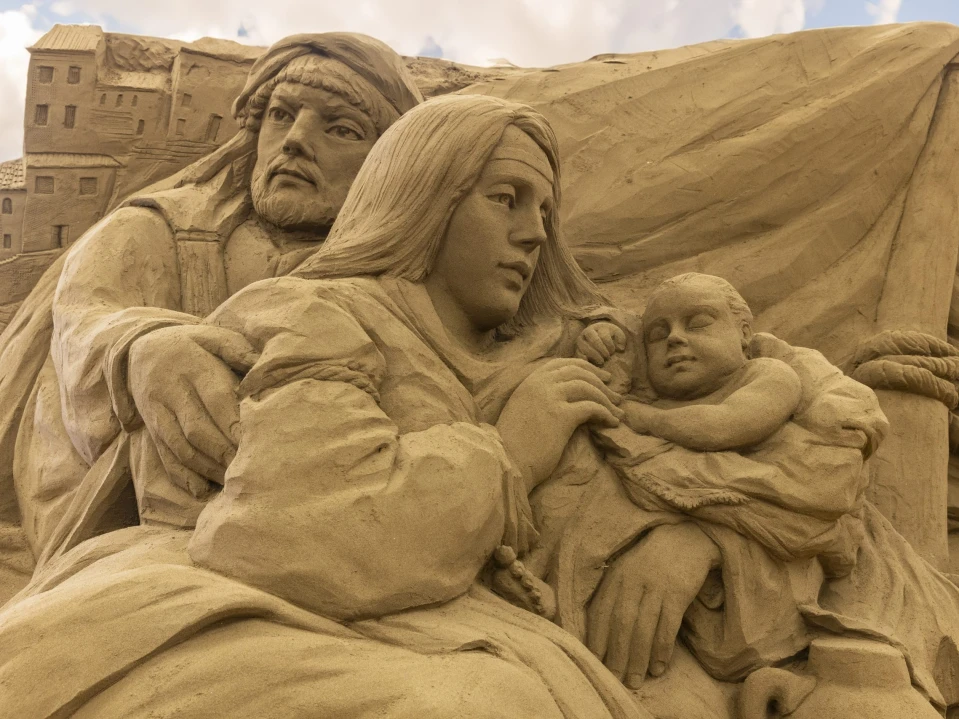
In the northern region of Friuli Venezia Giulia, one finds a truly unique version: the Presepe di Sabbia di Lignano Sabbiadoro. Now in its 22nd edition, this installation transforms fine sand into monumental sculptural scenes of the Nativity and biblical narratives. Sculpted by international artists, each figure is illuminated with dramatic lighting to evoke an almost theatrical effect, blending ephemeral art with sacred imagery. For 2025, the theme is “Mary,” celebrating women across time and scripture through this expressive medium.
Move to the north-west, to the city of Milano, where the historic Basilica of Sant’Ambrogio houses a nativity unlike any other: the Presepe della Prigionia. Created originally in 1944 by Italian soldiers in a Nazi concentration camp to bring hope in dark times, this nativity is crafted from repurposed materials – wood, barbed wire, old clothes – and displayed annually at the basilica’s museum. Its humble origins and emotional weight make it one of the most touching nativity scenes in the world.
From Lombardy we cross the Garda lake and we arrive in Peschiera del Garda, in Veneto. This is the first example in the world of an underwater nativity scene, built with the specific intent of making it visible to everyone. It can indeed be admired without going underwater, thanks to the nearby Ponte San Giovanni, which acts as a panoramic balcony accessible to all. The installation consists of 26 life-sized metal sculptures, sculpted with an oxy-acetylene torch, then coated with reflective paint, and placed at the bottom of the canal. On the evening of December 24, with the placement of the Baby Jesus, the Nativity scene is completed: the Baby Jesus is lowered into his manger at the bottom of the Canale di Mezzo, accompanied by choirs and Christmas carols.
In Italy’s spiritual heart, the city of Rome hosts a grand international showcase known as 100 Presepi in Vaticano. Running from early December to January 6, the exhibit gathers hundreds of nativity scenes crafted by artists from around the globe – all displayed beneath the sweeping colonnades of St. Peter’s Square. It’s a celebration not only of religious tradition but also of global creativity and communal sharing.
The town of Assisi, birthplace of the nativity tradition, offers yet another meaningful path: the exhibit called Presepi del Mondo di Assisi. Held in its historic center and in a former palazzo turned exhibition space, this event brings together dozens of interpretations of the nativity from across continents. Among the highlights this year: an 8‑meter‑long Sicilian nativity scene crafted by an Italian artist, blending Umbrian spirituality with Mediterranean flavor and global vision.
Down south, traditions remain vivid and deeply rooted. In Matera (Basilicata), the Presepe Vivente di Matera transforms the ancient stone district known as Sasso Caveoso into a living Bethlehem. Actors in period costumes reenact biblical scenes amid the city’s caves and winding alleys under atmospheric lights and sound effects – creating a spiritually rich and immersive experience. The 2025‑2026 edition, held on weekends throughout December and early January, carries the theme of peace.
Finally, the art and craft tradition shines in Caltagirone, Sicily – a city renowned for ceramics. Every year, local artisans display handcrafted nativity scenes made of terracotta and maiolica, often showcased along the historic center or in local museums. The event, running from December 1 to January 7, transforms the entire town into a festive celebration of Mediterranean identity, craftsmanship and holiday cheer.
Together, these varied expressions of the nativity tradition reveal how throughout Italy the holiday can take many different shapes – from sand sculptures and humble re‑creations born in hardship to elaborate ceramic art and theatrical street performances. Each version offers a unique lens through which to rediscover culture, faith and community.
Visiting these displays is more than a festive outing – it’s a journey into history, artistry and collective memory. Whether under the vaults of an ancient basilica, among UNESCO‑listed caves in a southern village, or on a beach molded by the hands of sculptors, the spirit of Christmas resurfaces every year in Italy, reinventing itself through the love and creativity of its people.