In 2026, We the Italians celebrates “Two Anniversaries, One Heart” – the 250th anniversary of the United States and the 80th anniversary of the Italian Republic. This article is part of the “Happy Birthday USA: Unsung Italian Heroes” project, in which we share how, in every corner of the United States, an Italian has made a positive impact on their local community.
---
The Italian woman who built Oklahoma’s first community safety net
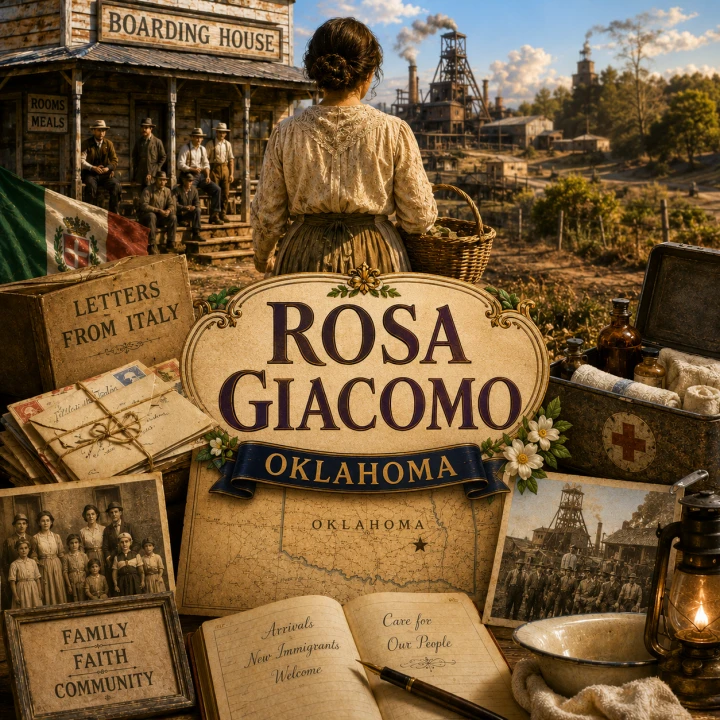
Long before Oklahoma developed public hospitals or organized social services, one Italian immigrant woman quietly created something just as essential: a place where newcomers found shelter, injured miners received care, families stayed connected, and an entire community learned to rely on one another. That woman was Rosa Giacomo, whose boarding house in Krebs and nearby McAlester became one of the hidden foundations of eastern Oklahoma's Italian settlements.
During the great wave of Italian immigration between the late nineteenth and early twentieth centuries, thousands of immigrants arrived in what was then Indian Territory to work in the coal mines of Pittsburg County. Unlike many Italian American communities, most of Oklahoma's early Italian immigrants came from northern Italy, joined by families from Abruzzo, Molise, Campania, and Sicily. Together they established one of the largest Italian communities west of the Mississippi River, centered around Krebs and McAlester.
While historians often celebrate the miners who fueled Oklahoma's industrial growth, women like Rosa Giacomo made those mining camps livable. Her boarding house was far more than a place to rent a room. It became the community's unofficial welcome center, helping newly arrived immigrants find jobs, reconnect with relatives, translate letters, and adapt to life in America.
Its most important role, however, was providing social services before government institutions existed. Coal mining ranked among America's most dangerous occupations, and injured miners often had nowhere to recover except boarding houses managed by experienced Italian women. Rosa prepared meals, cared for the sick, monitored injuries, and offered a safe environment for workers until they regained their strength. Women gave birth there, elderly immigrants found support, and vulnerable families always knew there was someone ready to help.
Her home also functioned as an informal postal and communication center. Before widespread telephone service, letters arriving from Italy frequently passed through trusted boarding-house keepers. Rosa helped distribute mail, read correspondence for those unable to do so, write replies, and share news throughout the growing Italian community. In many respects, her boarding house became one of eastern Oklahoma's earliest social welfare centers, combining the roles of hospital, post office, employment agency, and community center under one roof.
This achievement reflected values deeply rooted in Italian culture. Traditions of hospitality, mutual aid, and strong family networks had long characterized Italian communities, and Rosa successfully transplanted those customs to the Oklahoma frontier. Rather than preserving her heritage only within her household, she used it to solve practical challenges facing hundreds of immigrant families.
The stability created by women like Rosa helped Italians establish successful businesses throughout the region. As the mining economy expanded, Italian families opened grocery stores, restaurants, banks, and other enterprises that permanently shaped the economy and identity of Krebs and McAlester.
Today Krebs proudly celebrates its nickname as "Oklahoma's Little Italy," with its Italian restaurants, annual festivals, and enduring traditions attracting visitors from across the state. That remarkable legacy rests not only on miners and entrepreneurs but also on women like Rosa Giacomo, whose compassion and leadership created the social infrastructure that allowed immigrant communities to flourish.
Although her name rarely appears in history books, Rosa Giacomo left a lasting mark on Oklahoma. By transforming a simple boarding house into the community's first safety net, she demonstrated that the growth of a state depends not only on industry and politics but also on ordinary people willing to care for others.
Nel 2026 We the Italians celebra Two Anniversaries One Heart, i 250 anni degli Stati Uniti e gli 80 anni della Reubblica Italiana. Questo articolo fa parte del progetto Happy Birthday USA: The Unsung Italian Heroes, in cui raccontiamo perchè in ogni angolo degli Stati Uniti qualcuno italiano ha lasciato un impatto positivo per il singolo territorio.
---
La donna italiana che costruì la prima rete di assistenza sociale dell’Oklahoma
Molto prima che l’Oklahoma disponesse di ospedali pubblici o di servizi sociali organizzati, una donna immigrata italiana diede silenziosamente vita a qualcosa di altrettanto essenziale: un luogo dove i nuovi arrivati trovavano accoglienza, i minatori feriti ricevevano cure, le famiglie rimanevano in contatto e un’intera comunità imparava a sostenersi reciprocamente. Quella donna era Rosa Giacomo, la cui boarding house a Krebs e nella vicina McAlester divenne una delle fondamenta meno conosciute degli insediamenti italiani nell’Oklahoma orientale.
Durante la grande ondata migratoria italiana tra la fine dell’Ottocento e i primi decenni del Novecento, migliaia di immigrati raggiunsero quello che allora era il Territorio Indiano per lavorare nelle miniere di carbone della contea di Pittsburg. A differenza di molte altre comunità italoamericane, la maggior parte dei primi immigrati italiani dell’Oklahoma proveniva dall’Italia settentrionale, ai quali si aggiunsero famiglie originarie dell’Abruzzo, del Molise, della Campania e della Sicilia. Insieme diedero vita a una delle più grandi comunità italiane a ovest del fiume Mississippi, con i principali centri a Krebs e McAlester.
Se gli storici celebrano spesso i minatori che alimentarono la crescita industriale dell’Oklahoma, furono donne come Rosa Giacomo a rendere realmente vivibili quei villaggi minerari. La sua boarding house era molto più di un luogo dove affittare una stanza. Divenne il centro di accoglienza informale della comunità, aiutando i nuovi immigrati a trovare lavoro, ricongiungersi con i parenti, tradurre la corrispondenza e adattarsi alla vita negli Stati Uniti.
Il suo ruolo più importante, tuttavia, fu quello di fornire servizi sociali quando ancora le istituzioni pubbliche non esistevano. L’estrazione del carbone era una delle professioni più pericolose d’America e i minatori feriti spesso non avevano altro luogo dove ristabilirsi se non le boarding houses gestite da esperte donne italiane. Rosa preparava i pasti, assisteva gli ammalati, seguiva il decorso delle ferite e offriva un ambiente sicuro ai lavoratori fino al completo recupero. Nella sua casa si assistevano i parti, gli anziani trovavano sostegno e le famiglie più fragili sapevano di poter sempre contare su qualcuno disposto ad aiutarle.
La sua casa svolgeva anche la funzione di centro postale e di comunicazione informale. Prima della diffusione del telefono, le lettere provenienti dall’Italia passavano spesso attraverso i gestori delle boarding houses, figure di fiducia per l’intera comunità. Rosa contribuiva a distribuire la posta, leggeva la corrispondenza a chi non era in grado di farlo, aiutava a scrivere le risposte e diffondeva le notizie tra le famiglie italiane. Sotto molti aspetti, la sua boarding house rappresentò uno dei primi centri di assistenza sociale dell’Oklahoma orientale, riunendo sotto lo stesso tetto le funzioni di ospedale, ufficio postale, ufficio di collocamento e centro comunitario.
Questo straordinario risultato rifletteva valori profondamente radicati nella cultura italiana. Le tradizioni dell’ospitalità, dell’aiuto reciproco e della forza dei legami familiari caratterizzavano da secoli le comunità italiane, e Rosa riuscì a trapiantare con successo questi principi nella frontiera dell’Oklahoma. Invece di limitarsi a conservare la propria eredità culturale all’interno della famiglia, la mise al servizio di centinaia di immigrati, offrendo risposte concrete alle loro necessità quotidiane.
La stabilità creata da donne come Rosa permise agli italiani di costruire attività imprenditoriali di successo in tutta la regione. Con l’espansione dell’economia mineraria, molte famiglie italiane aprirono negozi di alimentari, ristoranti, banche e altre imprese che contribuirono in modo permanente a plasmare l’economia e l’identità di Krebs e McAlester.
Ancora oggi Krebs celebra con orgoglio il suo soprannome di "Little Italy dell’Oklahoma": i suoi ristoranti italiani, le feste annuali e le tradizioni tramandate di generazione in generazione attirano visitatori da tutto lo Stato. Questo straordinario patrimonio non è il risultato soltanto del lavoro dei minatori e degli imprenditori, ma anche dell’opera di donne come Rosa Giacomo, la cui dedizione e capacità di guida crearono l’infrastruttura sociale che permise alla comunità italiana di prosperare.
Sebbene il suo nome compaia raramente nei libri di storia, Rosa Giacomo ha lasciato un’impronta duratura sull’Oklahoma. Trasformando una semplice boarding house nella prima rete di assistenza della comunità, dimostrò che la crescita di uno Stato non dipende soltanto dall’industria o dalla politica, ma anche da persone comuni disposte a prendersi cura degli altri.