

Reports about Roman-era finds in Mexico suggest it’s possible that Christopher Columbus was not the first European to reach the shores of the Atlantic. Still, it’s important to be precise. Columbus is considered the one who discovered America because he returned four times, establishing lasting contact rather than a one-time arrival.
He brought with him the technological and cultural knowledge of his time to lands where, for example, the wheel was not in use, while in his homeland – the region that would later become Italy – society was entering the Renaissance, a period marked by rapid intellectual and scientific progress.
This gap in development meant that the people of Columbus’s world were, in many ways, significantly more advanced than the native populations he encountered. The concept of “discovery” should not be reduced to who arrived first and then disappeared. A place is truly discovered by those who create a lasting connection, introduce innovation, and begin shaping its future trajectory.
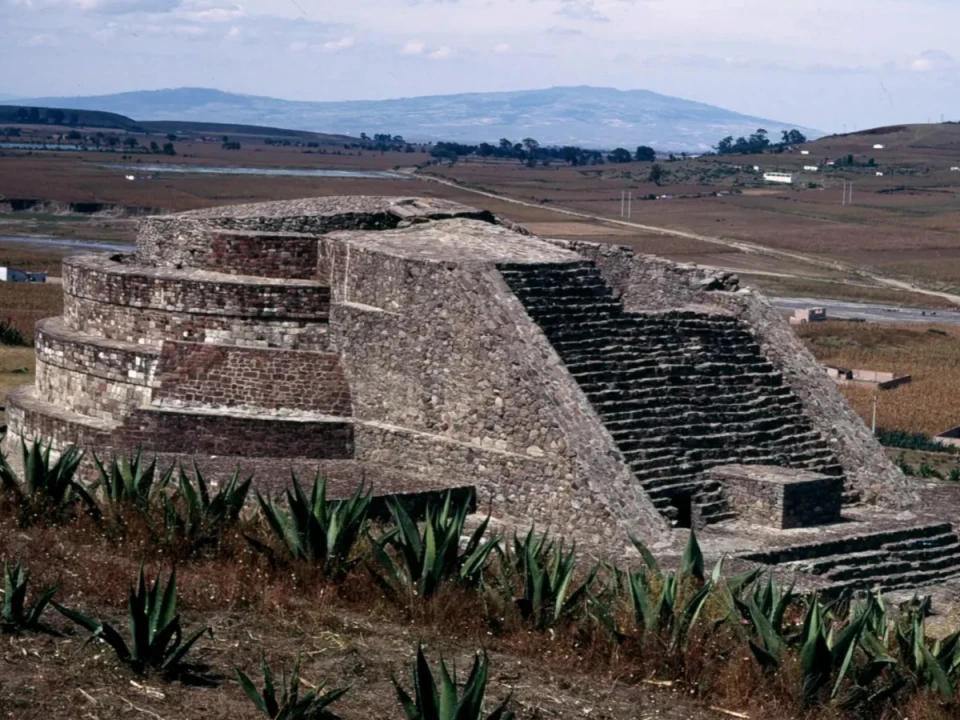
So, a small terracotta head discovered in central Mexico is reigniting debate about when Europeans may have first reached the Americas. The object, known as the Tecaxic-Calixtlahuaca head, was unearthed in 1933 during excavations led by archaeologist José García Payón at a site about 65 km from Mexico City. It was found inside a sealed burial beneath three intact floor layers, alongside typical pre-Hispanic items such as pottery, gold ornaments, and bone artifacts.
What makes the piece unusual is its distinctly Mediterranean appearance. Experts have noted that the beard, facial structure, and craftsmanship resemble Roman styles rather than indigenous Mesoamerican art. Austrian anthropologist Robert Heine-Geldern suggested a date as early as 200 BC, while later analysis linked it to the Roman Severan period, around 193–235 AD.
Scientific testing has added to the mystery. Thermoluminescence dating places the artifact somewhere between the 9th century BC and the 13th century AD, meaning it predates Christopher Columbus’ 1492 voyage. Meanwhile, the burial itself has been dated to roughly 1476–1510, just before Hernán Cortés arrived in Mexico in 1519.
This unusual timeline has led to several theories. Some researchers suggest accidental transatlantic drift, where a ship carried objects across the ocean. Others point to early European contact before Columbus, while skeptics argue the piece could have been planted during excavation, especially since documentation from 1933 is incomplete.
Despite the speculation, there is still no broader evidence – 0 confirmed Roman settlements, ships, or additional artifacts in the Americas. For now, the object remains an outlier, raising questions but not rewriting history.