

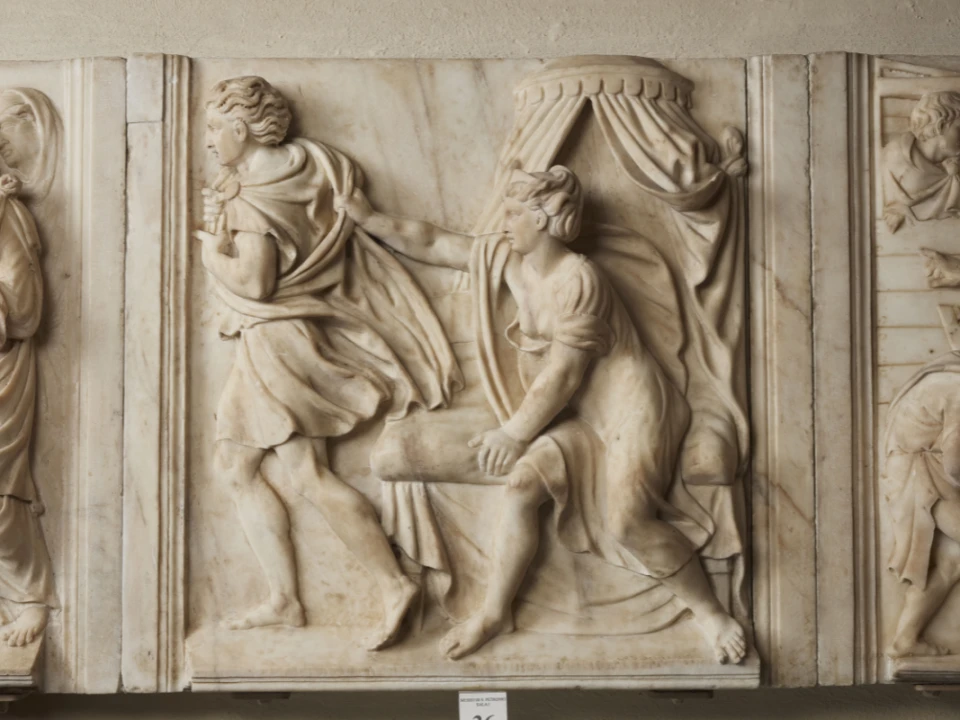
When people think of the Italian Renaissance, names such as Leonardo Da Vinci, Michelangelo, and Raphael likely spring to mind. This is not by chance, but part of a canonical history of the Italian Renaissance that, according to Emanuele Lugli, associate professor of art and art history at Stanford, “fetishizes the male genius.”
At a recent Faculty Research Fellows talk at the Clayman Institute, Lugli discussed his current research rewriting the history of Italian Renaissance art. How does one do this? By taking seriously the contributions of women artists, such as Properzia de’ Rossi—the first recorded woman sculptor.