
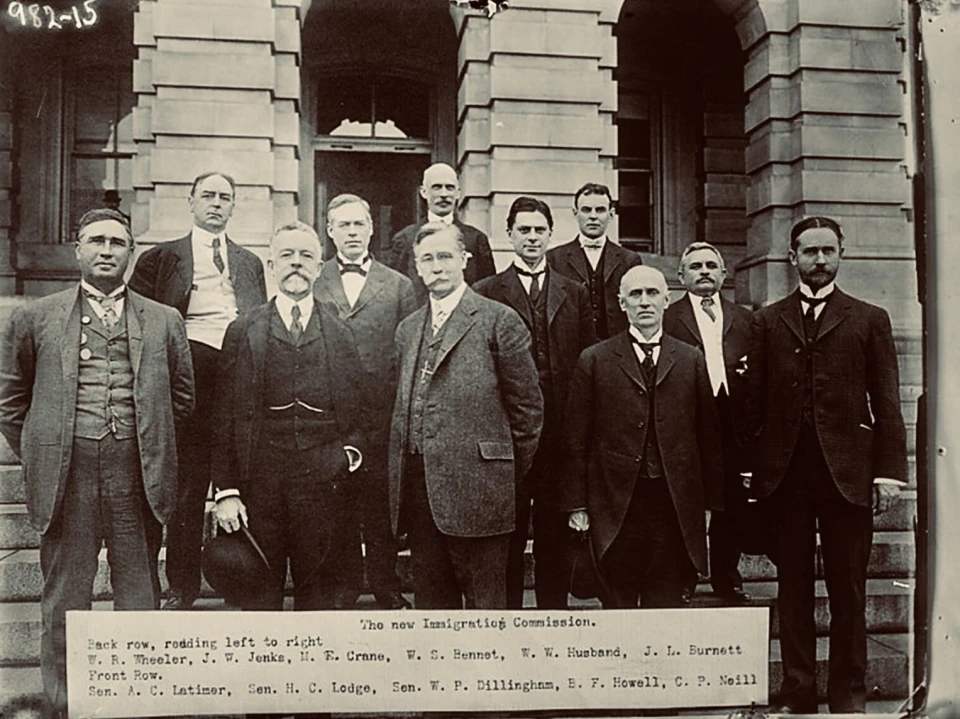
I have long held a keen interest in early immigration, particularly the period often referred to as the “Great Arrival,” when roughly four million Italians emigrated to the United States between 1880 and 1920. Recently, while conducting family genealogy research and reviewing scholarly works on early immigration, I repeatedly encountered references to the “Dillingham Commission.” This sparked a quest to better understand the now little-known Commission and the role it played in shaping early immigration law reform.
I am grateful that both sets of my grandparents, along with so many other Italian immigrants, arrived in America before the Commission’s recommendations set off the restrictive immigration laws of 1921 and 1924. What follows is a snapshot of what I discovered within the Commission’s drawn-out report — findings that are, at times, deeply shocking.