
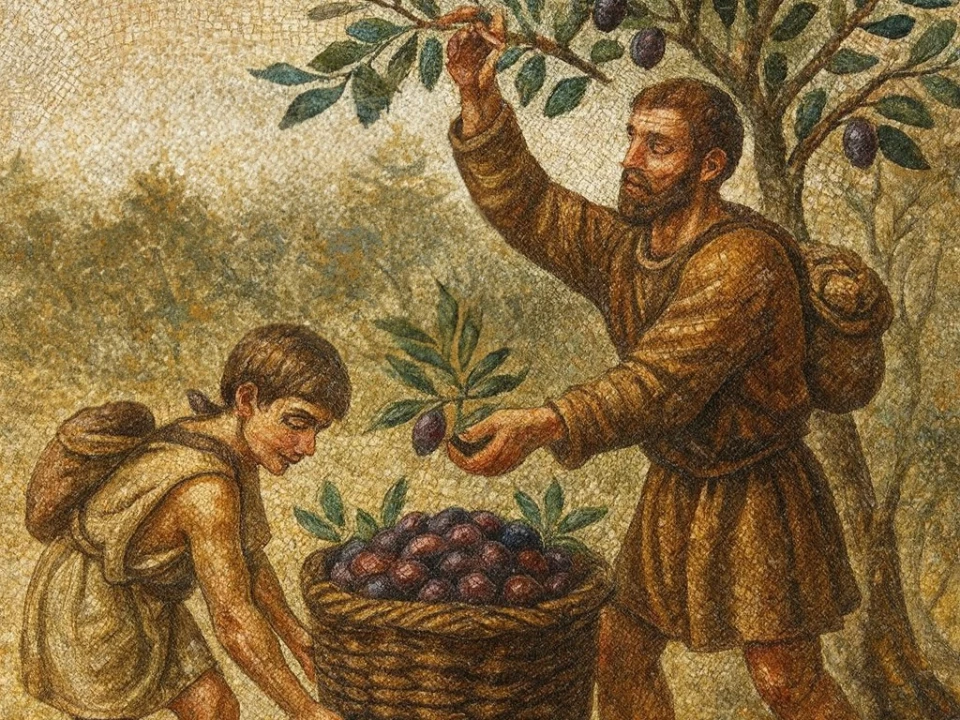
The countryside that once surrounded Rome bore little resemblance to the modern landscape of Lazio. Long before the imperial age transformed the city into a vast metropolis, its survival depended on a dense network of farms supplying grain, oil, wine, vegetables, and fruit to both rural communities and a steadily growing urban population.
To understand what these farms produced, it is necessary to look beyond modern Italian agriculture and reconstruct a system shaped by climate, soil, and the practical demands of daily life. Ancient authors such as Cato, Varro, and Columella, together with archaeological evidence from villae rusticae across central Italy, offer a detailed picture of how varied and carefully organized this agricultural world really was.