

If one spends even a modest amount of time on social media these days, one could easily reach the conclusion that half of America is in the process of relocating to Italy.
Everywhere one looks there are cheerful videos explaining how surprisingly simple it is to buy a house in a charming Italian village. Instagram is full of smiling couples proudly standing in front of crumbling stone buildings that will soon become elegant homes.
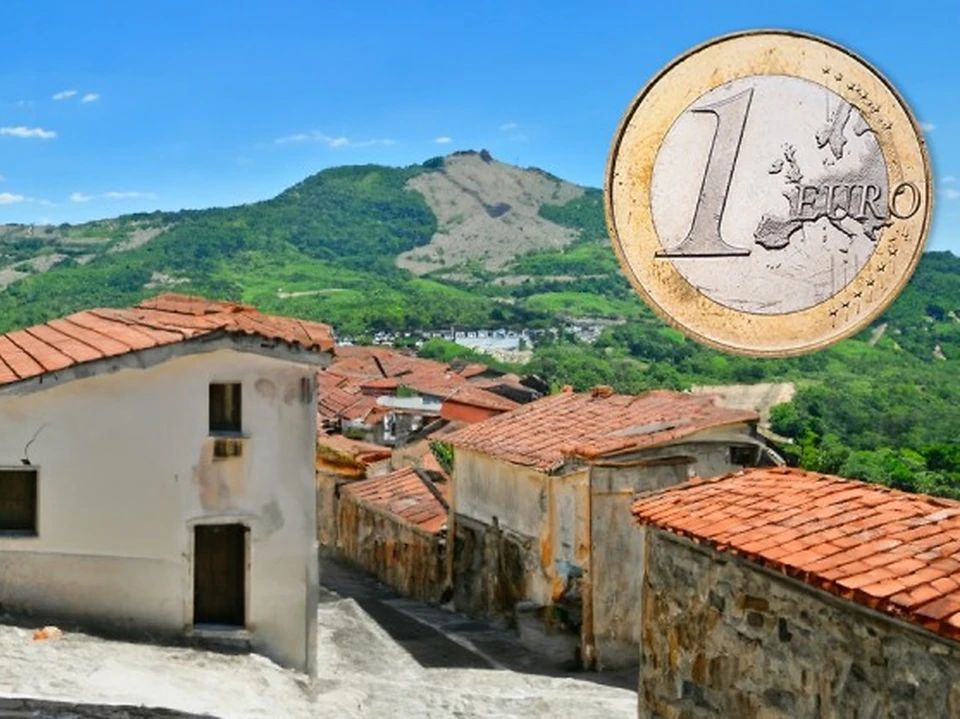
Television programmes document, with great enthusiasm, the miraculous transformation of neglected properties into dream residences (remember Lorrain Bracco and her 'one euro' deal in Sicily?). The tone is invariably optimistic. The narrative is reassuring. Buying property in Italy appears not only achievable but almost inevitable.
At the same time, if you spend time speaking to property owners across Italy, particularly in smaller towns and villages, you will often hear another familiar sentence repeated with quiet confidence.
“We have American clients looking for houses.”
It is a phrase that travels remarkably well across the Italian peninsula. One hears it in Tuscany, of course, but also in regions that Americans have barely discovered. It appears in glossy real estate brochures and in casual conversations between agents and property owners. And it tends to produce the same reaction everywhere. Sellers feel encouraged to hold out for higher prices. Buyers feel encouraged to move quickly before someone else secures the opportunity.
Between these two narratives sits reality, which is usually a little calmer than either side of the story suggests.
None of this is particularly sinister. The property market has always been enthusiastic by nature. Yet anyone who has spent several years observing the international fascination with Italian homes begins to notice a curious pattern that receives far less attention than the dream itself.
Across the country there are thousands of houses purchased with excitement and genuine affection that remain closed for most of the year.
The shutters are drawn. The garden is maintained just enough to avoid appearing abandoned. Lights appear briefly during the summer and perhaps again at Christmas, before the house returns to silence for long stretches of time.
These houses are rarely neglected. Many of them are beautifully restored. Yet they exist in a curious state between presence and absence. They belong to people who love Italy but who rarely manage to spend as much time there as they once imagined.
Understanding why this happens requires a closer look at the way Italy is presented to the world and at the way property decisions are sometimes made under the influence of powerful narratives.
The Italian dream seen from abroad
Italy has a remarkable ability to compress an entire lifestyle into a handful of images.
A table set under a pergola. Olive trees moving gently in the afternoon breeze. A long lunch that stretches naturally into the early evening. Church bells marking the passing hours with a calm indifference to the modern world.
For visitors arriving from large cities where life moves quickly and relentlessly, these moments can feel almost transformative. It is hardly surprising that many Americans who travel through Tuscany, Umbria, Sicily or Puglia return home with a lingering thought.
What if we had a place here?
The idea usually appears innocently. A house in Italy becomes a symbol of something larger than property ownership. It represents a slower rhythm of life and a sense of connection to a place that seems to operate according to different priorities.
Occasionally the dream becomes reality. A property is purchased. Renovation plans begin. The keys are handed over with understandable excitement.
And yet, if one spends time in the streets of many Italian towns outside the main tourist season, another quieter reality begins to appear.
There are houses with foreign names on the doorbells that remain closed for most of the year. They are visited occasionally but not regularly. Their owners intend to return more often, but work, distance and the rhythm of life elsewhere intervene.
The dream remains sincere, yet the house becomes something slightly different from what was originally imagined.
Two very different markets
Part of the explanation lies in the peculiar structure of the Italian property market for international buyers.
At one end of the spectrum stand the famous hotspots. Tuscany, Lake Como, the Amalfi Coast and certain coastal areas have attracted international buyers for decades. These places are undeniably beautiful and have been celebrated so frequently in films and magazines that they have become part of the global imagination.
In these locations the romance of Italy has long since met the realities of international demand. Prices are not necessarily unreasonable when compared with major American cities, but they are rarely the effortless bargains that some first-time visitors expect.
At the other end of the spectrum lies a very different narrative. These are the villages that appear in viral articles and television programmes celebrating astonishingly cheap houses waiting to be restored. Many of these towns have lost population over the decades. Properties can be acquired for surprisingly modest sums because they require significant work.
From the perspective of someone accustomed to the property markets of New York or San Francisco, the numbers can appear extraordinary. A house built from centuries-old stone available for less than the cost of a modest apartment parking space.
What is not always explained with equal enthusiasm is that the purchase price is only the beginning of a much longer story.
The renovation reality
Historic houses possess immense charm. They also possess complexities that are sometimes overlooked during the excitement of a purchase.
Old buildings require careful attention. Structural elements may need reinforcement. Electrical and plumbing systems often belong to earlier decades. Local planning rules must be respected and permits obtained before work begins.
Italy has remarkable craftsmen and builders who know how to restore historic buildings with skill and patience. Renovations take place across the country every day and many of them are extremely successful.
However, renovations require time, coordination and, most importantly, presence.
When decisions must be made about materials, layouts or unexpected discoveries inside ancient walls, it is far easier to address those questions while standing in the building itself rather than discussing them from another continent.
Television programmes often condense a year of renovation work into a single episode filled with cheerful music and triumphant final reveals. Real projects tend to unfold more slowly and require a greater degree of patience.
The distance factor
Geography also plays a role that is often underestimated.
Owning a property in Italy while living in the United States is entirely possible and often rewarding. Yet distance inevitably shapes how the property is used.
A house that is visited only during holidays still requires attention throughout the year. Gardens grow. Roofs occasionally require repairs. Administrative matters must be handled locally.
Flights across the Atlantic require planning and time away from work. The house that once seemed like the centre of a new life gradually becomes a special destination visited only during certain moments of the year.
This does not diminish the affection owners feel for their Italian homes, but it does change the role those homes play in everyday life.
The social media narrative
Meanwhile the online version of Italy continues to exist in a permanent state of perfection.
Videos and posts present a world in which buying property appears remarkably simple and life unfolds in endless sequences of sunsets, wine glasses and picturesque renovations.
Some voices online offer confident advice on immigration rules, taxation and property law after relatively brief personal experiences with the country.
Anyone who has spent time dealing with Italian bureaucracy will know that these subjects are slightly more complex than they sometimes appear in short videos.
The result is that the conversation surrounding property often focuses almost entirely on the purchase itself. Very little attention is given to the far more important question of what it actually means to live somewhere.
It is not really about the house
After years of observing this transatlantic fascination with Italian homes, one conclusion becomes increasingly clear.
The house itself is rarely the real story.
What people are seeking is an experience. They are searching for a different rhythm of life and a connection with a place that feels authentic and human.
A house may provide the setting for that experience, but it cannot create it on its own.
Without time spent in the community, without learning the language and without navigating the systems that shape daily life, the house remains simply a building that holds a dream inside it.
That dream can be beautiful, but it remains incomplete if the house itself is rarely used.
A more thoughtful approach
For anyone genuinely considering the idea of buying property in Italy, a more deliberate approach can make the experience far more rewarding.
Spending extended periods renting in a place before purchasing allows prospective buyers to understand how a town functions outside the tourist season. Winter reveals a great deal about daily life.
Understanding immigration regulations is essential for anyone planning to spend significant time in the country. Fiscal obligations should be considered carefully as well.
Learning even a modest amount of Italian transforms everyday interactions and deepens the sense of belonging in ways that are difficult to describe.
Most importantly, it is worth asking a simple but honest question.
Is the desire to own property driven by a holiday fantasy or by a genuine intention to build a life connected to a particular place?
Both answers are valid. Confusing the two, however, can lead to disappointment.
he extraordinary potential
When international buyers approach Italy thoughtfully, the results can be remarkable.
New residents can revitalise communities that have struggled with declining populations. Local businesses gain customers. Schools gain students. Cultural exchanges take place naturally in markets, cafés and neighbourhood gatherings.
Foreign homeowners who spend time in their communities contribute far more than the restoration of buildings. They become part of the social life that keeps towns alive.
This is where the relationship between Americans and Italy becomes genuinely meaningful.
A final reflection
Dreaming about Italy is not a mistake. It is one of the great pleasures of travel and culture.
The landscapes are extraordinary, the food remains one of the great civilisations of the table, and the sense of history woven into daily life continues to inspire visitors from around the world.
But dreams deserve a solid foundation.
Before buying property, it is wise to spend time understanding the place itself. Walk the streets during quiet months. Speak with neighbours. Observe how life actually unfolds in the town that captured your imagination.
Italy does not need fewer international admirers.
What it needs are people who are willing to engage with the country beyond the purchase of a house. People who recognise that living somewhere requires curiosity, patience and participation.
When Americans arrive with that spirit, they do far more than restore buildings.
They become part of the life that fills those buildings with meaning.
And that, in the end, is far more valuable than simply owning a house whose shutters remain closed for most of the year.