
Italy is commonly imagined, both from within and without, as a linguistically unified country. The standardisation project that followed unification in 1861, accelerated by military conscription, mass schooling, and the spread of broadcasting in the twentieth century, succeeded in making a version of Florentine-derived Italian the shared medium of the peninsula.
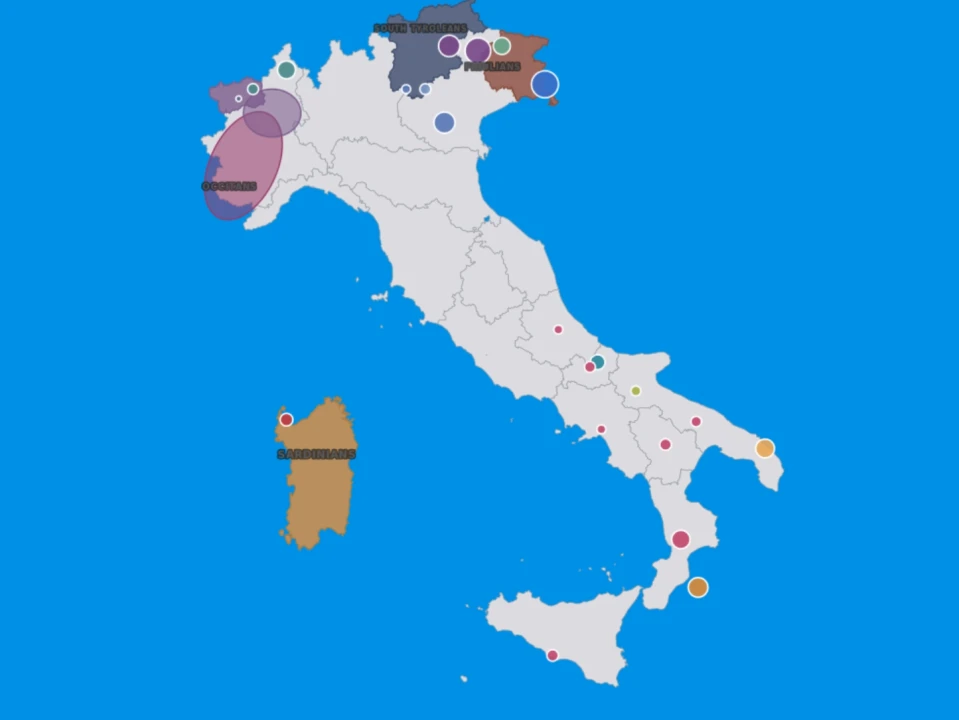
What it did not do was erase the older, more fractured linguistic reality that preceded it. Below the surface of the national language, and in many cases still audible in daily life, lies a set of historical communities whose languages, dialects, and cultural identities are distinct enough to warrant formal legal protection.