
Scandicci is a small city in Tuscany with a population of about 50,000. Conegliano, by contrast, is in the Veneto region and is even smaller, with around 35,000 residents. They are both Italian cities – and they sit at the very top of women’s volleyball. Not just in Italy. Not even just in Europe. At the top of the world.
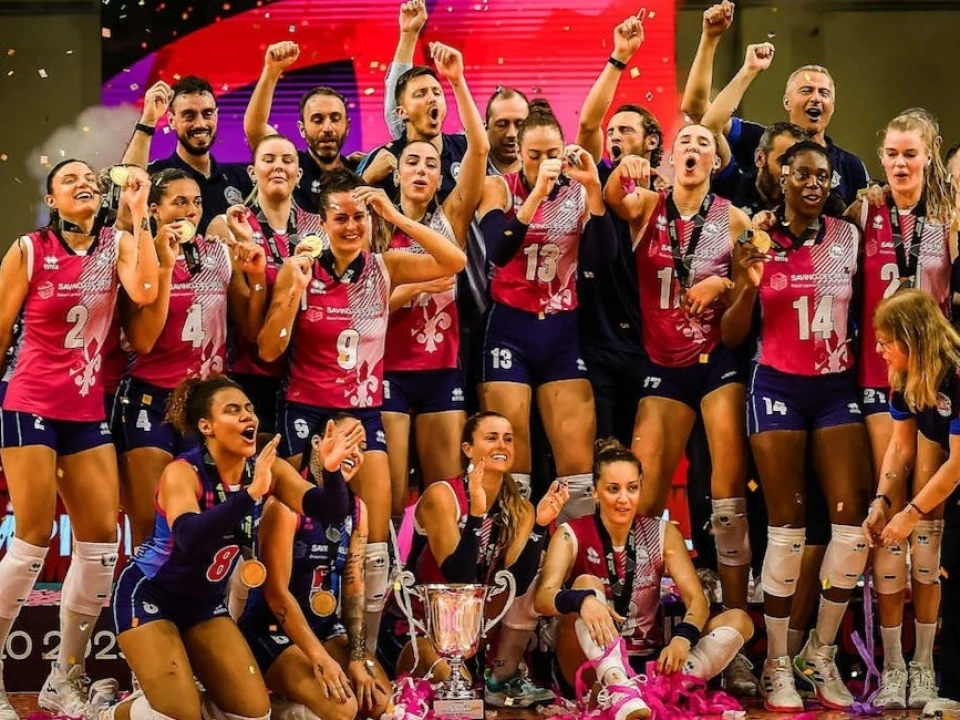
In São Paulo, Brazil, Scandicci captured the FIVB Women’s Club World Championship. For a club born just a few years ago, the achievement marked a dramatic leap onto the global stage. Scandicci did not simply win a tournament – it confirmed itself as the strongest club team in the world.
The competition brought together eight elite teams from four continents and ran from December 9 to December 14. From the opening matches, Scandicci displayed the tactical discipline and technical identity that have long defined Italian volleyball. Their path to the final included efficient wins and limited set losses, reflecting a team built on structure, patience and defensive consistency rather than improvisation.
The final itself was an all-Italian showdown. On one side stood Scandicci, representing Tuscany; on the other, Conegliano, from Veneto, a club that has shaped an era and carried Italian volleyball to the top of the world in recent years. Two Italian teams, both from small cities, faced each other on the sport’s biggest club stage, highlighting the extraordinary depth of the Italian women’s game.
Scandicci won 3–1, with set scores of 30–28, 25–19, 21–25 and 25–23. The opening set alone lasted more than 40 minutes and embodied the intensity of the match. After Conegliano pulled back in the third set, Scandicci responded with composure, closing the fourth through precise serving and disciplined defense.
The victory was built on collective balance, another hallmark of Italian volleyball culture. Ekaterina Antropova provided scoring power, Avery Skinner added stability in attack and reception, and Maja Ognjenović directed play with experience and clarity. In the backcourt, Brenda Castillo ensured continuity, while players such as Lucia Bosetti, Henny Reesink Weitzel and Linda Nwakalor contributed at key moments.
Conegliano, led by Isabelle Haak and Gabi, confirmed its status as a global benchmark despite the defeat. Their presence in the final reinforced the sense of italianità surrounding the event – not just in nationality, but in style, organization and competitive mindset.
With this win, Scandicci claimed its first world title and reinforced Italy’s central role in women’s volleyball. The world championship final, entirely Italian, became a powerful statement: the heart of the sport beats strongly in Italy, even when the stage is global.