

Nestled in the heart of the Alps, South Tyrol – known in Italian as Alto Adige and in German as Südtirol – is one of Italy’s most distinctive and fascinating territories. As the northernmost province of the Italian Republic, it borders Austria to the north and east, Switzerland to the west, and the Italian province of Trentino to the south. Although its landscapes and architecture often resemble those of the Alpine world beyond the Brenner Pass, South Tyrol is unmistakably Italian, forming, together with Trentino, the autonomous Italian region of Trentino–Alto Adige/Südtirol. Its unique blend of languages, cultures, and traditions has made it one of Europe's most successful examples of coexistence between different ethnic communities.
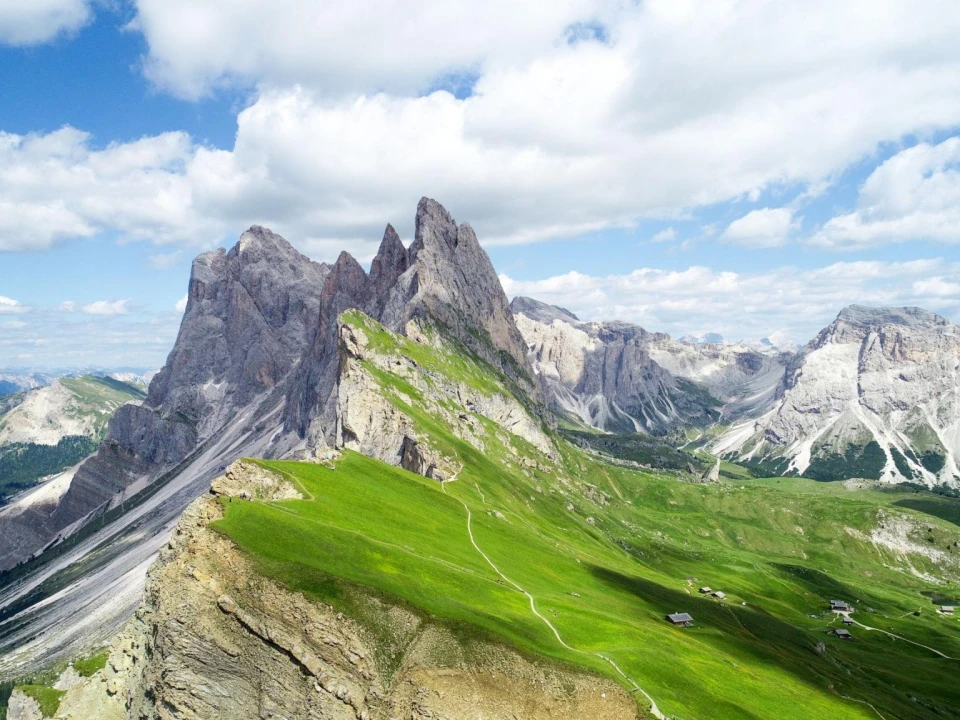
Covering approximately 7,400 square kilometers (2,860 square miles) and home to more than 540,000 residents, South Tyrol is dominated by dramatic mountain scenery. About 80% of its territory lies above 1,000 meters (3,280 feet), making it one of Italy's most mountainous provinces. The region includes some of the country's most spectacular natural landmarks, including the Dolomites, a UNESCO World Heritage Site famous for their soaring limestone peaks, alpine meadows, and breathtaking hiking and skiing destinations. Rivers such as the Adige, Italy's second-longest river, begin their journey here, while fertile valleys support extensive vineyards and apple orchards. South Tyrol alone produces roughly 10% of Europe's apples, making it one of the continent's leading fruit-growing regions.
The province's history is as remarkable as its geography. For more than 550 years, until the end of World War I, South Tyrol belonged to the County of Tyrol within the Habsburg Empire. Following the 1919 Treaty of Saint-Germain, the territory became part of Italy, a status it has retained ever since. During the Fascist era, policies of forced Italianization created tensions with the predominantly German-speaking population. After World War II, Italy and Austria negotiated a series of agreements that culminated in the Second Statute of Autonomy in 1972, granting South Tyrol extensive powers of self-government while firmly remaining part of the Italian state. Today, this autonomy is widely regarded as one of the world's most successful models for protecting linguistic minorities and promoting peaceful coexistence.
One of South Tyrol's defining characteristics is its multilingual identity. German is the first language for roughly 69% of the population, Italian for about 26%, while approximately 4% speak Ladin, an ancient Romance language preserved in the Dolomite valleys of Val Gardena and Val Badia. All three languages enjoy official status, and road signs, schools, public offices, and government services operate accordingly. This multilingual environment gives South Tyrol a cultural richness unlike anywhere else in Italy.
The region's economy consistently ranks among the strongest in Italy. Tourism is a major pillar, attracting millions of visitors each year for skiing, hiking, cycling, and wellness vacations. Agriculture also plays a vital role, with world-renowned wines, apples, and dairy products benefiting from the Alpine climate and centuries of farming tradition. High-quality manufacturing, renewable energy, and a strong network of small and medium-sized enterprises further contribute to one of Italy's highest standards of living.
Perhaps nowhere else in Italy do Mediterranean and Central European influences blend so naturally. Medieval castles overlook vineyards, Baroque churches stand beside Alpine farmhouses, and Italian cuisine meets Austrian and Ladin traditions at the dinner table. Cities such as Bolzano, Merano, and Bressanone combine Italian elegance with Tyrolean charm, while local festivals celebrate centuries-old customs that remain deeply rooted in everyday life.
South Tyrol demonstrates that cultural diversity can be a strength rather than a division. Entirely Italian in its political identity, yet proudly preserving its multilingual heritage and Alpine traditions, it represents one of Italy's most extraordinary regions – a place where history, nature, and culture come together in a landscape unlike any other in Europe.