
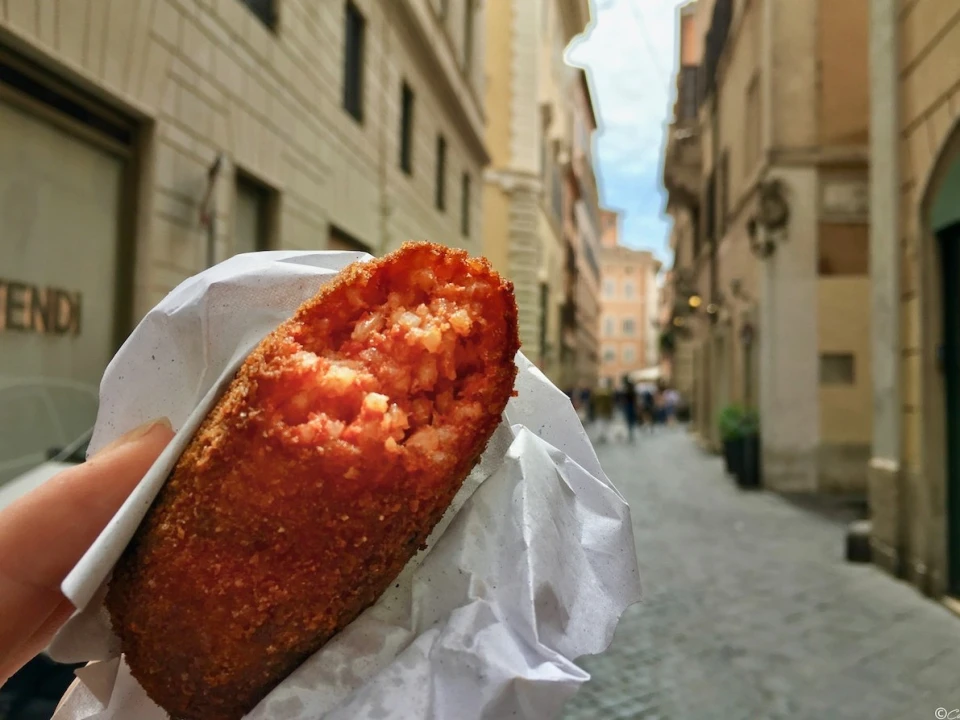

Supplì is one of the most iconic examples of Roman street food, a simple yet deeply rooted specialty that reflects the culinary identity of Italy’s capital. Found in pizzerias, bakeries, and takeaway counters across Rome, this fried rice croquette is widely consumed as a quick snack, an appetizer, or even a light meal. Today, it remains a staple of everyday eating habits, with thousands of pieces sold daily in the city’s many “pizza al taglio” shops, confirming its enduring popularity.
At its core, supplì is made from rice cooked in tomato sauce or meat ragù, shaped into an oval or cylindrical form, filled with mozzarella, coated in breadcrumbs, and deep-fried at around 180°C (356°F). The result is a crispy exterior that contrasts with a soft interior and a melted cheese center. Typical recipes use risotto rice varieties such as Arborio or Carnaroli, along with eggs and breadcrumbs for coating, ensuring a compact structure and a golden crust after frying.
One of the defining features of this dish is the so-called “supplì al telefono.” When the croquette is broken in half while still hot, the melted mozzarella stretches into a thin strand resembling a telephone wire. This visual effect is not just a curiosity but a hallmark of proper preparation, indicating the correct temperature and texture of the filling.
The origins of supplì date back to at least the 19th century. Written evidence appears as early as 1847, when a similar preparation was listed on a Roman trattoria menu under the name “soplis di riso.” Over time, the dish became widely associated with street vendors who fried and sold these croquettes directly in the streets, making them accessible to a broad urban population. This connection to street culture remains central to its identity today.
The name “supplì” itself is derived from the French word “surprise,” reflecting the hidden filling inside the rice ball. This linguistic influence is often linked to the period of French presence in Rome during the late 18th and early 19th centuries. The “surprise” refers specifically to the molten mozzarella at the center, which reveals itself only after the first bite.
Historically, the recipe has evolved significantly. Early versions included ingredients such as chicken giblets and offal, which were common in traditional Roman cooking and reflected a culture of minimizing waste. In modern preparations, these elements have largely been replaced by ground meat ragù or even vegetarian alternatives, making the dish more accessible and adaptable to contemporary tastes. In fact, some sources note that early variations could be meat-free, highlighting the flexibility of the recipe over time.
Today, supplì is not limited to its classic form. Creative reinterpretations have emerged, incorporating flavors inspired by traditional Roman pasta dishes such as cacio e pepe or amatriciana. These variations demonstrate how a historic street food can evolve while maintaining its essential structure and cultural significance. Despite these innovations, the original version remains the most widely recognized and consumed.
Consumption patterns also highlight its versatility. Supplì is commonly eaten as a pre-meal snack, especially before pizza, but it is equally popular as a standalone street food. Its portability, affordability, and satisfying texture make it ideal for fast-paced urban life. Unlike more elaborate dishes, it requires no utensils and can be eaten on the go, reinforcing its role as a practical and accessible food option.
In comparison with similar Italian foods, such as Sicilian arancini, supplì stands out for its elongated shape and its emphasis on a stringy mozzarella center rather than a more complex filling. This distinction has helped preserve its unique identity within Italy’s diverse street food landscape.