
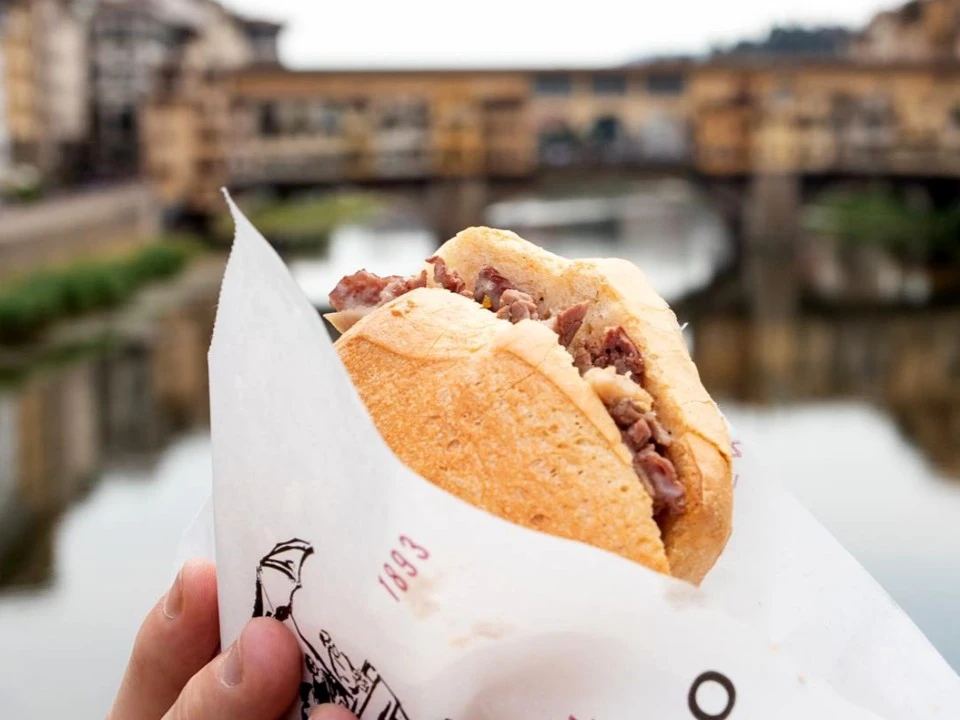

In Florence, one of the most recognizable street foods comes from an ingredient many people would not expect. Lampredotto, a sandwich made from a specific part of a cow’s stomach, has been part of the city’s culinary life for centuries. Despite its humble origins, it remains one of the most beloved traditional foods in Tuscany and an essential stop for visitors exploring Florence’s markets and squares.
Lampredotto is prepared using the fourth stomach of cattle, known as the abomasum. This cut belongs to the broader category of tripe, a type of offal that has long been used in Italian cooking. In medieval and Renaissance Florence, expensive cuts of meat were reserved for wealthy families, while workers and laborers relied on less costly parts of the animal. Organs and stomachs, which were cheaper and widely available, became the basis for many popular dishes.
The name “lampredotto” has an unusual origin. Many historians believe it comes from the lamprey eel, a fish once common in the Arno River. Lampreys were considered a delicacy among noble families, and their elongated shape reminded Florentines of the cooked tripe used for lampredotto. Over time, the comparison gave the dish its name.
Street vendors selling lampredotto began appearing in Florence hundreds of years ago. Known locally as trippai, these vendors specialized in preparing and serving tripe-based dishes to workers, artisans, and travelers. By the 1800s, lampredotto stalls had become a familiar sight in busy areas of the city. Vendors cooked the meat slowly in large metal pots filled with broth flavored with vegetables such as celery, onion, carrot, and parsley.
The traditional preparation process remains largely unchanged today. The lampredotto is simmered for several hours until it becomes tender and flavorful. Once cooked, the meat is sliced into small pieces and placed inside a crusty bread roll called a rosetta or semelle. Before serving, the bread is usually dipped briefly in the hot broth to soften it and enhance the flavor.
Two classic condiments complete the sandwich. One is salsa verde, a green sauce made from parsley, garlic, capers, olive oil, and sometimes anchovies. The other is a spicy red sauce often based on tomatoes and chili pepper. Locals typically choose one or the other, although some vendors offer both together.
Even today, lampredotto remains closely connected to Florence’s street food culture. Dozens of kiosks operate across the city, particularly near markets such as Mercato Centrale and in busy public squares. For many Florentines, eating a lampredotto sandwich during a lunch break or while walking through the city is part of everyday life.
In recent years the dish has also attracted international attention. Food tourism has grown significantly in Florence, with millions of visitors arriving every year to experience Tuscan cuisine. According to tourism estimates, more than 10 million travelers visit the city annually, and many seek out authentic local foods. Lampredotto has become a symbol of Florence’s culinary identity, often recommended alongside dishes like ribollita and bistecca alla fiorentina.
Despite its growing popularity, lampredotto still reflects its working-class roots. It represents a culinary tradition built on resourcefulness, where no part of the animal was wasted. This philosophy of using every ingredient continues to resonate today, especially as modern chefs and diners increasingly value sustainable cooking.
After hundreds of years, lampredotto remains a simple yet powerful example of Florence’s food culture. A few slices of slow-cooked tripe, a piece of bread soaked in broth, and a spoonful of sauce are enough to connect present-day diners with a tradition that has shaped the city’s street food for generations.