
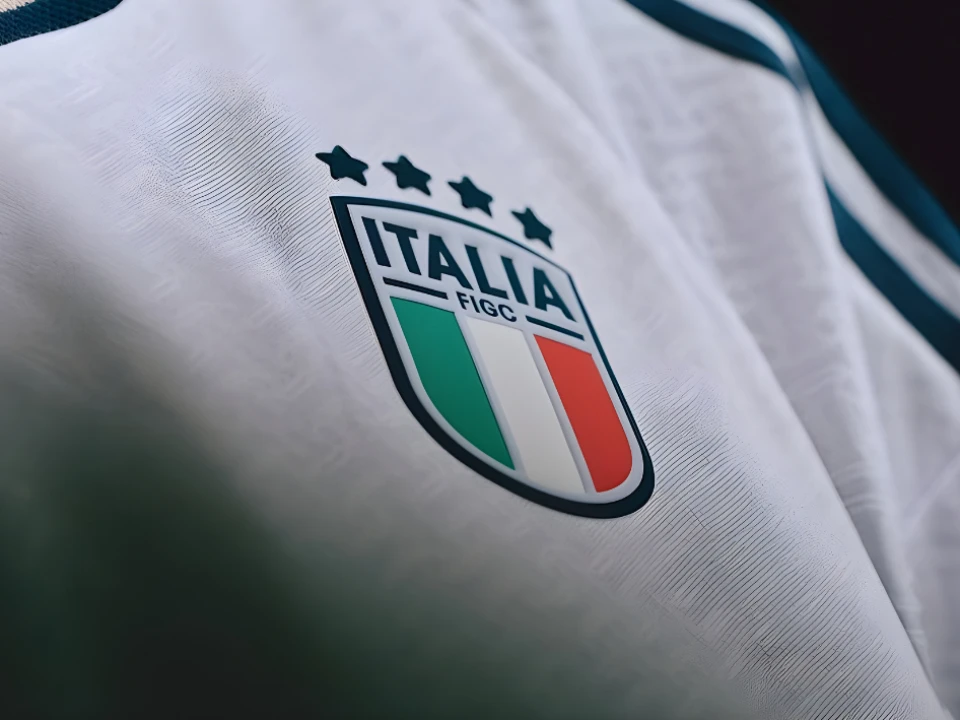

There is something profoundly cruel about the geography of soccer. Zenica, Bosnia - a gray, industrial city wedged between the mountains of the Balkans, with a stadium that seats fewer than ten thousand. And yet it is here, on March 31, 2026, that the Italian national soccer team, four-time world champion, lost on penalties to Bosnia and Herzegovina, failing to qualify for a third consecutive World Cup, which this summer will take place in the United States and Canada.
Italy is the only team in history to have won at least one World Cup and then fail to qualify for three editions in a row. A truly dismal record. To understand how deep this pain runs for the millions of Azzurri fans around the world, you have to remember what soccer means to Italy. You have to go back in time and recount the four occasions when that blue jersey reached the very top.
The first world title came on home soil, in fascist Italy in 1934. The regime of Benito Mussolini wanted to stage that World Cup as a propaganda showcase - and succeeded. The team was coached by Vittorio Pozzo, born in Turin, who led the national team for more than twenty years, in addition to managing major clubs such as Torino FC and AC Milan. At the 1934 World Cup, Italy won its opening match 7-1 against the United States, then defeated Spain and Austria, and finally overcame Czechoslovakia in the final. It was a thrilling victory that turned into a nationwide celebration in a still poor and underdeveloped country.
Four years later, once again under Pozzo, Italy achieved the feat of winning the World Cup held in France. The final in Paris against Hungary ended 4-2 and was a true football spectacle. Italy was still a developing country, yet that national team played a modern, physical, tactical style of soccer. It became the first team to win two consecutive titles - and, to this day, the last to accomplish that feat. That is how the Azzurri - as the national team players were called because of their jersey color - became legends of world soccer. But only one year after that triumph, Europe was devastated by World War II, and soccer disappeared for many years.
Italian soccer glory returned in the 1960s, during the economic boom that transformed Italy into one of the ten most industrialized and prosperous countries in the world. In 1968, the Azzurri won their first European Championship, thanks to players like Gianni Rivera and Sandro Mazzola, two true international stars.
But it would take forty-four years to win a third world title - the one no Italian has ever forgotten. The 1982 World Cup was played in Spain. To understand what that summer meant, you first have to understand Italy in 1982. It was a country struggling to emerge from a decade of turmoil. The 1970s had been marked by clashes between opposing extremist forces - from neo-fascist terrorism to attacks by communist groups such as the Red Brigades and Lotta Continua - events that deeply divided and frightened the country, leading to widespread disillusionment with politics. The kidnapping and murder of a leading government figure, Aldo Moro, in 1978 had left a wound that was still open. The economic crisis was severe, and trust in institutions was at historic lows.
Italy was searching for something to believe in - something that would not betray it. It found it in eleven men wearing blue. Or rather, in one of them above all: Paolo Rossi, a player from Vicenza with a boyish face who had been suspended for two years due to a betting scandal. Rossi returned to the national team, called up by coach Enzo Bearzot, a former player from Joannis, in the province of Udine, who had not enjoyed great success either as a player or as a coach. In just a few weeks, Rossi became the symbol of a nation rising again. Six goals in three matches, including a hat trick against star-studded Brazil in what is still considered one of the greatest World Cup matches ever played. The final against West Germany ended 3-1. In Italy, there was an explosion of collective, liberating joy, as if soccer had given the country a unity that politics could not.
The last title is still vivid in memory. Germany, summer 2006. Italy arrived at the World Cup in the midst of the “Calciopoli” scandal, a system of referee corruption that had involved the biggest clubs and cast a shadow over the entire system. The team of Marcello Lippi, the Viareggio-born coach famous for always having a cigar in his mouth, responded on the field with extraordinary strength. After defeating host nation Germany in the semifinals, the Azzurri won the final on penalties against France. On the night of July 10, Italy turned into an ocean of flags. Four World Cups won - a feat also achieved by Germany and surpassed only by Brazil, with five.
All of this makes the silence of the past twelve years even more painful for millions of Azzurri fans - from 2014, the last World Cup Italy played in, to today.