
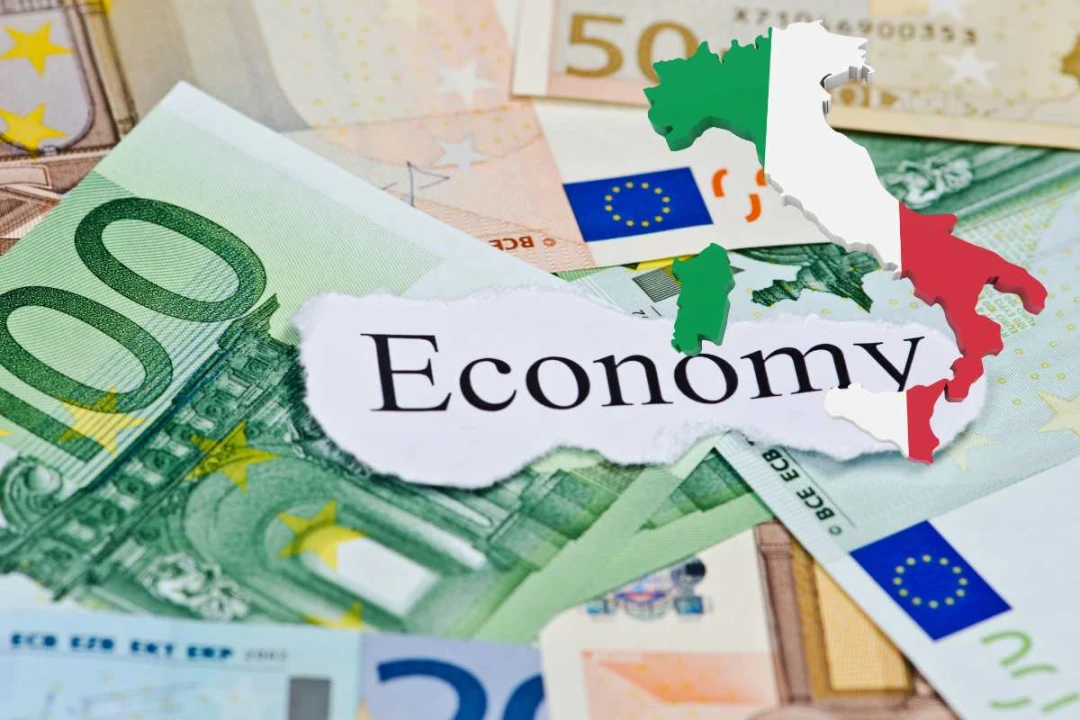

There are two Italys: one that endures and one that struggles. A country that keeps exporting excellence - food, fashion, design, creativity - and a country that, at the same time, can’t turn that strength into steady growth. It’s the double face of a complex economy, built on talent, resilience, and contradiction.
Today, as the global economy slows and geopolitical tensions multiply, Italy is living in a state of suspension. Not in deep crisis, but not in recovery either: growing little, investing little, and yet still managing to surprise.
Stagnation that doesn’t stifle ingenuity
According to Istat and the IMF, Italy’s GDP will rise by about 0.6% in 2025 - a modest pace, especially compared to the United States, where growth is expected to reach around 2.1%, fueled by strong domestic consumption and investments in technology and infrastructure.
The gap is more than statistical; it reflects two different development models. America thrives on consumer confidence and its ability to attract capital, while Italy tends to protect what it already has rather than bet on what it could become.
Over the past two decades, Italian productivity has risen by just 4%, compared to a 25% increase in the U.S. The difference is critical, since productivity means the capacity to create stable, well-paid jobs.
Yet behind the numbers lies another story - that of a country that keeps inventing, problem-solving, and refusing to give up. Across industrial districts, artisan workshops, and startups, Italy continues to generate value. It just does so quietly, without the broad trust network needed to turn individual brilliance into collective success.
Exports once again as a lifeline
Whenever the domestic market slows, Italy turns outward. Once again, exports are keeping the system afloat, with a trade surplus exceeding 50 billion euros in 2024.
The United States is Italy’s third-largest market, after Germany and France, with trade between the two nations surpassing $90 billion last year. It’s a striking figure that shows how strong the economic bond across the Atlantic remains.
But the world has changed: having a good product is no longer enough. Buyers of Italian goods - in the U.S. as well as in Asia - now demand stories, values, and authenticity. In this sense, Made in Italy must make a cultural leap: not just sell, but tell its identity. Not just export goods, but export trust - because in today’s global markets, reputation is worth as much as quality.
Energy and sustainability: the new frontier of competitiveness
Then there’s the issue of costs. Italian companies pay about 30% more for electricity than the European average - and nearly twice as much as in the U.S., where domestic gas and energy sources keep prices low. This structural disadvantage weighs heavily on Italian manufacturing, especially small and medium enterprises.
But it’s also generating a positive side effect: a rush toward efficiency.
Today, more than one in three Italian firms invests in renewable energy or in technologies to reduce waste. Sustainability is no longer just an ethical choice - it’s an economic survival strategy.
In the United States, the green transition is powered by massive public programs such as the Inflation Reduction Act. In Italy, the process is slower, but the most forward-looking companies are turning environmental challenges into competitive advantages.
The culture of “fair play” as Italy’s signature
One word sums up the challenge ahead: fair play. It means respect for rules, transparency, and responsibility.
In the United States, a company’s reputation has become a key part of its market value - just look at how ESG criteria influence finance and consumer behavior. Italy is beginning to follow that same path, but with a more human and cultural touch: respect for work, for quality, and for people.
In a world where competition is ruthless, Italy’s true distinctive value may be this very balance - the ability to combine excellence with integrity, beauty with ethics, business with community.
Corporate fair play - consistency between values and behavior - could become the new frontier of Made in Italy, a form of economic soft power recognized around the world.
A bridge across the Atlantic
This is where the Italian American community comes in. Today more than ever, the relationship between Italy and the United States can be a strategic key to breaking free from stagnation and creating new opportunities.
Italian Americans know Italy - but they also understand the rules and mindset of American markets. They know that success is built on reliability, clarity, and reputation.
They can be ideal partners for Italian small and medium enterprises seeking to enter the U.S. market without losing their identity. They are natural bridges between two worlds that, though different, share deep values: work, family, creativity, and personal dignity.
That’s what makes the bond between Italy and the United States so special - two nations that, in different ways, still believe in the power to improve, to restart, to reinvent themselves.
A future to write together
Italy stands at a crossroads. It can remain stuck, lamenting stagnation, or it can rediscover its spirit of initiative and cooperation.
The United States - despite its contradictions - shows that trust, whether public, private, or personal, is the invisible engine of growth. It’s what allows people to take risks, to innovate, and to believe in the future.
That can happen in Italy too. But it will take courage, vision, and a renewed alliance among generations, businesses, and local communities. Italian Americans, with their long story of achievement, can help lead the way - not just as investors or partners, but as guardians of a living memory built on sacrifice, ingenuity, and pride.
Because the true strength of Italy - now as always - isn’t found in the numbers, but in the people who still believe that creating value together is possible.