

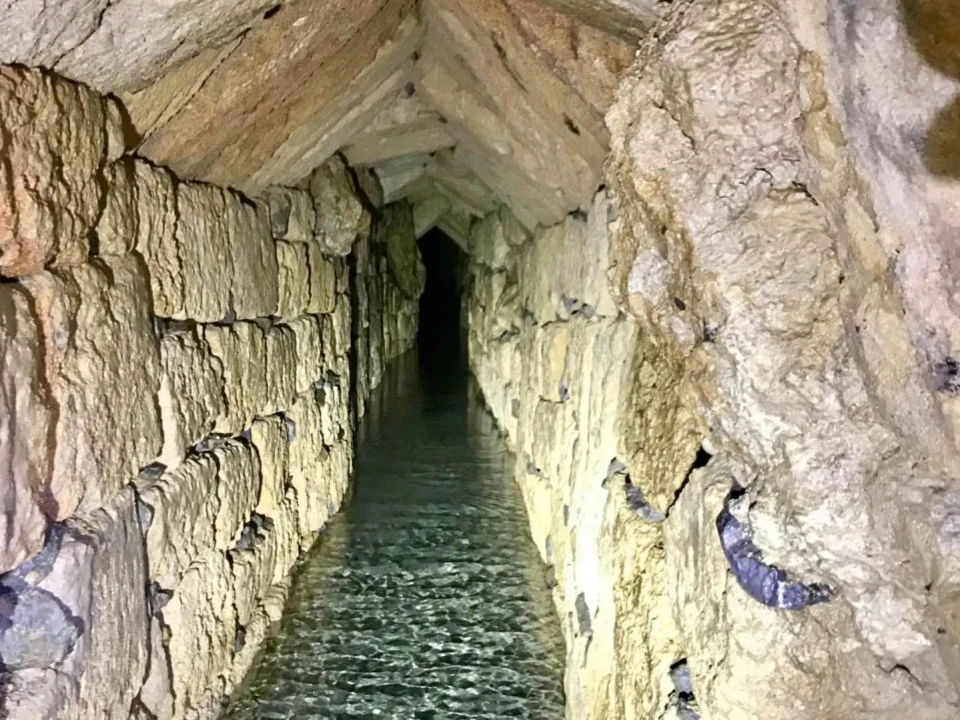

Palermo is a city that dazzles visitors with its golden light, bustling markets, and layered history. Yet under the streets and palaces, another world flows quietly – a network of underground aqueducts that once carried life-giving water through the Sicilian capital. These channels, known as qanats, were carved centuries ago and still whisper stories of engineering genius, cultural encounters, and the challenges of survival in a dry land.
The idea of channeling water underground did not begin in Sicily. The technique has roots in the Middle East, where arid climates demanded clever ways to capture and move water. When Arab rulers governed Palermo in the 9th and 10th centuries, they introduced these systems to harness the groundwater of the Conca d’Oro valley. Skilled workers dug tunnels with patient precision, sloping them gently so that water could travel from springs in the hills down toward gardens, fountains, and homes.
A qanat is more than a tunnel. Vertical shafts were opened every few yards to provide ventilation and access for maintenance. These shafts also gave workers light as they chipped away at limestone with simple tools. Crawling through the low, narrow passages was grueling work – not for the faint of heart. Yet the reward was remarkable: a constant, pure flow of water that turned Palermo into a garden city. The citrus groves, with their famous oranges and lemons, were made possible by this hidden irrigation network.
Over time, several major qanats were built around Palermo. Some ran under noble estates, feeding lush gardens that became symbols of prestige and wealth. Others supplied public fountains and, later, helped fill the great basins of monasteries and convents. The system blended function with beauty, tying the rhythms of daily life to the hidden veins of the earth.
Walking today through these underground passages is like stepping back into a forgotten dimension. The air is cool and damp, the walls etched with centuries of pickaxe marks. Visitors sometimes kneel or crawl to follow the channels, guided by the faint sound of trickling water. The shafts above create sudden shafts of light, where moss and roots hang like fragile curtains. In some stretches, the passage widens enough to stand, but the sense of enclosure never disappears.
Palermo’s qanats are also tied to cultural memory. Local stories describe workers who descended into the narrow shafts, their bodies covered in mud, eyes stung by humidity. These men were nicknamed ‘ngruttati – literally, “encrusted ones.” It was a hard, dangerous trade. Accidents were common, and the physical strain left its mark. Yet their labor sustained an entire city, making possible the lush gardens that once gave Palermo the nickname “paradise on earth.”
The qanats reveal more than just practical engineering. They reflect a philosophy of balance with nature. Instead of dominating the land with massive dams or heavy machinery, the system quietly cooperated with geology. The tunnels did not waste water – they preserved it from evaporation in Sicily’s hot sun. This respect for natural limits feels especially relevant today, as modern societies confront new water shortages and climate challenges.
Over the centuries, many qanats fell into neglect. Changes in technology, urban expansion, and shifting water needs made them less central. Some were blocked, others collapsed, and still others disappeared under new construction. Yet parts of the network have survived, and in recent years there has been growing interest in protecting and exploring them. Environmental groups and local associations have organized tours that allow visitors to descend into the cool darkness and discover Palermo’s watery secret for themselves.
The experience is not only physical but emotional. To descend into a qanat is to leave behind the noise of scooters and crowded piazzas, entering instead a hushed space where time slows. You hear drops echoing off stone, feel the earth’s chill seep into your skin, and imagine the hands that carved these walls more than a thousand years ago. Emerging again into the Sicilian sunlight, you realize how fragile and precious water is – and how deeply it has shaped the city’s destiny.
Today, Palermo’s qanats stand as both monuments and warnings. They are monuments to the ingenuity of past civilizations that blended cultures and technologies to build something enduring. At the same time, they remind us that water is not infinite. As droughts spread across the Mediterranean, the ancient channels whisper lessons about stewardship, patience, and respect for nature’s rhythms.
For Palermo, these underground rivers are part of its identity – hidden, complex, and resilient. They carry the memory of Arab farmers, Norman rulers, and Sicilian workers whose sweat shaped a living city. To walk their paths is to connect with Palermo’s true heartbeat, not only above ground in its lively streets, but also below, where water still flows through the stone veins of history.