

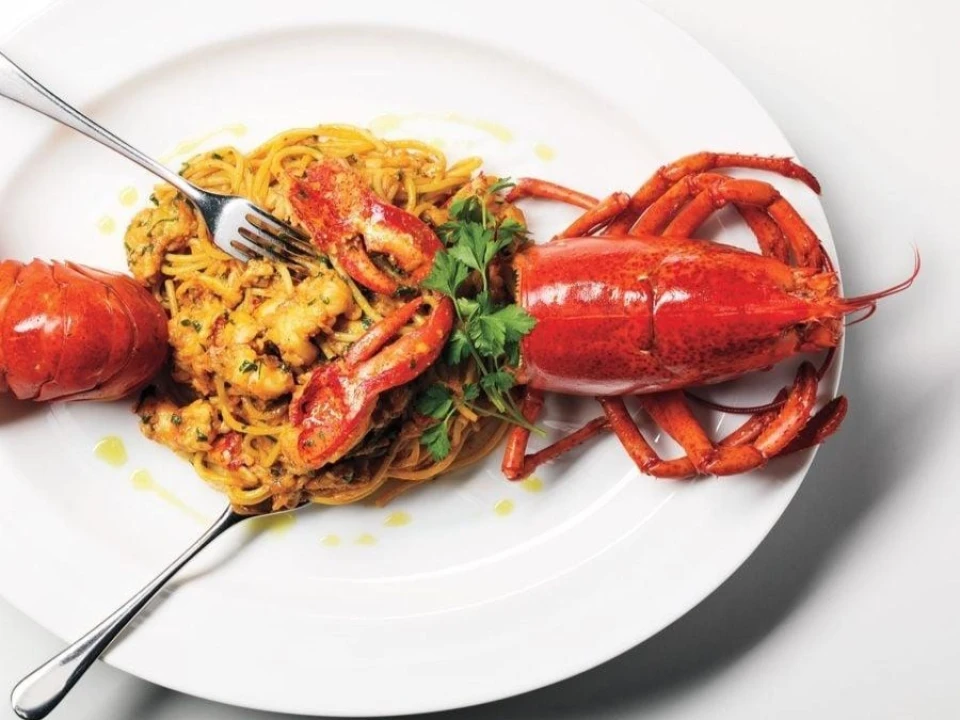

The origins of this recipe are intensely personal.
As Silvia Baldini recounts on her website, the inspiration came shortly after her wedding in Tulum, Mexico. During the trip, she and her husband discovered a small restaurant owned by a woman of Roman descent. There, they tasted a pasta unlike anything they had experienced before: spaghetti enveloped in a creamy curry sauce, topped with lobster and shrimp.
The memory stayed with her for years.
That emotional connection matters because the dish itself feels emotional. It is not merely an exercise in flavor pairing or technical skill. It carries the warmth of travel, discovery, romance, and surprise, the kinds of experiences that permanently shape how people remember food.
This is what elevates the recipe beyond restaurant luxury. It tells a story.
The Ingredients: Elegant but Purposeful
- 2 tablespoons extra virgin olive oil
- 2 tablespoons unsalted butter
- ½ medium yellow onion, finely chopped
- 2 tablespoons curry powder
- ½ teaspoon fine sea salt
- 1 teaspoon freshly ground black pepper
- Juice of ½ lemon
- ½ cup heavy cream
- 1 pound spaghetti
- 16 large shrimp, peeled and deveined
- 8 ounces lobster meat, cut into chunks
- 1 cup fresh parsley, finely chopped
- Coarse sea salt for pasta water
Baldini recommends Madras curry powder for its balanced warmth and aromatic complexity, though she notes that different curry blends can personalize the dish. She also emphasizes flexibility, frozen lobster meat works well, and the sauce itself is flavorful enough to support vegetarian adaptations.
The Technique: Precision Without Complication
Like many great Italian recipes, the success of the dish lies less in complexity and more in execution.
The onions are cooked slowly in olive oil and butter until softened and sweet, creating the flavor base. The curry powder is toasted gently to release its fragrance without becoming bitter. Lemon juice cuts through the richness while cream binds everything into a velvety sauce.
Then comes the critical moment: cooking the seafood.
Lobster and shrimp are delicate proteins. Overcook them by even a minute and the dish loses its elegance. Baldini handles them with restraint, allowing their natural sweetness and tenderness to remain intact.
Finally, the spaghetti is tossed directly into the sauce so it absorbs flavor rather than simply carrying it.
This detail matters. In authentic Italian cooking, pasta and sauce are not separate components. They must become one.
Curry and Italian Cuisine: A More Natural Pairing Than It Seems
The use of curry in Italian food may surprise some diners, but historically, Mediterranean cuisine has always been shaped by spices moving through trade routes connecting Europe, North Africa, the Middle East, and Asia.
Venice, Sicily, and southern Italy all absorbed outside influences over centuries. Cinnamon, saffron, cloves, nutmeg, and pepper became integrated into regional cooking long before modern ideas of “fusion cuisine” existed.
Baldini’s recipe taps into that historical reality.
The curry here does not attempt to imitate Indian cuisine, nor does it abandon Italian culinary identity. Instead, it becomes another layer in a dish fundamentally grounded in Italian technique and balance.
That distinction is important because it separates thoughtful culinary evolution from gimmickry.
The Emotional Luxury of Seafood Pasta
There is something inherently celebratory about lobster pasta.
It evokes anniversaries, vacations, weddings, birthdays, and long dinners where no one is checking the time. Yet Baldini’s version avoids the heaviness that often accompanies luxurious seafood dishes.
Despite the cream and shellfish, the pasta remains surprisingly light in spirit. The lemon keeps it vibrant. The curry adds intrigue rather than weight. Fresh parsley brightens the finish.
The dish invites lingering conversation instead of overwhelming the palate.
That is what makes it memorable.