

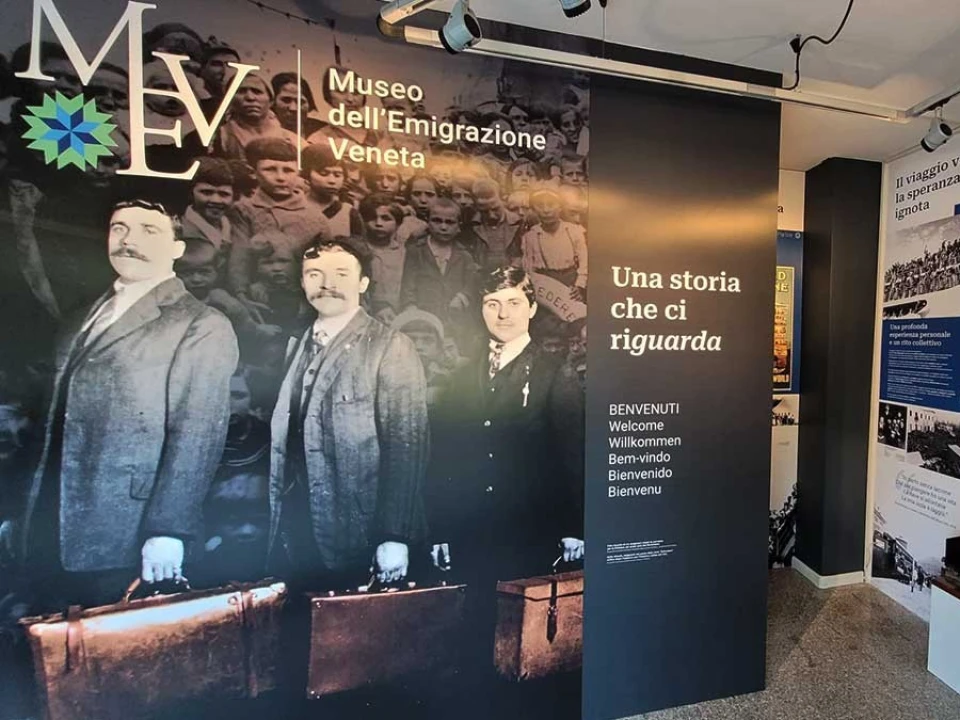
For an Italian family bound for America in 1913, some of the biggest decisions came before anyone stepped aboard a steamship. Which port offered the best route? How much luggage could they bring? What would an immigration officer ask in New York? A 33-page booklet issued by Italy’s Emigration Commissariat answered those questions. Printed in Rome in August 1913 and distributed free of charge, it is now available to visitors on their smartphones through the MevApp at the Museum of Venetian Emigration in Belluno.
The booklet opened with 20 practical recommendations. It reminded travelers that their passports were free and that their fare covered up to 100 kilograms of baggage – about 220 pounds – within a specified size limit. Groups of 10 or more could get a reduced train fare to the port. The guide advised passengers to arrive 24 hours before sailing, with meals and lodging for that period covered by the steamship company. It also directed travelers to assistance offices in Genoa, Naples, Palermo, and Messina.
The next section explained U.S. immigration rules. Third-class passengers arriving in New York would be taken to Ellis Island for inspection. Travelers could tell officials they planned to look for work, while a job promised before departure could be grounds for refusing admission. The booklet suggested arriving with at least $25, preferably in a Banco di Napoli money order. U.S. law set no fixed minimum.
For people headed to Massachusetts, Vermont, New Hampshire, or Maine, the guide recommended a ship to Boston. Travelers continuing from New York to San Francisco could take the Union Pacific route, which took about nine days and cost $53 to $65. The booklet also listed steamship companies and vessels authorized to carry emigrants that year.
For Italian American families, the booklet fills in details that passenger lists rarely capture. A ship’s manifest may record a name, an age, and a destination. The guide shows what it took to get there, from paying for the train to the port to deciding how to carry the money a family would need once it reached the United States.