
In 2026, We the Italians celebrates “Two Anniversaries, One Heart” – the 250th anniversary of the United States and the 80th anniversary of the Italian Republic. This article is part of the “Happy Birthday USA: Unsung Italian Heroes” project, in which we share how, in every corner of the United States, an Italian has made a positive impact on their local community.
---
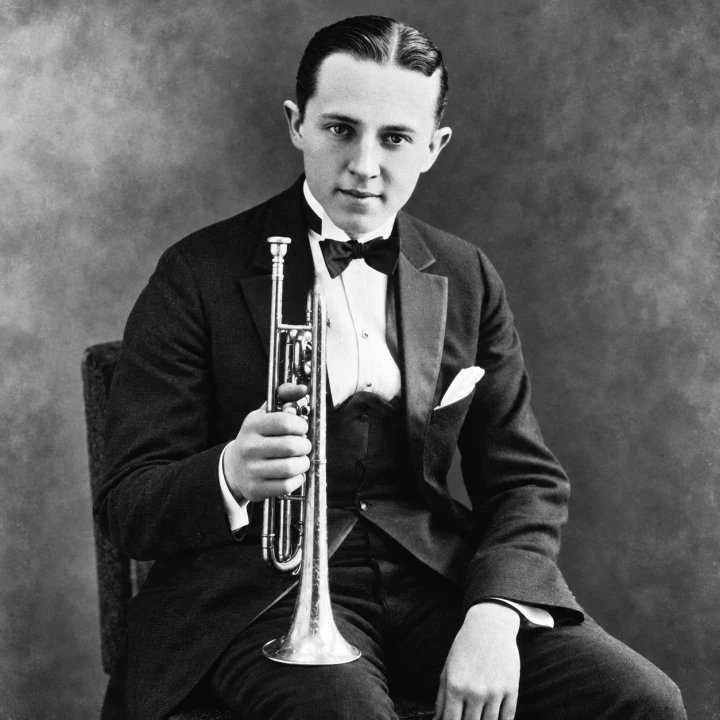
Nick La Rocca, the son of a Sicilian shoemaker who recorded the first jazz record in history
On February 26, 1917, five musicians from New Orleans entered a recording studio in New York City and made a record that would change music history. Leading the group was Nick La Rocca, the son of a shoemaker who had emigrated from Sicily. Released by Victor Records, that recording is widely recognized as the first commercial jazz record in history. It marked a musical revolution whose roots also reached back to a small Sicilian town: Salaparuta, in the province of Trapani.
Nick, born in New Orleans in 1889, was the son of Girolamo La Rocca, a shoemaker from Salaparuta, and Vita De Nina. Girolamo had brought more than the tools of his trade to America. He had also brought a cornet, a reminder of his experience playing in Italian brass bands.
The family was part of the great wave of Sicilian immigration to Louisiana. In the late nineteenth century, a steamship reportedly sailed every week between Palermo and New Orleans, carrying immigrants and agricultural products. New Orleans was one of America's leading ports: by 1850, it was already the second busiest in the United States and the fourth busiest in the world.
Louisiana, purchased from France in 1803, had attracted farmers, merchants, and workers from many different countries. New Orleans became an extraordinary crossroads of musical cultures. African Americans made decisive contributions through blues, ragtime, and improvisation, while Europeans brought other instrumental traditions. Sicilians were particularly familiar with the brass instruments played in their hometown bands. Jazz emerged from this multicultural environment.
Nick grew up surrounded by these sounds. His father would have preferred that he pursue a more secure profession, but the young man learned to play the cornet while initially working as an electrician.
In 1916, he helped form the Original Dixieland Jass Band. The following year, the group recorded Livery Stable Blues and Dixieland Jass Band One-Step. The first piece featured an unforgettable novelty: the instruments imitated the sounds of farm animals, an unusual effect that helped make the record popular.
The success was enormous. The recordings sold hundreds of thousands of copies, with some historical accounts estimating sales of more than one million. The band also conquered London in 1919, transforming music born on the streets of New Orleans into an international phenomenon.
For the city, La Rocca's legacy was particularly significant. His recording success helped establish a lasting association between New Orleans and jazz, bringing worldwide recognition to the city's musical identity. The recordings also influenced musicians who remained in Louisiana: some changed their bands' instrumentation after hearing them. Even Louis Armstrong acknowledged the importance of the band's early recordings.
La Rocca also helped popularize Tiger Rag, which became one of the signature compositions of traditional jazz. After retiring from performing, he returned to New Orleans, strengthening his connection to the city. He died in 1961, but his contributions are still remembered through historical accounts and public tributes, including a plaque on the New Orleans Jazz Walk of Fame.
Nick La Rocca did not invent jazz, but he helped bring the music born in his hometown to the world. His story brings together the Sicilian brass band tradition, the entrepreneurial spirit of Italian immigrants, and the extraordinary multicultural creativity of America. From a shoemaker's workshop in Salaparuta to the earliest jazz recordings, his legacy continues to illustrate why New Orleans holds such a unique place in the history of music worldwide.