In 2026, We the Italians celebrates “Two Anniversaries, One Heart” – the 250th anniversary of the United States and the 80th anniversary of the Italian Republic. This article is part of the “Happy Birthday USA: Unsung Italian Heroes” project, in which we share how, in every corner of the United States, an Italian has made a positive impact on their local community.
---
John Rebori Sr. and the forgotten story of Knoxville’s first Italian Americans
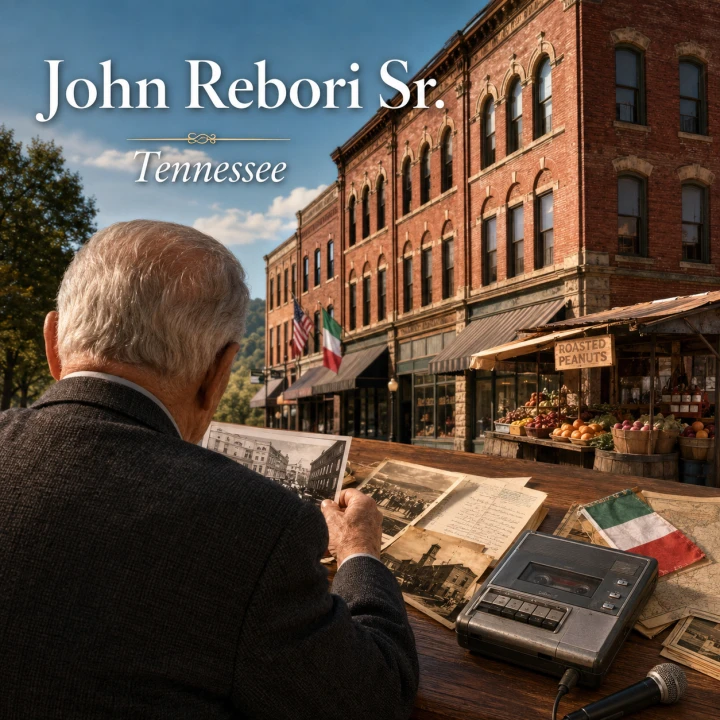
When thinking about the history of Italian Americans in Tennessee, one family seems to stand out for preserving the story of Knoxville's earliest Italian immigrants - the Rebori family. At the head of this family stands John Nicholas Rebori Sr. (1912 – 2003) who is remembered for many reasons including: his distinguished military service, career with the Tennessee Valley Authority (TVA), and international humanitarian work. However, in my opinion, his most enduring contribution may be one that received far less public attention: preserving the history of Knoxville's first Italian American community. His recollections, which were recorded around 1990, became one of the foundational primary sources for historians studying Italian immigration in East Tennessee.
Unlike cities such as New York or Chicago, Knoxville has never had a large "Little Italy". In fact, to this day, the Italian community in East Tennessee remains relatively small. Historical records indicate that by 1900 only about a dozen Italian-born residents lived in the city, and only a handful of Italian families called East Tennessee home during the early twentieth century. Because the community was so small, much of its history was preserved not in official archives but through family memories and oral tradition.
Around 1990, John Rebori Sr., a third-generation Italian American and grandson of Fiorenzo Ernesto Rebori, presented an extensive oral history of Knoxville's Italian pioneers. Modern historians have described this interview as the most reliable surviving source on the city's earliest Italian community because so few written records exist. Through his recollections, Rebori documented the lives of pioneering families such as the Reboris, Riccardis, and Brichettos - families whose stories might otherwise have been forgotten.
John’s family history began with his grandfather Fiorenzo Rebori, who unexpectedly settled in Knoxville after a snowstorm interrupted his journey to Memphis. It was this fateful snowstorm which changed Fiorenzo’s destination in which he opted to stay in Knoxville and start a small sidewalk stand selling roasted peanuts, fruit, and confections. Fiorenzo became known locally as the "Peanut King" as he began to plant deep roots in East Tennessee.
In 1915, Fiorenzo purchased the former Lawson McGhee Library building on Gay Street, which sat next to his stand. This building became known as the Rebori Building! The family owned the landmark for more than eight decades, making it one of downtown Knoxville's longest-held family-owned commercial properties. Today, the Rebori Building is highlighted on the walking tour maps of downtown Knoxville and still stands at 128 South Gay Street as a lasting reminder of the entrepreneurial spirit of Knoxville's early Italian immigrants.
John Rebori Sr.'s contribution extended far beyond preserving his own family's history. His oral testimony documented how Italian immigrants established fruit markets, bakeries, ice cream businesses, theaters, and construction companies all which helped to shape downtown Knoxville. He also explained how these families became fully integrated into East Tennessee while retaining pride in their Italian heritage.
The insight shared by John Rebori Sr. is invaluable to the Italian American community in East Tennessee. Without his willingness to share the oral history, photographs, and memories, scholars would know very little about the Italians who first settled in and helped to build Knoxville.
More than a century after Fiorenzo Rebori first welcomed customers to his sidewalk fruit stand, the Rebori Building still stands on Gay Street, serving as a lasting reminder that one Italian American family's perseverance became part of Knoxville's architectural and cultural heritage.
Nel 2026 We the Italians celebra Two Anniversaries One Heart, i 250 anni degli Stati Uniti e gli 80 anni della Reubblica Italiana. Questo articolo fa parte del progetto Happy Birthday USA: The Unsung Italian Heroes, in cui raccontiamo perchè in ogni angolo degli Stati Uniti qualcuno italiano ha lasciato un impatto positivo per il singolo territorio.
---
John Rebori Sr. e la storia dimenticata dei primi italoamericani di Knoxville, Tennessee
Quando si pensa alla storia degli italoamericani nel Tennessee, una famiglia sembra distinguersi per aver preservato la vicenda dei primi immigrati italiani di Knoxville: la famiglia Rebori. Al centro di questa famiglia c’è John Nicholas Rebori Sr. (1912 – 2003), ricordato per molte ragioni, tra cui il suo distinto servizio militare, la carriera presso la Tennessee Valley Authority (TVA) e il lavoro umanitario internazionale. Tuttavia, a mio parere, il suo contributo più duraturo potrebbe essere quello che ha ricevuto molta meno attenzione pubblica: aver conservato la memoria della prima comunità italoamericana di Knoxville. I suoi ricordi, registrati intorno al 1990, sono diventati una delle fonti primarie fondamentali per gli storici che studiano l’immigrazione italiana nell’East Tennessee.
A differenza di città come New York o Chicago, Knoxville non ha mai avuto una grande “Little Italy”. Ancora oggi, infatti, la comunità italiana dell’East Tennessee rimane relativamente piccola. I documenti storici indicano che nel 1900 vivevano in città solo una dozzina di residenti nati in Italia, e che solo poche famiglie italiane chiamavano casa l’East Tennessee all’inizio del Novecento. Proprio perché la comunità era così ridotta, gran parte della sua storia è stata conservata non negli archivi ufficiali, ma nei ricordi familiari e nella tradizione orale.
Intorno al 1990, John Rebori Sr., italoamericano di terza generazione e nipote di Fiorenzo Ernesto Rebori, offrì un’ampia testimonianza orale sui pionieri italiani di Knoxville. Gli storici contemporanei hanno descritto questa intervista come la fonte superstite più affidabile sulla prima comunità italiana della città, proprio perché esistono così pochi documenti scritti. Attraverso i suoi ricordi, Rebori documentò la vita di famiglie pioniere come i Rebori, i Riccardi e i Brichetto, famiglie le cui storie altrimenti sarebbero potute andare perdute.
La storia della sua famiglia cominciò con il nonno Fiorenzo Rebori, che si stabilì inaspettatamente a Knoxville dopo che una tempesta di neve interruppe il suo viaggio verso Memphis. Fu proprio quella tempesta a cambiargli il destino: Fiorenzo decise di restare a Knoxville e aprì un piccolo chiosco sul marciapiede dove vendeva arachidi tostate, frutta e dolciumi. Col tempo divenne noto in città come il “Peanut King”, mentre metteva radici profonde nell’East Tennessee.
Nel 1915, Fiorenzo acquistò l’ex edificio della Lawson McGhee Library su Gay Street, accanto al suo chiosco. Quell’edificio divenne noto come il Rebori Building. La famiglia possedette questo immobile storico per oltre ottant’anni, rendendolo una delle proprietà commerciali a conduzione familiare più a lungo mantenute nel centro di Knoxville. Ancora oggi il Rebori Building compare nelle mappe dei percorsi a piedi del centro città e si trova al 128 di South Gay Street, come testimonianza duratura dello spirito imprenditoriale dei primi immigrati italiani di Knoxville.
Il contributo di John Rebori Sr. andò ben oltre la conservazione della storia della sua stessa famiglia. La sua testimonianza orale documentò il modo in cui gli immigrati italiani aprirono mercati di frutta, panetterie, gelaterie, teatri e imprese edilizie, contribuendo a plasmare il centro di Knoxville. Spiegò anche come queste famiglie si integrarono pienamente nell’East Tennessee mantenendo allo stesso tempo l’orgoglio per la propria eredità italiana.
Le informazioni condivise da John Rebori Sr. sono preziosissime per la comunità italoamericana dell’East Tennessee. Senza la sua disponibilità a trasmettere storia orale, fotografie e ricordi, gli studiosi saprebbero ben poco degli italiani che per primi si stabilirono a Knoxville e contribuirono a costruirla.
Più di un secolo dopo che Fiorenzo Rebori accolse i suoi primi clienti al chiosco di frutta sul marciapiede, il Rebori Building è ancora in piedi su Gay Street, come ricordo tangibile del fatto che la perseveranza di una famiglia italoamericana è diventata parte del patrimonio architettonico e culturale di Knoxville.