
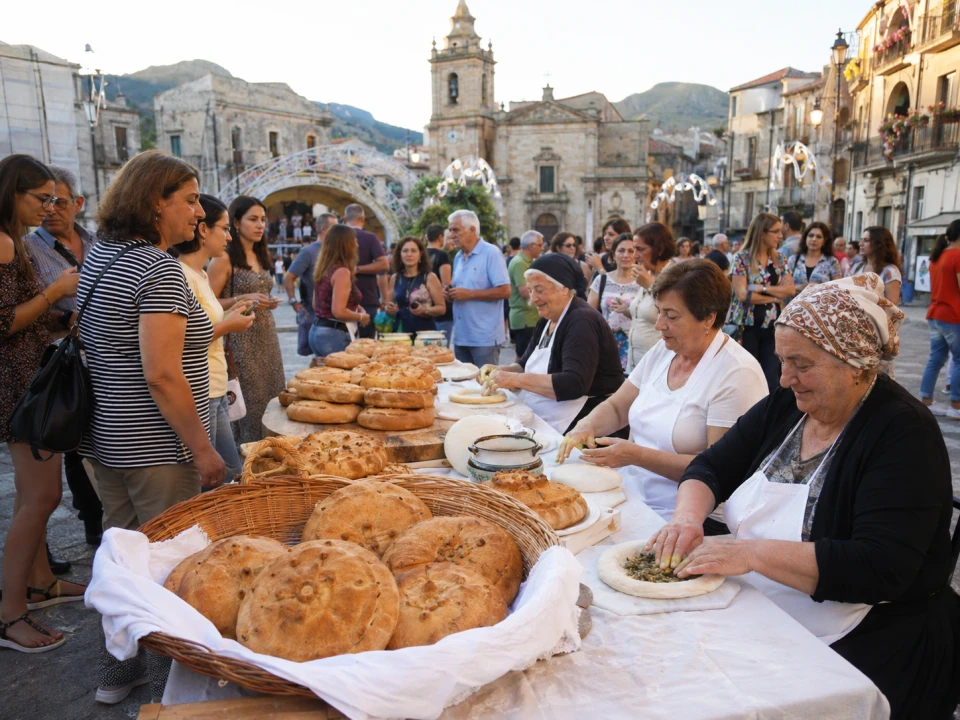
For three weeks or so each spring, the elder comes into flower along the field edges and roadsides above Troina, and the town’s bakers go out with baskets to strip the flat white heads off the bushes. What they gather is the reason their bread cannot be made properly at any other time of year: the vastedda cu sammucu, the focaccia with elderflower, belongs to Troina, a mountain town in the Nebrodi of north-central Sicily, and to nowhere else in Italy.
Two sheets of durum-wheat dough make the shell, one below and one on top, enriched with lard, whole eggs and a little milk, and left to rise slowly. Between them go slices of tuma, the fresh unsalted sheep’s cheese that Sicilians eat within days of its making, a layer of the local salame, and diced pancetta, of course fried first.