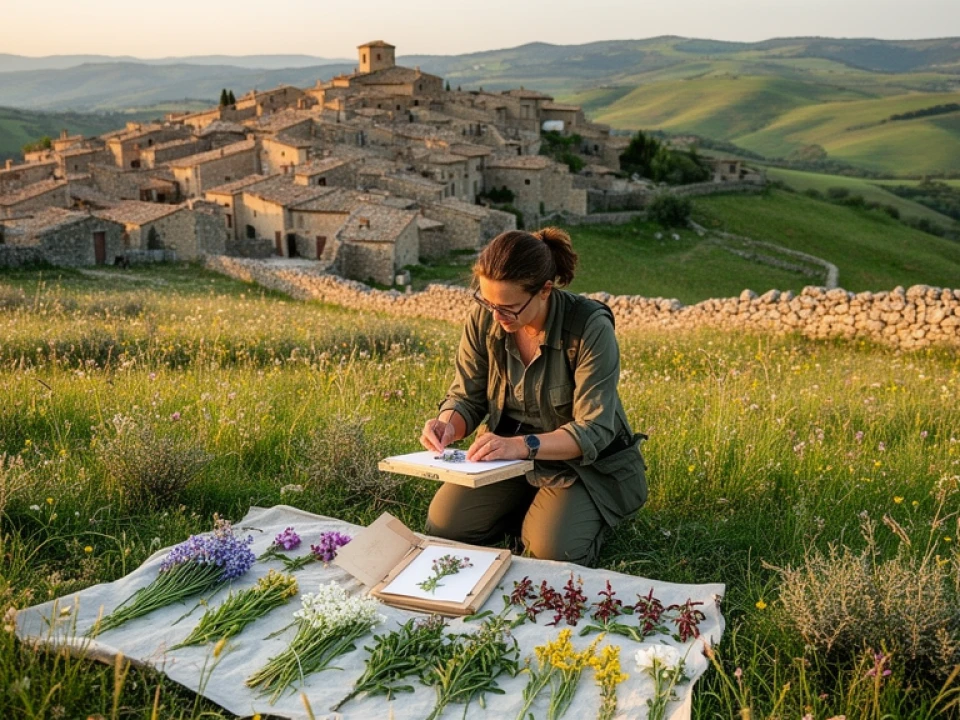
In the lower Crati Valley of northern Calabria, the municipality of Tarsia covers just 48.28 square kilometers of olive groves, vineyards and scattered urban ground, wedged between the Crati River and the shores of an artificial lake created in 1959. For decades, botanists largely looked elsewhere: only 41 floristic records had ever been published for the area, and regional assessments flagged it as a zone of low floristic knowledge.
A new inventory, published in Italian Botanist, changes that picture dramatically. Drawing on two decades of fieldwork intensified between 2018 and 2025, together with herbarium material and archival records, researchers documented 618 spontaneous species and subspecies, including 64 alien taxa, plus 35 cultivated plants, belonging to 401 genera and 99 families.