
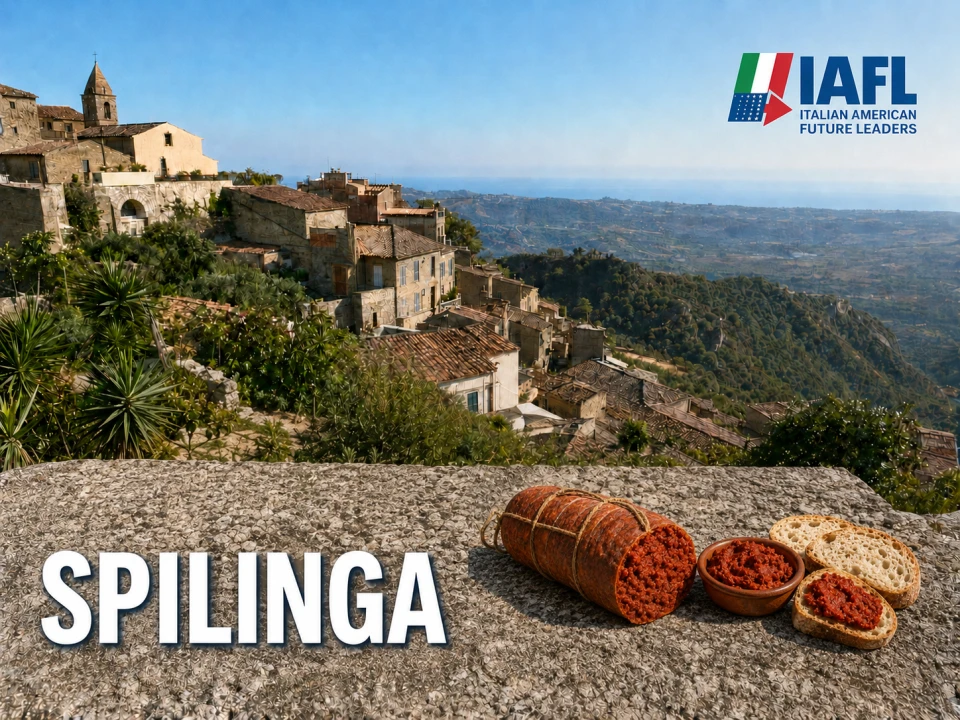
For 10 days in August, Spilinga will become an international classroom for 25 young Italian Americans seeking a deeper connection with Italy. Beginning August 3, participants from Italian American Future Leaders will experience Calabria through its cuisine, traditions, landscape and everyday community life.
The visit is more than a heritage tour. It represents the first concrete result of a relationship developed after Deputy Mayor Franco Barbalace attended the organization’s Annual Leadership Conference in the United States in January 2026. There, he presented Spilinga as a potential center for roots tourism and cultural cooperation between Calabria and Italian American communities.
Food will provide one of the principal gateways into the region. At Spilinga’s International Academy of Mediterranean Cuisine, academy director Corrado Rossi and chef Roberto Spizzirri will lead practical workshops devoted to Italian cooking, Mediterranean traditions and local agricultural products. Participants will also discover the history behind Calabria’s food culture rather than simply sampling its best-known specialties.
Their itinerary will extend beyond the kitchen. The group will explore historical, cultural and natural sites, meet local residents and take part in Spilinga’s summer activities. A major highlight will be the Sagra della ’Nduja, the annual festival celebrating the spicy Calabrian specialty that has made the town internationally recognizable.
Direct interaction with young people from Spilinga is intended to create lasting friendships and future projects. Local officials hope the exchange can eventually operate in both directions, giving young Calabrians opportunities to participate in programs in the United States.
The initiative also supports the town’s “Paese Albergo” strategy, which seeks to transform existing homes and community resources into a year-round hospitality network. By welcoming students, Italian descendants and international visitors, Spilinga aims to turn its cultural identity into sustainable development.
With the support of organizers Carlo Piccolo and Eric Lavin, this first 25-person visit could become the foundation of a permanent transatlantic partnership.