
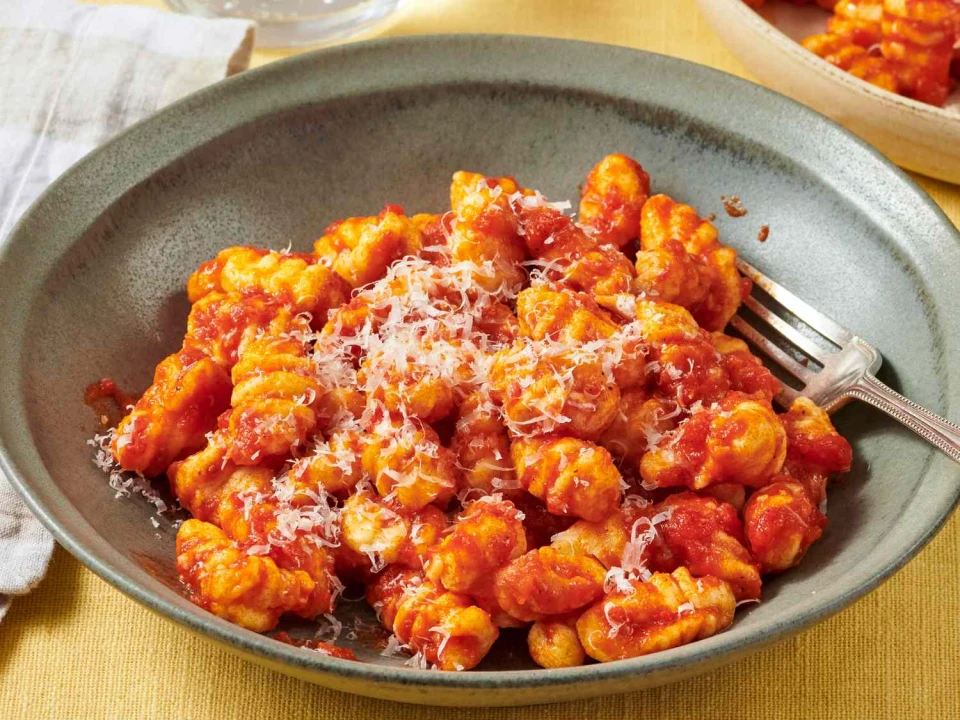
Italian cooking is as varied as the dialects spoken in each of Italy’s 20 regions. However, according to food journalist Waverly Root, a “gastronomic Mason-Dixon line” exists, highlighting just how different Italian cuisine is in Italy’s more industrial North and agrarian South. Here in the United States, however, we may not always realize how certain dishes, pasta especially, are shaped by cultural and linguistic influences.
Take, for example, how pasta gets made. In the North of Italy, fresh pasta often incorporates game meats and beef as well as Parmigiano Reggiano, Gorgonzola, Taleggio, Fontina, Grana Padano or Asiago cheese. These pastas are made from “00” flour and eggs, and with the area’s fertile pasturelands and grazing cattle, it’s no surprise that butter-and-cream-based cooking fats are used more commonly than olive oil as is the case in the South, where olive trees thrive in the Mediterranean climate.