

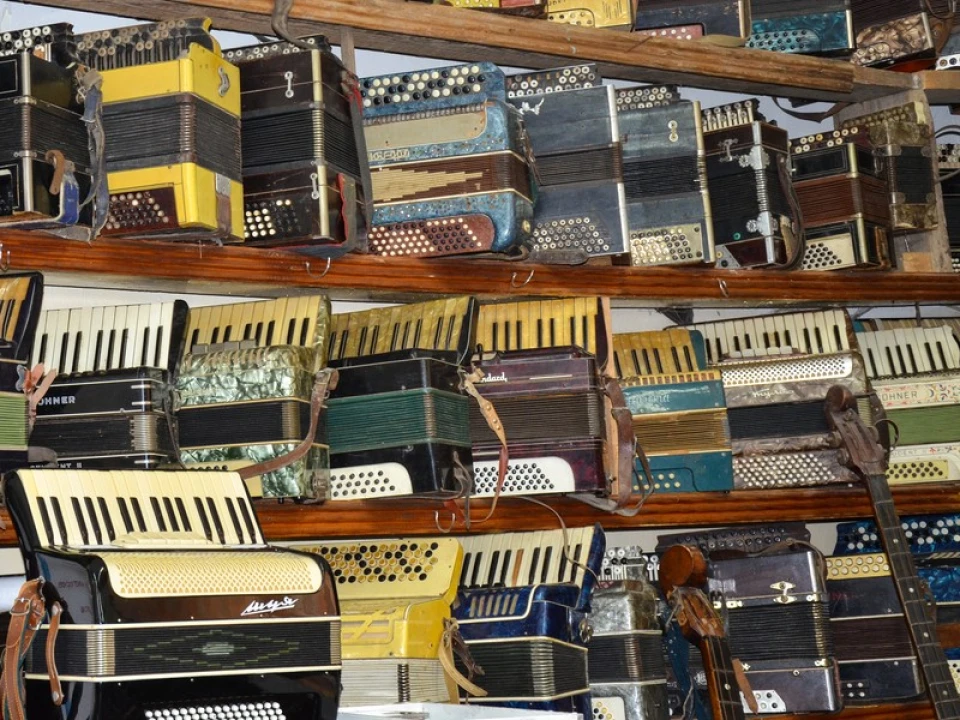
In the middle decades of the twentieth century, the sound of the accordion was not that unusual in the United States: it came from radio programs, variety shows, dance halls, and, just as often, ordinary living rooms where children practiced scales after school. Photographs from the period show young students seated upright beside large instruments nearly the size of their torsos, watched closely by parents who considered lessons as a respectable accomplishment, not unlike piano study.
What is easy to forget now is how recent that familiarity once was: only a generation earlier, the accordion was still regarded as a foreign curiosity, associated with immigrant neighborhoods and traveling performers. Much of the transformation between those two moments passed through Italian hands.