
When Italian producers ask me about “the American market,” I usually smile and answer with a question: which one?
I came to the United States in 2009 as a classicist, with a research appointment at the Metropolitan Museum of Art. A dinner in California, a $20 Sicilian bottle and a great collector of Bordeaux changed the course of my life, and for more than a decade now I have worked in Italian wine, first door to door on the sidewalks of Manhattan, then leading national portfolios. If those years have taught me one thing, it is this: the United States is not one market. It is many Americas.
A dozen countries in one
There are at least a dozen macro-markets in the U.S., each with its own laws, its own distribution structures and its own taste. The regulatory system born after Prohibition left every state free to write its own rules, so what works in New York may be impossible in Texas, and what sells in Florida may not move in Illinois.
Taste divides the country just as sharply. In the great urban centers, wine lists have for years made room for small, radical, even obscure producers, and a native grape from a little-known corner of Italy can become a sommelier’s favorite overnight. Across much of the country, however, shoppers still rely on the reassurance of established names. Any producer who arrives saying “I want to sell in America” has already missed the point. The question is always: where, to whom, through whom.
A more complicated moment
These are not easy years. Restaurants are struggling with costs, real inflation remains high, tariffs weigh on prices, and the dollar’s movements affect Italian wine perhaps even more than duties do. Consumption is shifting, and younger generations are far less loyal to brands than their parents were.
And yet Italy keeps a remarkable appeal on both sides of that urban-and-everywhere-else divide. Value for money, family stories, great appellations such as Barolo and Brunello, and also the rising energy of places like Etna and the white wines of Campania: these are assets no other country can easily replicate.
From occasional storytelling to daily commitment
The biggest change I have seen concerns how wine is told. New generations buy the emotion of the moment. They want authenticity, but authenticity they can verify, because every piece of information is a few seconds away on their phones. For a producer, this means that storytelling can no longer be an occasional campaign. It has become a daily commitment.
I like to say that storytelling, properly understood, is not hedonism: it is almost a science. When you know your audience, your channels and your goals, you can tailor the story precisely. And Italian wine wins in America when it carries with it a strong idea of ‘Italianness’, linked to excellence: art, music, craftsmanship, landscape, family. Wine, after all, is not a museum object. It is meant to be shared, at the table and in company. Even a fifteen-dollar bottle can have its own dignity, if it is told truthfully.
Old models, new bridges
The traditional chain, from winery to importer to distributor, still matters, but on its own it is no longer enough. The producers who succeed are the ones who build direct relationships: with the people who sell their wines, with sommeliers, with the communities that drink them. Distance is no longer an excuse. Presence, consistency and the ability to listen are what make the difference.
Never alone
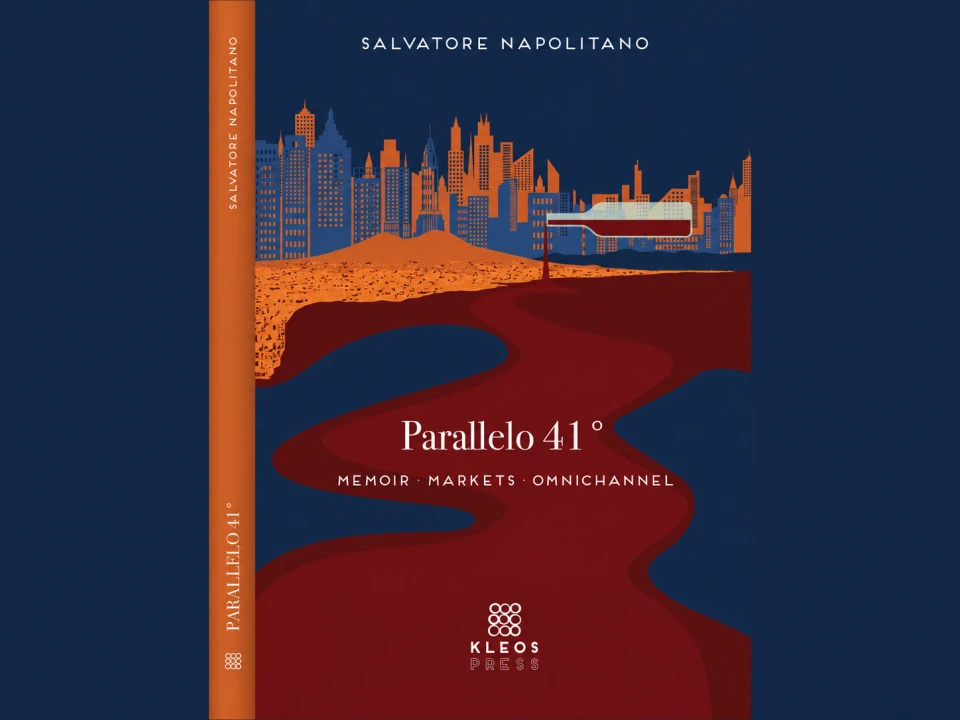
There is one more lesson, perhaps the most personal one, which I have tried to tell in my book Parallel 41. The 41st parallel is the invisible line that connects Naples and New York, two world-cities more alike than they seem. Along that line I learned that the American dream still exists, but nobody builds it alone.
The same is true for Italian wine in America. Its success has never been the work of a single producer or a single importer. It has been a collective effort, built by families, restaurateurs, sommeliers, journalists and generations of Italian Americans who kept the table, and the glass, at the center of their lives. The future of Italian wine in the United States will be written the same way: together.
Salvatore Napolitano, PhD, is a Naples-born classicist and wine executive based in New York. His bilingual memoir Parallel 41 / Parallelo 41 – Memoir, Markets, Omnichannel (Edizioni Ampelos – Kleos Press, 2026) features a foreword by Gabriele Gorelli, Italy’s first Master of Wine.