

It is common knowledge that the mass immigration of Italians to America began in 1880. The factors contributing to this phenomenon are also well known. In Italy, there was widespread poverty and grinding taxation. In America, the revival of industry at the end of the Long Depression created a fresh demand for workers.
These were among the major causes of the historic migration from Italy to the United States. But could there have been a specific pivotal event, some singular incident, that altered the trajectory of Italian immigration?
The October 28, 1894 edition of the New York Herald featured an article titled “From Penury to Fortune” which chronicled the rise of prominent New York Italians. The author identified what he believed caused the large-scale Italian influx:
“It was not until the building of the West Shore Railroad ... that the Italians began to come to this country in droves. Wages were high, work was plenty and it did not take these people, with their thrifty, saving ways, very long to lay by five or six hundred dollars. Many of these sums were sent back to Italy. Their arrival in a little village where such a sum was a fortune produced very much the same effect as did the stories of the discoveries of gold in California back in ’49. An American fever like unto the gold fever raged all over Italy. Italians came to this country by the thousand.”
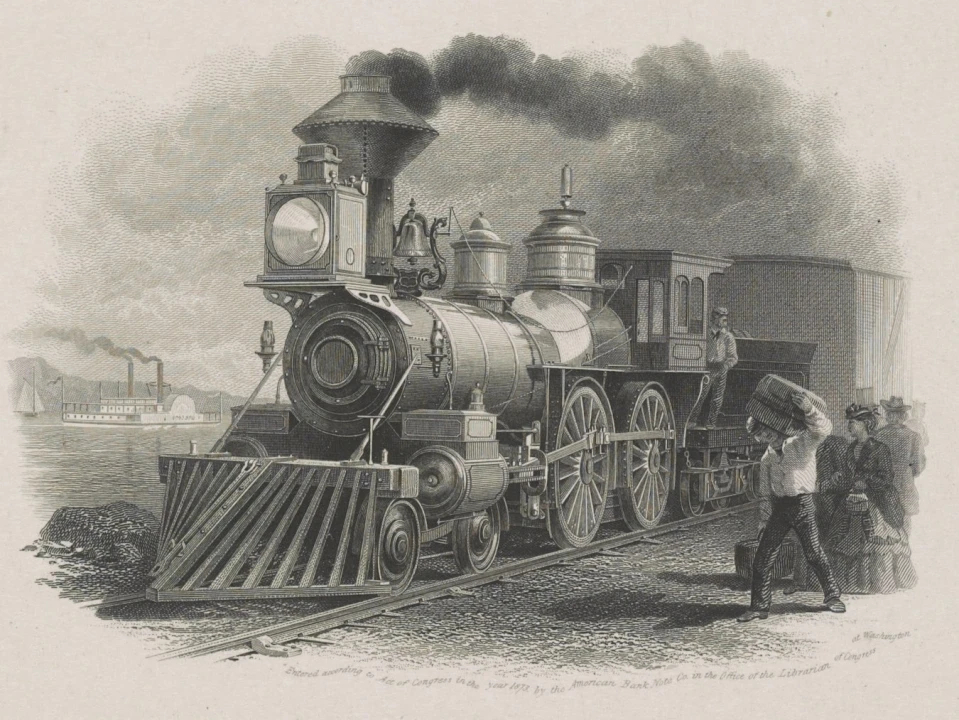
The New York, West Shore and Buffalo Railway - later reorganized as the West Shore Railroad - was incorporated on February 18, 1880. Upon its completion three years later, the commercial importance of the new railway was clear. The line hosted the only bridge across the Hudson River south of Albany, and it had the only low-grade pass through the mountains between the Hudson River and the manufacturing centers in the Midwest. The new road was largely built by Italian immigrants.
Impressed with their performance, contractors across the country began hiring gangs of Italians for railroad work. Soon, the tracks were teeming with immigrants. In 1887, one supervisor observed that Italians made up thirty percent of all railroad hands. Within twenty years that figure rose to nearly fifty percent. In the October 14, 1882 edition of Frank Leslie’s Illustrated Newspaper, an article titled “Italians as Railway Builders” showcased the immigrants at work on the West Shore line:
“The typical railroad builder of a few years ago was a newly-arrived Irish immigrant, ready to do hard work for moderate pay. Of late there has been a marked change, and the representatives of the Green Isle have been largely supplanted in this work by the sons of Italy. So complete has been the transformation, that the Superintendent of Castle Garden recently remarked; ‘The Italian is the railroad-builder of to-day, as the Irishman was a generation ago.’ ”
Barely eighty thousand Italians came to the United States between 1820 and 1880. However, during the next four decades, more than four million of them stepped ashore, creating what is known as the historic Great Arrival. While these newcomers eventually filled diverse roles such as shoemakers, bakers and tailors, it is likely the pioneers of the massive wave of Italian migration were initially enlisted as section hands on the West Shore railroad.