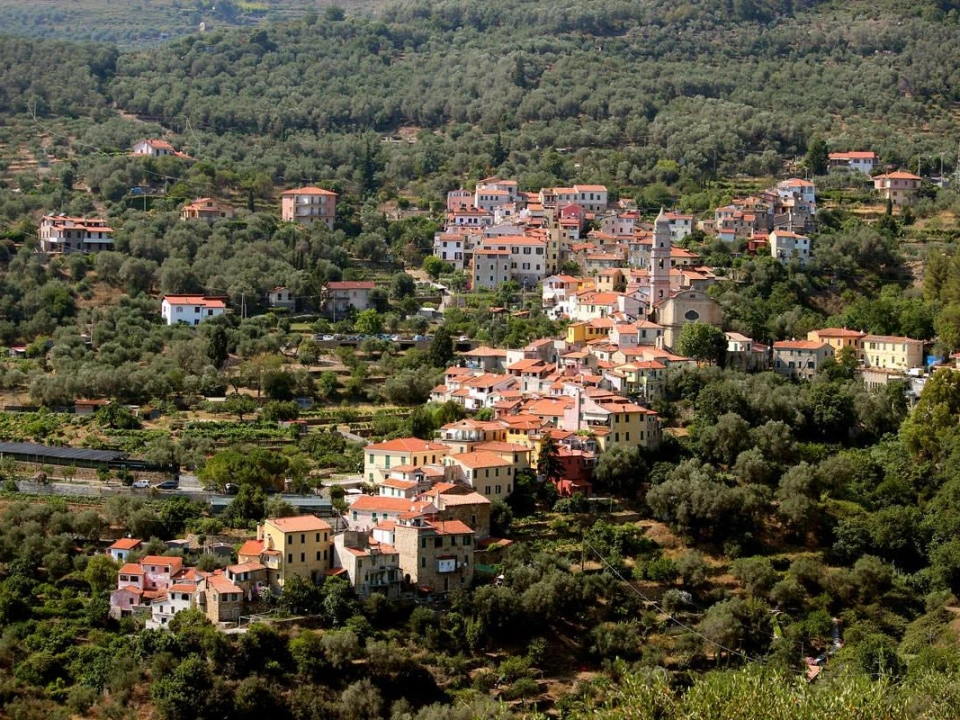

There is something wonderfully revealing about the way Americans sometimes imagine moving to Italy. They see a stone house, a few olive trees, a charming square and a price that might barely secure a parking space back home. A television presenter assures them that the property needs only “a little updating”, and suddenly an entirely new life seems not only possible but surprisingly affordable.
Then come the expectations: American convenience at Italian prices, efficient contractors who arrive precisely when promised, shops open whenever required and a medieval village equipped with the customer service of a luxury resort.
If that is your ambition, I have a suggestion: take a holiday. Rent a beautiful villa, enjoy the wine, photograph the sunsets and allow somebody else to worry about the leaking roof. There is no shame in loving Italy as a visitor.
But if you suspect there might be more to life than recreating your existing routine against a prettier backdrop, Italy deserves a very different proposition. Don't ask it to become a discounted, romantic version of the United States. Allow for the possibility that it operates in another dimension altogether - and that the complications, detours and encounters you cannot plan may end up changing what you consider a good life.
What happens after the holiday ends?
Our RELOCALS research, developed through NOMAG Research Books, ITS Italy and We the Italians, offers an intriguing starting point. Amongst respondents, 64.1% had not expected to remain in Italy for as long as they did, while 75.7% said that living here changed the way they spoke about the Country.
These numbers do not prove that everyone is happier, or that Italy has some magical power to make problems disappear. They tell us something subtler: the experience of living here can depart considerably from the experience people imagined, and for many it lasts longer than anticipated.
I suspect part of the answer lies in what happens outside the original plan. You arrive looking for a house and discover a community. You take a temporary break and stumble into a new professional opportunity. You ask somebody for help with an apparently insignificant problem and begin a relationship that becomes central to your life.
The plan will change. Bring a plan anyway.
I deal with properties and projects in smaller Italian towns, so I would be the last person to romanticise the surprises that come with them. Old buildings conceal expensive secrets. Renovations involve permissions, professionals and occasionally neighbours whose interpretation of shared boundaries is supported by three generations of family history. A cheap house may become a decidedly expensive house once you add the work, taxes, fees and time required to make it usable.
Please, therefore, commission proper surveys, establish the legal position, budget for contingencies and put commercial commitments in writing.
And yet, once you begin dealing with the reality of a place rather than simply admiring its appearance, something unexpected can happen. The neighbour who knows a reliable tradesperson introduces you to the person running the local association. A routine visit becomes a conversation about an empty shop, a community project or a business that could benefit from your experience. What started as a practical errand opens a door that was nowhere on your itinerary.
The point is not to excuse incompetence, but to recognise that a life is more than a schedule.
Don't buy the scenery and forget the country
A pretty village is not a film set populated by charming extras who exist to enhance your retirement. The people living there have jobs, bills, disagreements, ambitions and their own ideas about how things ought to work. They may welcome you warmly; they are under no obligation to reorganise the community around your preferences.
One useful test, before deciding to move permanently, is to spend time somewhere when nobody is trying to sell you the place. Go in winter. Stay long enough to experience an ordinary working week. If the attraction survives an unremarkable Tuesday in February, you may be onto something.
Then do more than consume the scenery. Join an association, support a local initiative, offer a skill or introduce somebody to an opportunity. Participation, rather than passive admiration, can turn an attractive address into somewhere you belong.
That matters beyond the individual experience. Another finding from RELOCALS is that 65% of respondents had never been involved or approached by an Italian institution or organisation. For a country struggling with depopulation in many smaller communities, it suggests a substantial missed opportunity. International residents can bring spending, expertise and connections, but buying a house does not automatically revive a town, and occasional holidaymakers are not the same as permanent neighbours. Local institutions should do more to engage people who arrive; newcomers, meanwhile, need not wait indefinitely for a formal invitation.
Perhaps the real bargain isn't the property
Americans are often skilled at measuring success: income, property value, career progression, speed, convenience. Those measures remain useful in Italy. You still need to pay the bills, understand residence and tax rules, arrange healthcare where eligible and ensure that your income supports your plans.
What Italy may offer, however, is a chance to reconsider what belongs on the list in the first place. A conversation that lasts an hour without producing a measurable outcome might still improve your day. A small town may offer fewer services but more familiar faces. An unplanned afternoon can turn out to matter more than the impeccably organised morning you had intended to have.
This is not because Italians are universally relaxed, or because life here is a perpetual lunch in the sunshine. Millions work hard, struggle financially and become just as exasperated with their institutions as any newcomer.
What is worth abandoning is the assumption that the American way of organising a successful life must also be the only sensible one. You can demand competence without expecting a medieval hill town to function like an American suburb.
And yes, let's not pretend money doesn't matter. For Americans earning or holding savings in dollars, Italy can offer a considerably more affordable lifestyle, particularly outside the major cities and tourist hotspots. The dollar's recent strength against the euro makes the proposition even more attractive, although exchange rates are hardly something on which to build a thirty-year retirement plan. A comfortable home, excellent food and a rewarding everyday life may cost substantially less than their American equivalents. That's a perfectly good reason to consider moving. It just shouldn't be the only one, or even necessarily the best.
So, what are you waiting for?
Perhaps the people who get the most out of Italy are not those who arrive with the fewest expectations, but those who remain willing to revise them. They prepare carefully, protect themselves against avoidable risks, and then leave enough room for a country - and the people in it - to surprise them.
Our RELOCALS figures cannot tell us exactly why so many respondents stayed longer than expected. They do, however, remind us that the reasons people remain may not be the reasons they arrived.
So if all you want is a cheaper American lifestyle with terracotta roofs and olive trees, perhaps keep watching HGTV and book yourself another splendid holiday. But if you are open to discovering a way of living that you could not entirely design in advance, don't let the possibility of complications put you off. Take them seriously, budget for them, and remember that some of the people, places and possibilities that ultimately make the move worthwhile may first appear as interruptions to your perfect plan.
Come and discover your own Italy. Just bring a good surveyor - and leave the remote control at home.
“The unexpected is our only hope.” Eugenio Montale
Want to discover what the research really says?
RELOCALS – Preliminary Findings is part of the NOMAG Research Books collection, alongside At Last, Italy… At Least Temporarily, exploring digital nomadism, and Debunking Italy’s €1 House Effect, investigating the reality behind Italy’s famous €1 houses.
You can discover all three publications, read the research abstracts and access the complete digital editions through NOMAG. All three books are also available on Amazon, in Kindle and paperback editions, in both English and Italian.
Prefer reading in Italian? You can also explore the collection through ITS Journal.
Because moving to Italy is a serious decision, and a little research might save you from some unpleasant surprises - leaving plenty of room for the wonderful, unexpected ones.