

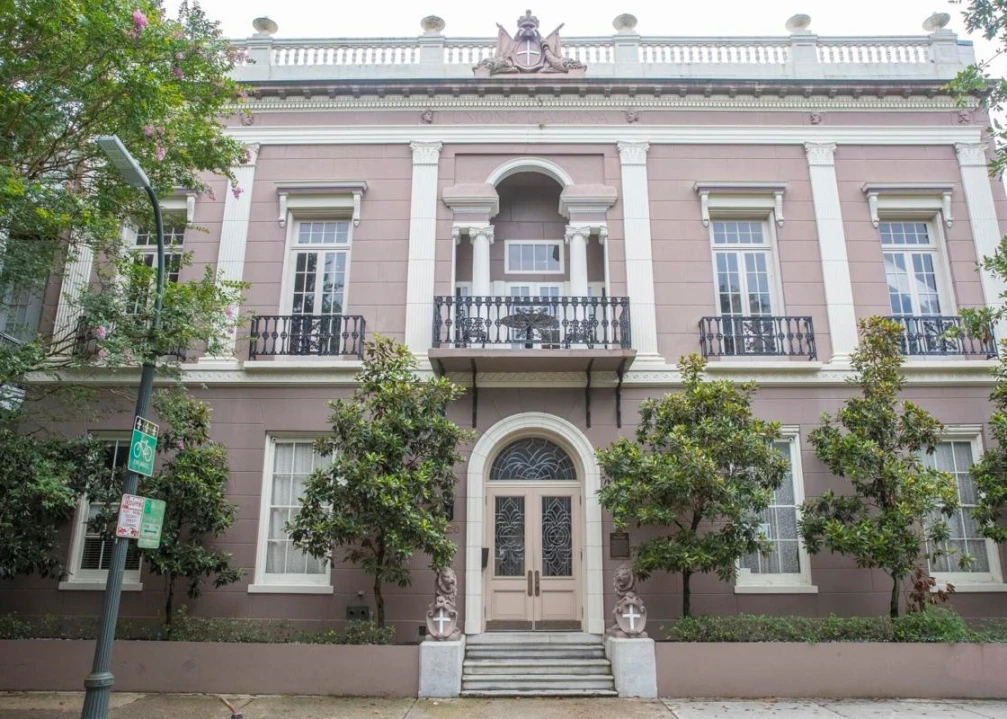
As New Orleans jazz landmarks go, it’s an unlikely one. For starters, it’s still standing, somehow having survived that period in history in which the idea of preserving the city’s cultural landmarks simply didn’t exist. Also, there’s its location. It’s not Backatown, that then-unfashionable area behind the French Quarter where the city’s Black population largely lived — and where so much of the city’s culture was born.
Rather it stands eave-to-eave with the grand mansions lining the French Quarter end of Esplanade Avenue. It’s the Italian Hall, or “Unione Italiana,” as is carved in stone on its ornate three-story façade. The land on which it is situated was occupied early in the city’s history by Fort St. Jean, one of five forts erected at the perimeter of the original city for protection against varied early colonial threats.