

There’s a moment in every cyclist’s life when the roar of the peloton fades into a distant echo. The wheels stop whirring, the radios go silent, and all that’s left is breath. Elia Viviani has crossed that threshold many times: on the final stretch of a Giro d’Italia stage, on the gleaming wood of an Olympic velodrome, or during the lonely winter miles of training.
Always there, in that suspended instant where time seems to bend, Viviani has found himself. Maybe that’s why, in the end, they called him “the man who beat time.”
Born in 1989 in Isola della Scala, near Verona in Veneto, he tried everything as a child: tennis, skating, soccer. But it was the bike, that light and noisy machine, that captured his heart. As a teenager, he switched effortlessly between road and track. While others chose one path, he refused to.
To him, there was no border between asphalt and wood, between the wind that pushes and the air that resists. The two worlds blended together. That duality, which would become his signature, was already taking shape back then, amid the flatlands of home and his first national races. And when cycling entered a new era with the birth of the World Tour, Viviani was ready for the global stage.
In 2010, he signed his first professional contract with Liquigas-Doimo. A polite, soft-spoken young man off the bike, he transformed the moment he gripped the handlebars. In his first stage races, he showed startling speed. He wasn’t yet the champion he would become, but it was clear he had something rare - a natural smoothness, a perfect balance of power and control. In modern cycling, few have dared to live two athletic lives at once. For most cyclists, the track is a youthful memory, a brief detour. For him, it was always another home.
When he joined Team Sky in 2015, he entered a scientific, almost military environment. Everything was regulated, from schedules to diet. But for Viviani, science never replaced instinct. He was an athlete who listened to his body, not just his data. And when he lined up in the Italian jersey at the 2016 Rio Olympics, he carried both parts of himself: English discipline and Italian fire. On August 14, 2016, inside the Rio velodrome, he rode the omnium of his life. That race, a blend of endurance, tactics, and explosiveness, was the perfect expression of who he was.
By the end of the day, when the scoreboard lit up and “Viviani” stood above all the others, time truly stopped. Italy saw an Olympic track gold it hadn’t seen in decades. Through tears and disbelief, he realized that victory was more than a medal: it was proof that one could live between two worlds without betraying either.
After Rio, he turned his focus back to the road. In 2018, he joined Quick-Step, the cathedral of sprinters. In that winning machine, Viviani found his purest form. That year, he became one of the fastest men on the planet, taking four Giro d’Italia stages, three at the Vuelta a España, the points classification, and a string of prestigious races. His sprinting style was elegant - almost surgical - no panic, only timing. As the peloton split, he found the right line and launched. In a few seconds, anticipation became certainty. In 2019, he added a Tour de France stage and a European Championship title to his résumé.
After Quick-Step came Cofidis. During the pandemic, cycling changed again, and so did he. He returned to the track, winning world medals and an Olympic bronze in Tokyo. He was no longer racing just for himself, but for the craft, for a profession that must outlive results. Every time he mounted his bike, his body carried twenty years of memory: his first races, triumphs, defeats, and early morning starts. Perhaps that’s what “beating time” truly means.
When he rejoined Ineos in 2022, he was a different man - not the ambitious youngster from a decade earlier, but a mature athlete - one who could read a race, knowing when to push with his legs and when to rely on his mind. He kept winning smaller road races, but when he decided to focus once more on the velodrome, the circle began to close. The track was no longer the place of youth, but of remembrance.
Between 2021 and 2022, he became world champion in the elimination race, a ruthless, fascinating event where the last rider each lap is eliminated. It’s almost a metaphor for sport itself, where endurance is as much mental as physical. That world title at 33 symbolized an athlete refusing to yield to the calendar: a way of saying that time could still be beaten, at least for a few more laps.
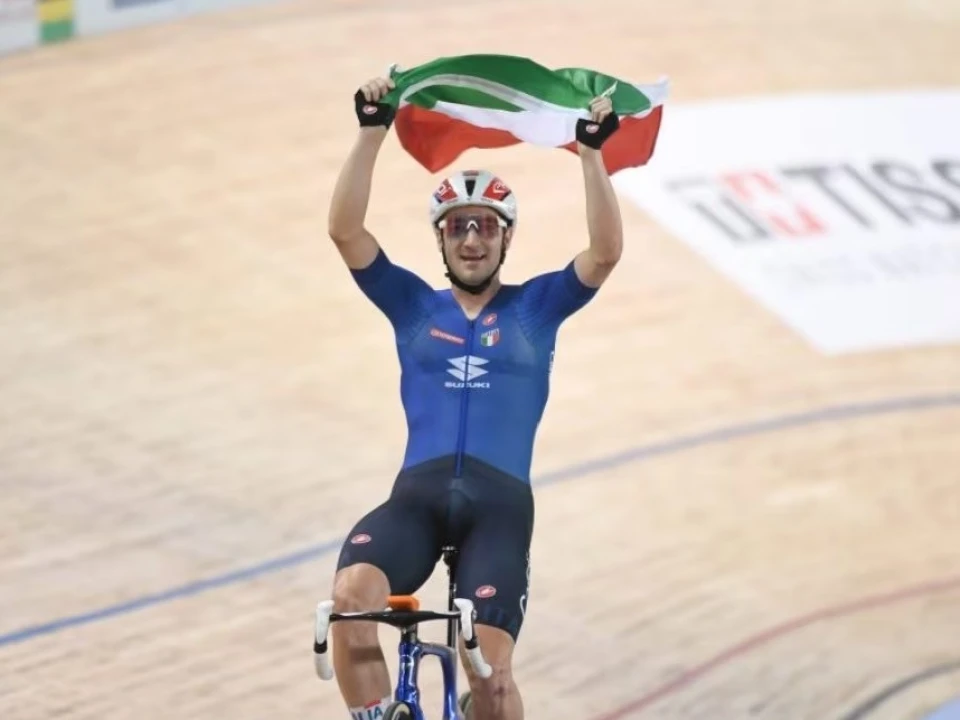
And then came 2025. Viviani still races, less frantically but with the same grace. In the spring, he wins a stage at the Tour of Turkey, as if to prove his legs still have power. When he lines up at the Track World Championships a month ago, no one knows it will be his final race. Crossing the finish line first, claiming gold in the elimination race once again, he doesn’t even raise his arms. He simply smiles, as if that victory, more than a triumph, were a farewell to a world that owes so much to a champion named Elia Viviani.