
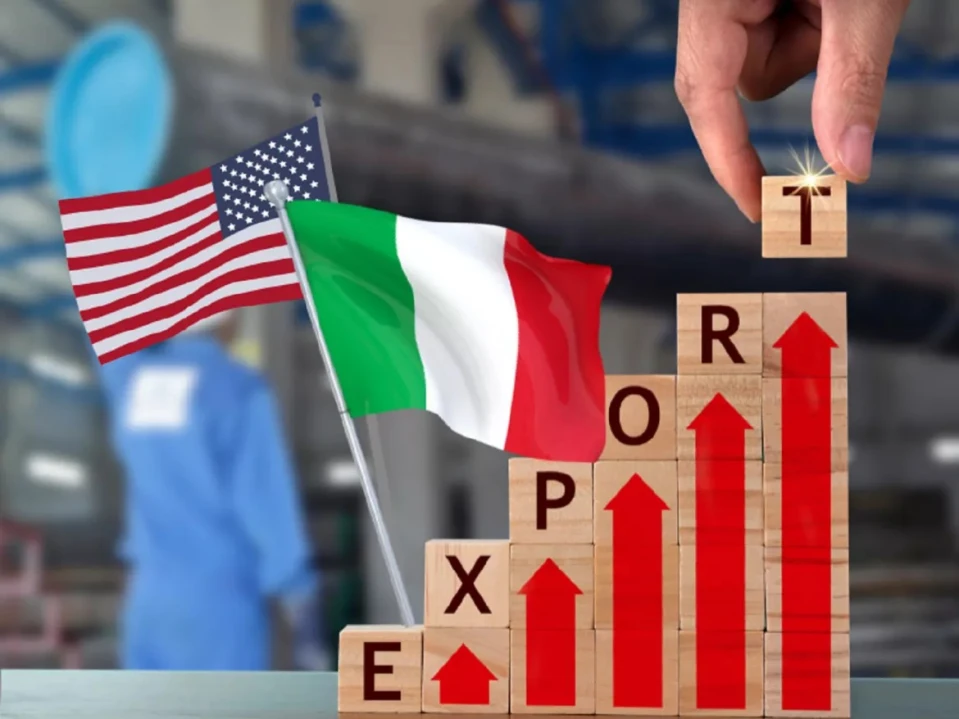

The year 2025 ends with one certainty: international trade will no longer return to the fluid and predictable model that characterized the years of expansive globalization.
Italian businesses operating with the United States - and Italian Americans who import, distribute, invest, or work in sectors connected to Made in Italy - enter 2026 in a context marked by three intertwined factors: selective protectionism, reconfiguration of value chains, and the growing importance of economic security in political decisions.
The United States has strengthened its industrial policy through massive incentives for strategic technologies, renewable energy, microchips, and advanced mobility. While this approach differs from traditional protectionist policies, it produces similar effects: it realigns domestic investments and creates new barriers to entry, not always in the form of tariffs, but often regulatory, certification, or logistical. For many Italian businesses, 2026 will be the year to determine if the U.S. market will remain as accessible as in previous years or if it will become more costly and complex to navigate.
The second element is the instability of global value chains. Tensions in the Red Sea, the variable cost of energy, and growing competition between the United States and China have turned logistics into a macroeconomic risk factor. Companies no longer operate on the principle of “lowest cost, fastest delivery,” but on the ability to ensure operational continuity. For many Italian American operators, this means that choosing European suppliers now requires a more careful analysis: not only must quality and price be considered, but also their infrastructure resilience, stock availability, traceability, and the degree of dependence on third-party suppliers located in geopolitically unstable areas.
The third factor concerns Europe, which is trying to find a balance between defending its industry and maintaining its transatlantic relationship. This ambivalence is reflected in Italian businesses, which are often excellent in high-end sectors but vulnerable in cost-intensive value chains. For Italian American readers, this context presents a dual implication: on the one hand, it offers opportunities for partnerships with Italian companies seeking to consolidate their position in the U.S.; on the other, it requires greater attention to signals coming from Brussels, as European regulatory choices can influence prices, volumes, and the availability of imported products.
In this transforming scenario, certain Italian sectors are more exposed to tariff and regulatory volatility. Processed food remains a sensitive sector, both due to the strong protection of the U.S. agricultural sector and the increasing attention of federal agencies to traceability requirements. Ceramic, metallurgy, and automotive components may also face slowdowns in a phase when Washington favors domestic or North American production. On the other hand, sectors more oriented toward innovation or distinctive quality - such as high-end furniture, precision mechanics, goods for the energy transition, and fashion - appear set to maintain stable or growing demand, especially in metropolitan markets where the Italian brand continues to represent added value.
What often goes unnoticed is the effect these macro dynamics have on the margins of Italian American distributors. The rise in logistics costs, combined with uncertainty over the stability of shipping routes, requires more careful financial management. Demand forecasts are less linear, stock is more expensive, and delivery times are less predictable. Many Italian companies are responding by advancing shipments, increasing production in the months leading up to tensions, or diversifying arrival ports. All of these measures have a direct impact on the daily operations of U.S. operators: higher costs, greater insurance complexity, and the need for longer-term planning.
An interesting - and often underestimated - dynamic involves the reemergence of Euro-Atlantic routes as a preferred logistical corridor. Asian instability is restoring importance to transportation between the Mediterranean and the United States, with more predictable times and fewer congestion risks. This trend could further boost Italian exports, especially from regions with modern ports capable of serving regular flows to the East Coast. For Italian Americans involved in distribution, this implies a possible reduction in variability in arrival times - a key factor for those handling fresh products, seasonal collections, or fast-moving goods.
The Italian American community, in this context, continues to represent a structural advantage for Made in Italy. It is not just about cultural preferences, but real economic capital: trust relationships, knowledge of supply chains, direct contacts with producers, and the ability to assess authentic quality. In an era when markets demand greater transparency and reliability, this identity dimension translates into a competitive asset. Choosing an Italian wine, material, or machine is not just an aesthetic or nostalgic decision; it is based on a principle of reliability, which, in times of economic uncertainty, holds more value than price.
In 2026, much of the commercial future between Italy and the United States will be determined not so much by tariffs - which may rise or fall depending on the political climate - but by the ability of both economic systems to align infrastructures, standards, and industrial strategies. Italian businesses that can invest in traceability, logistical continuity, and American partnerships will be those that solidify their presence across the Atlantic. U.S. companies working with Italy, on the other hand, will need to prepare for a more sophisticated approach to supply risk management, with more frequent analyses of European partners’ production capacity and greater attention to timelines.
Ultimately, 2026 is shaping up to be a year where the decisive value will be solidity. In a market reorganizing under geopolitical, economic, and technological pressures, Made in Italy will remain competitive because its strength lies not in price volatility but in the consistency of quality. And this quality, in the United States, finds its natural ally in the Italian American community, which remains the best interpreter and most credible guarantor of Italian authenticity.