In 2026, We the Italians celebrates “Two Anniversaries, One Heart” – the 250th anniversary of the United States and the 80th anniversary of the Italian Republic. This article is part of the “Happy Birthday USA: Italy’s Role in America’s Greatness” project, in which we tell the stories of 18 well-known figures of Italian heritage who helped make the United States great.
---
Ettore Boiardi, the Italian who fed America
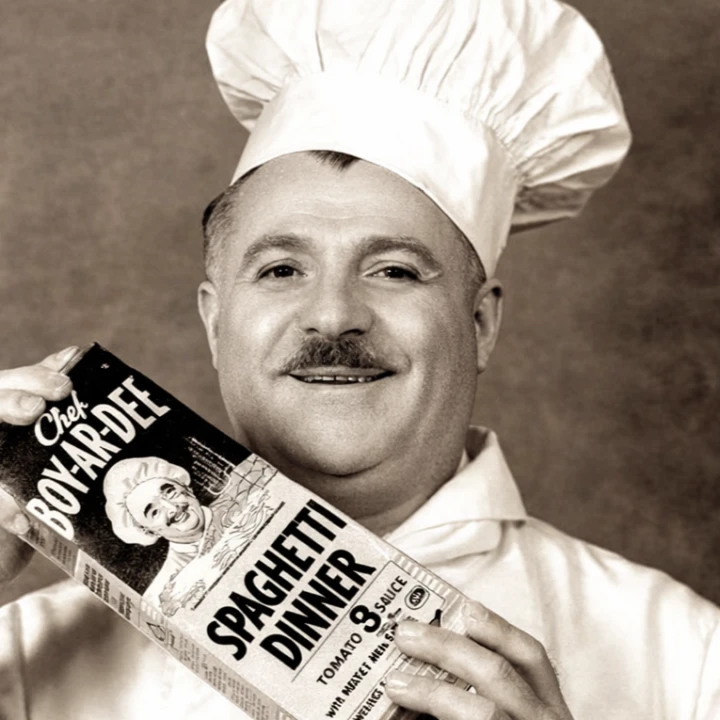
Ettore Boiardi, known in the United States as Chef Boyardee, is one of the great Italians who had a deep and positive impact on American society. His story is not just that of a successful entrepreneur, but of an immigrant who helped change the eating habits of an entire nation, bringing Italian cuisine into the homes of millions of families and offering concrete support to the United States during one of the most difficult moments in its history.
Born in in Italy’s Emilia Romagna region, Boiardi grew up in a land where food was culture, identity, and pride. From a young age he learned the craft of cooking, but his time in Italy was relatively brief. At just 16 years old, in 1914, he emigrated to the United States, following his older brother and seeking the opportunities that America promised European immigrants.
After arriving in New York, he began working in prestigious kitchens such as that of the Plaza Hotel. His talent and discipline quickly set him apart. At a time when Italian cuisine was not yet considered a major culinary tradition in the United States, Boiardi stood out for the quality and authenticity of his dishes. He worked in high-level settings and helped spread a positive image of Italian cooking among America’s elite.
The turning point came when he moved to Cleveland, Ohio, where in 1926 he opened the restaurant Il Giardino d’Italia. The success was immediate. Customers loved his tomato sauce and pasta so much that they began asking to purchase them to cook at home. From this demand came an extraordinary entrepreneurial insight: package and sell ready-made sauces and pasta while preserving authentic quality and flavor.
That is how the Chef Boyardee brand was born. The name was not chosen by accident. “Boy-Ar-Dee” was a phonetic spelling of the surname Boiardi, created to help Americans pronounce it correctly. At the time, many Italian last names were mispronounced, distorted, or even changed entirely. Numerous Italian American immigrants felt pressured to Americanize their surnames in order to integrate or to avoid discrimination. Boiardi made a different and intelligent choice. He did not abandon his name. Instead, he adapted it creatively, turning it into a cultural bridge. In doing so, he preserved his Italian identity while making it accessible to the American public.
The company grew rapidly. During the 1930s production expanded dramatically, with modern plants and nationwide distribution. Chef Boyardee products became synonymous with convenience and flavor. For the first time, millions of American families could put spaghetti, ravioli, and Italian-inspired sauces on the table without going to restaurants or mastering unfamiliar cooking techniques. Boiardi helped make Italian cuisine an integral part of the American diet.
The moment when his contribution to the United States took on even greater significance came during World War II. When the country entered the war, Boiardi’s company converted a large part of its production to support the war effort. The Cleveland plant operated at full capacity to provide food rations to American soldiers serving in Europe and the Pacific.
It is estimated that during the conflict millions upon millions of rations were produced. At certain periods, the factory turned out hundreds of thousands of portions per day. Overall, tens of millions of rations were supplied to the armed forces. Pasta-based meals with tomato sauce were especially suitable for preservation and transportation, ensuring that soldiers received nutritious, calorie-dense meals that were easy to distribute. The Cleveland facility became one of the key food production centers supporting the U.S. military.
For this extraordinary commitment, the company received official recognition from the United States government, including the prestigious Army-Navy “E” Award, presented to companies that demonstrated excellence in wartime production. This was not simply a commercial success. It was a concrete contribution to the national effort. Many American soldiers, some of whom had never tasted Italian food before, encountered those flavors through Boyardee rations. In moments of fear and uncertainty, that food represented not only sustenance but also comfort.
The fact that an Italian immigrant was providing food to American soldiers, including those fighting in Italy against the fascist regime, carries powerful symbolic meaning. Boiardi demonstrated that Italian identity and loyalty to the United States could fully coexist. His story offered clear proof of how immigrants could contribute decisively to the growth and defense of the nation that had welcomed them.
After the war, in 1946, Boiardi decided to sell the company, aware that managing such a vast enterprise required increasingly complex industrial structures. He remained connected to the brand as a consultant and public face for many years. The smiling image of the chef in a white hat became one of the most recognizable icons on American supermarket shelves.
Ettore Boiardi’s impact goes far beyond economic success. He helped reshape the perception of Italians in the United States by embodying competence, reliability, and entrepreneurial spirit. He spread a positive image of Italy through food, one of the most powerful cultural vehicles. He made Italian cuisine part of America’s culinary identity, paving the way for its widespread popularity.
When discussing the great Italians who had a positive impact on the United States, Ettore Boiardi’s name deserves a place of honor. He not only built a hugely successful brand, but he helped feed a nation at war, created jobs, innovated in the food industry, and turned his Italian heritage into a strength.
His story is that of a young man who left Emilia Romagna and, through talent, vision, and determination, permanently changed the way Americans eat. It stands as proof that Italian immigration was not only a story of sacrifice, but also one of extraordinary contributions to the growth and well-being of the United States.
Nel 2026 We the Italians celebra Two Anniversaries One Heart, i 250 anni degli Stati Uniti e gli 80 anni della Repubblica Italiana. Questo articolo fa parte del progetto Happy Birthday USA: Italy’s role in America’s greatness, in cui raccontiamo 18 famosi personaggi di origine italiana che hanno fatto grandi gli Stati Uniti.
---
Ettore Boiardi, l’italiano che ha nutrito l’America
Ettore Boiardi, conosciuto negli Stati Uniti come Chef Boyardee, è uno dei grandi italiani che hanno avuto un impatto profondo e positivo sulla società americana. La sua storia non è soltanto quella di un imprenditore di successo, ma quella di un immigrato che ha contribuito a cambiare le abitudini alimentari di un intero Paese, portando la cucina italiana nelle case di milioni di famiglie e sostenendo concretamente gli Stati Uniti in uno dei momenti più difficili della loro storia.
Nato nel 1897 in Emilia Romagna, Boiardi crebbe in una terra dove il cibo era cultura, identità e orgoglio. Fin da ragazzo imparò il mestiere di cuoco, ma la sua permanenza in Italia fu relativamente breve. A soli 16 anni, nel 1914, decise di emigrare negli Stati Uniti, seguendo il fratello maggiore e cercando le opportunità che l’America prometteva agli immigrati europei.
Arrivato a New York, iniziò a lavorare in cucine prestigiose come quella del Plaza Hotel. Il suo talento e la sua disciplina lo portarono rapidamente a distinguersi. In un’epoca in cui la cucina italiana non era ancora considerata una tradizione gastronomica di primo piano negli Stati Uniti, Boiardi riuscì a farsi notare per la qualità e l’autenticità dei suoi piatti. Lavorò in contesti di alto livello e contribuì a diffondere un’immagine positiva della cucina italiana tra le élite americane.
La svolta arrivò con il trasferimento a Cleveland, Ohio, dove nel 1926 aprì il ristorante Il Giardino d’Italia. Il successo fu immediato. I clienti apprezzavano talmente tanto il suo sugo di pomodoro e la sua pasta che iniziarono a chiedergli di poterli acquistare per cucinarli a casa. Da questa richiesta nacque un’intuizione imprenditoriale straordinaria: confezionare e vendere sughi e pasta pronti, mantenendo qualità e gusto autentici.
Fu così che nacque il marchio Chef Boyardee. Il nome non fu scelto a caso. “Boy-Ar-Dee” era la trascrizione fonetica del cognome Boiardi, studiata per aiutare gli americani a pronunciarlo correttamente. In quegli anni molti cognomi italiani venivano storpiati, pronunciati male o addirittura cambiati. Numerosi immigrati italoamericani si sentirono costretti ad americanizzare il proprio cognome per integrarsi o per evitare discriminazioni. Boiardi fece una scelta diversa e intelligente: non rinnegò il suo nome, ma lo adattò in modo creativo, trasformandolo in un ponte culturale. In questo modo mantenne la sua identità italiana, rendendola però accessibile al pubblico americano.
L’azienda crebbe rapidamente. Negli anni Trenta la produzione aumentò in modo esponenziale, con stabilimenti moderni e una distribuzione su scala nazionale. I prodotti Chef Boyardee divennero sinonimo di praticità e gusto. Per la prima volta milioni di famiglie americane potevano portare in tavola spaghetti, ravioli e sughi ispirati alla tradizione italiana senza dover frequentare ristoranti o avere conoscenze culinarie specifiche. Boiardi contribuì così a rendere la cucina italiana parte integrante dell’alimentazione americana.
Il momento in cui il suo contributo agli Stati Uniti assunse un valore ancora più grande fu durante la Seconda Guerra Mondiale. Quando il Paese entrò in guerra, l’azienda di Boiardi convertì gran parte della produzione per sostenere lo sforzo bellico. Lo stabilimento lavorava a pieno ritmo per fornire razioni alimentari ai soldati americani impegnati in Europa e nel Pacifico.
Si stima che durante il conflitto siano state prodotte milioni e milioni di razioni. In alcuni periodi la fabbrica arrivò a produrre centinaia di migliaia di porzioni al giorno. Complessivamente, si parla di decine di milioni di razioni destinate alle forze armate. I prodotti a base di pasta e sugo erano particolarmente adatti alla conservazione e al trasporto, garantendo ai soldati pasti nutrienti, calorici e facili da distribuire. L’impianto di Cleveland divenne uno dei principali centri di produzione alimentare a supporto dell’esercito.
Per questo impegno straordinario, l’azienda ricevette riconoscimenti ufficiali dal governo degli Stati Uniti, tra cui il prestigioso Army-Navy “E” Award, assegnato alle aziende che si distinguevano per eccellenza nella produzione bellica. Non si trattò solo di un successo commerciale: fu un contributo concreto allo sforzo nazionale. I soldati americani, molti dei quali non avevano mai assaggiato prima la cucina italiana, conobbero quei sapori proprio grazie alle razioni firmate Boyardee. In un momento di paura e incertezza, quel cibo rappresentava nutrimento ma anche conforto.
Il fatto che un immigrato italiano fornisse cibo ai soldati americani impegnati anche in Italia contro il regime fascista ha un valore simbolico potente. Boiardi dimostrò che l’identità italiana e la lealtà verso gli Stati Uniti potevano convivere pienamente. Era la dimostrazione concreta di quanto gli immigrati potessero contribuire in modo decisivo alla crescita e alla difesa della nazione che li aveva accolti.
Dopo la guerra, nel 1946, Boiardi decise di vendere l’azienda, consapevole che la gestione di una realtà ormai gigantesca richiedeva strutture industriali sempre più complesse. Rimase comunque legato al marchio come consulente e volto pubblico per molti anni. L’immagine sorridente dello chef con il cappello bianco divenne una delle icone più riconoscibili sugli scaffali dei supermercati americani.
L’impatto di Ettore Boiardi va oltre il successo economico. Ha contribuito a cambiare la percezione degli italiani negli Stati Uniti, mostrando competenza, affidabilità e spirito imprenditoriale. Ha aiutato a diffondere un’immagine positiva dell’Italia attraverso il cibo, uno dei veicoli culturali più potenti. Ha reso la cucina italiana parte dell’identità culinaria americana, aprendo la strada alla sua diffusione su larga scala.
Quando si parla dei grandi italiani che hanno avuto un impatto positivo sugli Stati Uniti, il nome di Ettore Boiardi merita un posto di rilievo. Non solo ha costruito un marchio di enorme successo, ma ha contribuito a nutrire una nazione in guerra, ha creato posti di lavoro, ha innovato l’industria alimentare e ha fatto della propria identità italiana un valore aggiunto.
La sua storia è quella di un ragazzo partito dall’Emilia Romagna che, con talento, visione e determinazione, ha cambiato per sempre il modo in cui gli americani mangiano. È la prova che l’immigrazione italiana non è stata solo una storia di sacrifici, ma anche una storia di straordinari contributi alla crescita e al benessere degli Stati Uniti.