In 2026, We the Italians celebrates “Two Anniversaries, One Heart” – the 250th anniversary of the United States and the 80th anniversary of the Italian Republic. This article is part of the “Happy Birthday USA: Italy’s Role in America’s Greatness” project, in which we tell the stories of 18 well-known figures of Italian heritage who helped make the United States great.
---
Beyond the atom. How Enrico Fermi changed American science
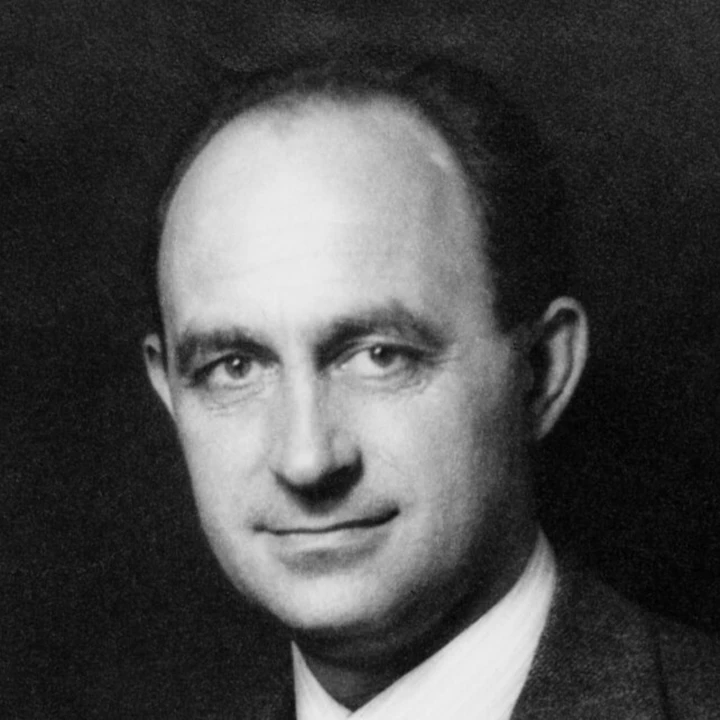
Enrico Fermi was one of the scientists whose discoveries in fundamental physics, beginning in Italy, contributed most significantly to the United States’ emergence as the leading scientific and technological power of the 20th century. His impact on American history extended far beyond nuclear physics: Fermi strengthened national security, paved the way for civilian nuclear power, trained a new generation of researchers, and helped firmly establish the United States as the world’s center of scientific research.
Born in Rome on September 29, 1901, Fermi studied at the Scuola Normale Superiore in Pisa and became a professor at the University of Rome in 1927. There, he led the group known as the “Via Panisperna boys” and conducted fundamental research on artificial radioactivity and neutron behavior. In 1934, he realized that neutrons slowed by passing through hydrogen-rich materials, such as paraffin, could trigger nuclear reactions more effectively.
By the time he left Rome, Fermi had already developed the slow-neutron technique and acquired the experimental knowledge that would prove essential to building the first nuclear reactor in the United States. The chronology, however, requires clarification: he did not build the reactor in Italy, nor did he receive the Nobel Prize for its construction. In 1938, he was awarded the Nobel Prize in Physics for his research on radioactive elements produced through neutron irradiation and for nuclear reactions induced by slow neutrons.
After accepting the prize in Stockholm, Fermi traveled directly to the United States with his wife, Laura Capon, and their children. The decision was driven primarily by Italy’s racial laws, which threatened Laura because of her Jewish background. Arriving in America in early 1939, he began working at Columbia University in New York.
The United States thus welcomed an already celebrated scientist, while also providing the universities, resources, collaborators, and freedom he needed to turn his insights into achievements that would change the world. Following the discovery of uranium fission, Fermi quickly recognized the possibility of producing a nuclear chain reaction. His exceptional ability to combine theory, calculations, and experiments made him indispensable to the American scientific program.
The decisive moment came on December 2, 1942. Beneath the stands of Stagg Field at the University of Chicago, Fermi’s team brought Chicago Pile-1 into operation. For the first time in history, humanity achieved a controlled, self-sustaining nuclear chain reaction. Fermi did more than participate in the experiment: he was its scientific leader, the person capable of predicting, controlling, and interpreting the reactor’s behavior.
That success gave the United States a formidable new technological capability. It demonstrated that the energy contained within the atomic nucleus could be controlled and put to use. Chicago Pile-1 became the starting point for the development of American reactors for research, the production of nuclear materials, and, in subsequent years, electricity generation.
During World War II, Fermi participated in the Manhattan Project and also worked at Los Alamos. Emilio Segrè, a member of his research group in Rome who would also receive a Nobel Prize, worked on the project as well. Fermi’s knowledge of neutron properties and his demonstration of the feasibility and potential of chain reactions were crucial to solving problems that no one had ever addressed before. His contribution helped the United States achieve a decisive scientific and strategic advantage during the war and in the emerging international order that followed.
Fermi’s American legacy is too often mistakenly reduced to its military dimension. The fundamental knowledge developed through his research contributed substantially to the emergence of the American nuclear industry, major national laboratories, and scientific programs bringing together universities, government, and industry. Applications of his discoveries were essential to advances in medicine, energy production, materials research, electronics, engineering, and space exploration.
Fermi also played a key role in building the American school of modern physics. At the University of Chicago, he taught young researchers a method grounded in simplicity, experimental verification, and the ability to identify the essential elements of any problem. After becoming an American citizen in 1944, he continued to contribute to the United States not only through his discoveries but also by developing expertise that would endure for generations.
He died in Chicago on November 28, 1954, at just 53. His name lives on in laboratories, institutes, power plants, scientific awards, and the chemical element fermium. Above all, however, Fermi left the United States a new way of understanding science as a national force supported by substantial investment and extensive international collaboration. He brought to America the scientific knowledge he had developed in Rome and found in the United States the conditions needed to transform it into a revolution. This is why Enrico Fermi was so consequential: he helped make the United States more secure, more advanced, and more scientifically influential, guiding it into the atomic age.
Fermi also maintained ties with Italy. In the year of his death, while lecturing on nuclear forces at the international school in Varenna, on Lake Como, he recommended investing in the development of powerful computers. The following year, the CEP project – the Calcolatrice Elettronica Pisana, or Pisa Electronic Computer – was launched in Italy.
Remembering Enrico Fermi, his scientific stature, and the profound impact of his research on our lives is always important, but especially as the United States celebrates its 250th anniversary. Fermi also chose American citizenship because he felt welcomed, scientifically recognized, and able to pursue his research and train new generations of scientists. His discoveries have inspired modern research and continue to do so, while his methods and approach to science remain exemplary.
Fermi rejected the idea that scientific knowledge could be erased or its advancement halted. For him, responsibility did not mean rejecting science. It meant recognizing that every scientific achievement, once it became part of history, required new forms of oversight, new political tools, and, above all, new moral choices.
Nel 2026 We the Italians celebra Two Anniversaries One Heart, i 250 anni degli Stati Uniti e gli 80 anni della Repubblica Italiana. Questo articolo fa parte del progetto Happy Birthday USA: Italy’s role in America’s greatness, in cui raccontiamo 18 famosi personaggi di origine italiana che hanno fatto grandi gli Stati Uniti.
---
Oltre l’atomo. Come Enrico Fermi cambiò la scienza americana
Enrico Fermi fu uno degli scienziati che con le sue scoperte nell’ambito della ricerca fondamentale in fisica, iniziate in Italia, contribuì maggiormente al processo di trasformazione degli Stati Uniti nella principale potenza scientifica e tecnologica del Novecento. Il suo impatto sulla storia americana andò ben oltre la fisica nucleare: Fermi rafforzò la sicurezza nazionale, aprì la strada alla produzione civile di energia atomica, formò una nuova generazione di ricercatori e contribuì a spostare definitivamente verso gli Stati Uniti il centro mondiale della ricerca scientifica.
Nato a Roma il 29 settembre 1901, Fermi studiò alla Scuola Normale Superiore di Pisa e nel 1927 divenne professore all’Università di Roma. Qui guidò il gruppo dei “ragazzi di via Panisperna” e sviluppò ricerche fondamentali sulla radioattività artificiale e sul comportamento dei neutroni. Nel 1934 comprese che i neutroni rallentati attraverso materiali ricchi di idrogeno, come la paraffina, potevano provocare reazioni nucleari con maggiore efficacia.
Quando lasciò Roma, quindi, Fermi aveva già elaborato la tecnica dei neutroni lenti e possedeva le conoscenze sperimentali che sarebbero state essenziali negli Stati Uniti per costruire il primo reattore nucleare. La cronologia deve però essere precisata: non realizzò il reattore in Italia e non ricevette il Nobel per la sua costruzione. Nel 1938 ottenne il Premio Nobel per la Fisica per le ricerche sugli elementi radioattivi prodotti mediante irradiazione neutronica e per le reazioni nucleari provocate dai neutroni lenti.
Dopo aver ritirato il premio a Stoccolma, Fermi partì direttamente per gli Stati Uniti con la moglie Laura Capon e i figli. La decisione fu legata soprattutto alle leggi razziali italiane, che minacciavano Laura, di origine ebraica. Arrivato in America all’inizio del 1939, iniziò a lavorare alla Columbia University di New York.
Gli Stati Uniti accolsero così uno scienziato già celebre, ma gli offrirono anche le università, le risorse, i collaboratori e la libertà necessari per trasformare le sue intuizioni in risultati destinati a cambiare il mondo. Dopo la scoperta della fissione dell’uranio, Fermi comprese rapidamente che sarebbe stato possibile ottenere una reazione nucleare a catena. La sua eccezionale capacità di combinare teoria, calcoli ed esperimenti lo rese indispensabile per il programma scientifico americano.
Il momento decisivo arrivò il 2 dicembre 1942. Sotto le tribune dello Stagg Field dell’Università di Chicago, il gruppo guidato da Fermi mise in funzione Chicago Pile-1. Per la prima volta nella storia, l’umanità produsse una reazione nucleare a catena autosostenuta e controllata. Fermi non si limitò a partecipare all’esperimento: ne fu la guida scientifica e l’uomo capace di prevedere, controllare e interpretare il comportamento del reattore.
Quel successo diede agli Stati Uniti una nuova e formidabile capacità tecnologica. Dimostrò che l’energia contenuta nel nucleo dell’atomo poteva essere controllata e utilizzata. Chicago Pile-1 divenne il punto di partenza per lo sviluppo dei reattori americani destinati alla ricerca, alla produzione di materiali nucleari e, negli anni successivi, alla generazione di energia elettrica.
Durante la Seconda guerra mondiale Fermi partecipò al Progetto Manhattan e lavorò anche a Los Alamos. In quel progetto lavorò anche Emilio Segrè che faceva parte del suo gruppo a Roma e che fu anche insignito del premio Nobel. Le conoscenze da lui acquisite sulle proprietà dei neutroni e l’aver dimostrato la presenza e potenzialità delle reazioni a catena furono decisive per affrontare problemi che nessuno aveva mai risolto prima. Il suo contributo aiutò gli Stati Uniti a raggiungere una superiorità scientifica e strategica determinante durante il conflitto e nei nuovi equilibri internazionali del dopoguerra.
L’eredità americana di Fermi è erroneamente spesso ridotta alla dimensione militare. Le fondamentali conoscenze sviluppate grazie alle sue ricerche contribuirono efficacemente e in gran misura alla nascita dell’industria nucleare statunitense, dei grandi laboratori nazionali e di programmi scientifici capaci di unire università, governo e industria. Le applicazioni dei delle sue scoperte furono essenziali per progressi e sviluppi nell’ambito della medicina, della produzione di energia, dello studio dei materiali, dell’elettronica, dell’ingegneria e dell’esplorazione dello spazio.
Fermi giocò un ruolo chiave anche nella costruzione della scuola americana di fisica moderna. All’Università di Chicago insegnò a giovani ricercatori, trasmettendo un metodo basato sulla semplicità, sulla verifica sperimentale e sulla capacità di individuare gli elementi essenziali di ogni problema. Divenuto cittadino americano nel 1944, aiutò gli Stati Uniti non soltanto con le proprie scoperte, ma creando competenze destinate a durare per generazioni.
Morì a Chicago il 28 novembre 1954, a soli 53 anni. Il suo nome rimane legato a laboratori, istituti, centrali, premi scientifici e all’elemento chimico fermio. Soprattutto, però, Fermi lasciò agli Stati Uniti un nuovo modo di concepire la scienza come forza nazionale che coinvolge forti investimenti e grandi collaborazioni internazionali. Portò in America il patrimonio scientifico sviluppato a Roma e trovò negli Stati Uniti le condizioni per trasformarlo in una rivoluzione. Per questo Enrico Fermi fu fondamentale: contribuì a rendere gli Stati Uniti più sicuri, più avanzati e scientificamente più autorevoli, accompagnandoli all’ingresso nell’era atomica.
Fermi ha mantenuto anche collegamenti con l’Italia e nell’anno in cui morì in occasione della sua partecipazione, dando lezioni sulle forze nucleari, alla scuola internazionale di Varenna (lago di Como) suggerì di investire nella realizzazione di potenti calcolatori. L’anno successivo nacque in Italia il CEP (Calcolatrice Elettronica Pisana).
Ricordare Enrico Fermi, la sua grande statura scientifica e il forte impatto della sua ricerca nella nostra vita è sempre importante ma lo è in particolare in occasione delle celebrazioni dei 250 anni degli USA. Enrico Fermi ha voluto anche la cittadinanza americana perché si è sentito accolto, riconosciuto scientificamente e messo in grado di portare avanti le sue ricerche e di formare le nuove generazioni di scienziati. Le sue scoperte sono state e lo sono tuttora fonte d’ispirazione della ricerca moderna ed esemplare è stato anche il suo metodo e atteggiamento verso la scienza.
Fermi rifiutava l’idea che la conoscenza scientifica potesse essere cancellata o arrestata. Per lui, la responsabilità non coincideva con il rifiuto della scienza, ma con la consapevolezza che ogni conquista scientifica, una volta entrata nella storia, richiedeva nuove forme di controllo, nuovi strumenti politici e soprattutto nuove scelte morali.