

In 2026, We the Italians celebrates “Two Anniversaries, One Heart” – the 250th anniversary of the United States and the 80th anniversary of the Italian Republic. This article is part of the “Happy Birthday USA: Italy’s Role in America’s Greatness” project, in which we tell the stories of 18 well-known figures of Italian heritage who helped make the United States great.
---
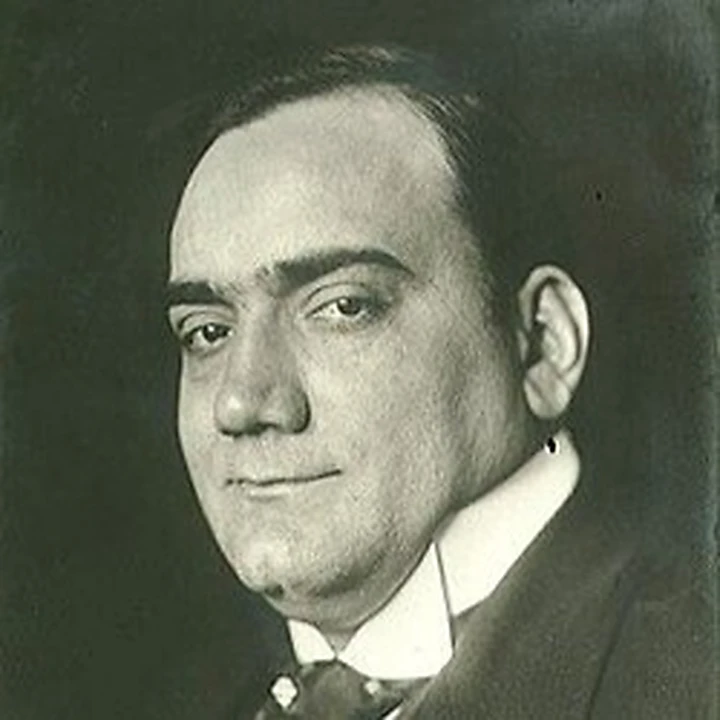
Enrico Caruso, the singer who changed the history of music and Italian immigration
Described as "the greatest tenor of all time," Enrico Caruso was born in Naples in 1873. He grew up in modest, if not impoverished, circumstances. His father worked in an iron foundry, while his mother earned a living cleaning houses. Despite the family's financial struggles, Caruso attended school regularly and showed an early talent for drawing. He first sang in church choirs and later performed in the streets and cafés of Naples as a posteggia singer. Rather than attending the city's renowned conservatory, he studied privately with vocal teacher Guglielmo Vergine.
Caruso made his operatic debut in 1895 at Naples' Teatro Nuovo, launching a remarkable career that soon took him far beyond Italy. Between 1897 and 1900, he toured extensively, performing in Egypt, Russia, Buenos Aires, Lisbon, London, and other international destinations. Admired by Giacomo Puccini, he sang the role of Rodolfo in the London premiere of La Bohème before opening La Scala's 1900 season under the baton of Arturo Toscanini.
In 1901, Caruso returned to Naples to perform in L'elisir d'amore. Although he was not booed - as legend has often claimed - part of the local press criticized his performance. At the time, fierce rivalries divided opera enthusiasts, and the influential critic of Il Pungolo favored the more traditional tenor Fernando De Lucia. Deeply disappointed, Caruso vowed never to sing in Naples again, and he kept that promise for the rest of his life.
Caruso was an innovator and a modern artist. His expressive verismo style, emotionally rich interpretations, and remarkably clear voice enabled him to reach audiences on an unprecedented scale. In 1902, he became the first great bel canto singer to record his voice commercially, making ten opera recordings in Milan for the Gramophone & Typewriter Company. Those recordings helped transform what had initially been considered an office technology into the foundation of the modern recording industry. They also reached New York, where executives at the Metropolitan Opera invited him to perform.
After relocating to New York in 1903, Caruso began an extraordinary 18-year relationship with the Metropolitan Opera that permanently linked his career to the city. He quickly became the first true celebrity of the age of mass communication. He was one of the most photographed people of his era, appearing constantly in newspapers and magazines around the world. His recordings effectively created the American record industry, giving rise to the famous saying, "Caruso made the record, and the record made Caruso." His recording of "Vesti la giubba" became the first recording ever to sell more than one million copies.
By conquering the world's leading opera stages and bringing opera into middle-class homes through recordings, Caruso fundamentally changed the way audiences experienced music. He also recorded Neapolitan songs, helping popularize Italian music well beyond Italy's borders.
Proud of his Italian heritage, Caruso maintained close ties with fellow Italians living abroad. In New York, he became part of the city's vibrant Neapolitan entertainment community, associating with performer Eduardo Migliaccio, better known as Farfariello, with whom he even co-wrote several songs. He was also close to Guglielmo Ricciardi, founder of the first professional Italian theater company in the United States, and Cesare Gravina, a musician and actor whom Caruso had already known at La Scala and who later became a popular character actor in New York's emerging film industry. Italian American newspapers frequently published Caruso's humorous caricatures, another artistic talent at which he excelled.
Like today's global celebrities, Caruso also found his private life under constant media scrutiny. Newspapers closely followed the scandal surrounding his longtime companion, soprano Ada Giachetti, who had given birth to his sons Enrico and Rodolfo before leaving him for his chauffeur. Caruso's heartbreak inspired the famous Neapolitan song "Core 'ngrato," written for him in New York by Alessandro Sisca and Salvatore Cardillo. His later marriage to Dorothy Benjamin, the young daughter of a wealthy Northeastern American family, also attracted widespread attention. Newspapers eagerly published photographs of their daughter Gloria with her mother. Far less publicized was the fact that Dorothy had been disinherited by her father because he opposed her marriage to "the son of an Italian peasant."
Caruso's popularity eventually caught the attention of the film industry. In 1918, Famous Players-Lasky - later known as Paramount - offered him the extraordinary sum of $200,000 to appear in two silent films, My Cousin and Splendid Romance. While Splendid Romance has been lost, My Cousin survived after a long and difficult history and was eventually restored by the Cineteca di Bologna. In the film, Caruso plays both an immigrant cousin who makes plaster figurines and the internationally celebrated opera star, revealing remarkable natural acting ability and the charisma that had always defined his relationship with audiences.
By 1920, the relentless physical demands of breathing technique, vocal performance, and his extraordinary workload - 863 performances at the Metropolitan Opera - had severely damaged his health, leading to pleurisy. While recovering with his family in Sorrento, he suffered a final medical crisis and died in Naples in 1921. His funeral in Naples drew enormous crowds, while a packed memorial Mass was celebrated at St. Patrick's Cathedral in New York.
Caruso occupies a central place in the history of Italian immigration. He helped elevate the social standing of Italians in America both directly and indirectly. Quietly, he assisted struggling immigrant families and courageously reported extortion attempts by the notorious Black Hand criminal organization.
His extraordinary success at the Metropolitan Opera transformed the company from a competitor of the more popular Manhattan Opera House into New York's leading opera institution. In 1910, Giacomo Puccini composed La fanciulla del West specifically for the Metropolitan and for Caruso, adapting David Belasco's western drama. The arrival of Arturo Toscanini and former La Scala general manager Giulio Gatti-Casazza reshaped the company's artistic direction, replacing a repertoire dominated by French grand opera with Italian opera. The Metropolitan consequently became one of New York's defining cultural institutions. As people would later say, "Caruso made New York, and New York made Caruso."
Through his performances, recordings, public image, and appearances in newspapers and newsreels, Caruso helped redefine the perception of Italians in the United States at a time when they often faced prejudice and discrimination. He associated Italian identity with artistic excellence, innovation, and modernity. His tireless work on stage, his naturalistic acting style, and his unique ability to connect emotionally with audiences transformed the image of Italian immigrants, restoring Italy's reputation as the cradle of the arts - a reputation that has long been admired in the United States.
During World War I, Caruso devoted himself to numerous fundraising performances benefiting the Italian Red Cross while also supporting the sale of American Liberty Bonds. In doing so, he contributed not only to the Allied war effort but also to the emergence of a shared Italian American identity, helping lay the cultural foundations of the Italian American community.