

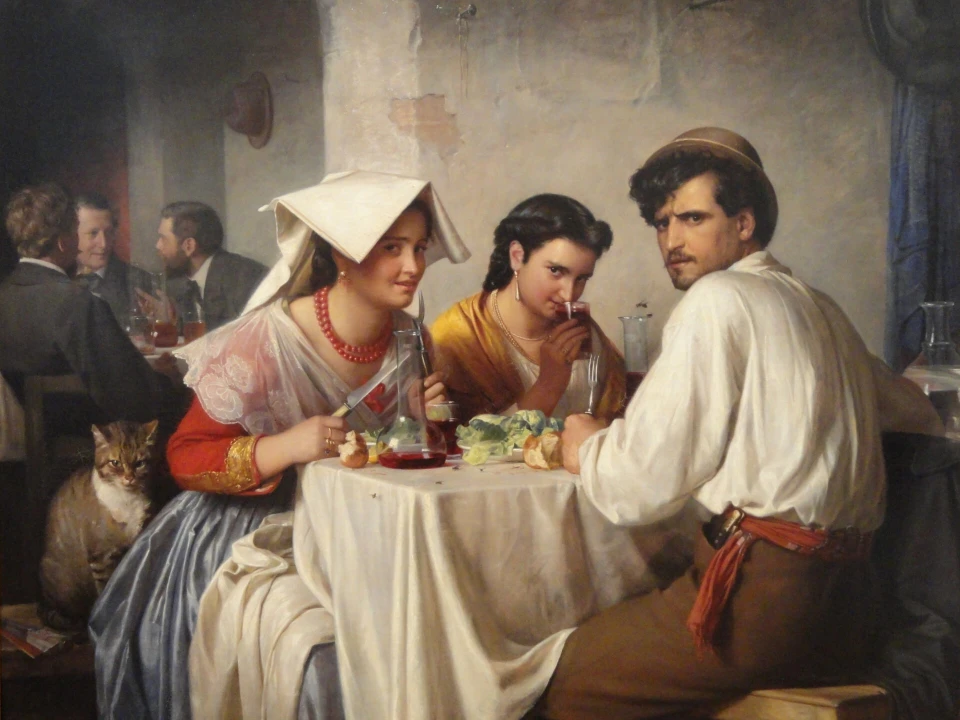
In the beginning, in Italy, there was the osteria. And you had to bring your own food. Relatively recent are the osterias we know and love today—those places where, whether for a solo lunch or for dinner with friends, tables are laid full of food and wine. Places where, in Tuscany for example, you might find hefty cuts of bistecca alla fiorentina and long strands of pappardelle coated in wild boar ragù. Or, in Puglia, orecchiette with biting cime di rapa and pesce al forno, caught just that morning by the local fisherman.
Three thousand years ago, the mere idea that you could be served food outside of the home, and of this level of culinary expertise and abundance, was unimaginable. The primary function of the osteria—which first appeared between the 7th and 8th centuries and was today what we would consider more of an inn—was rather room and board for travelers.